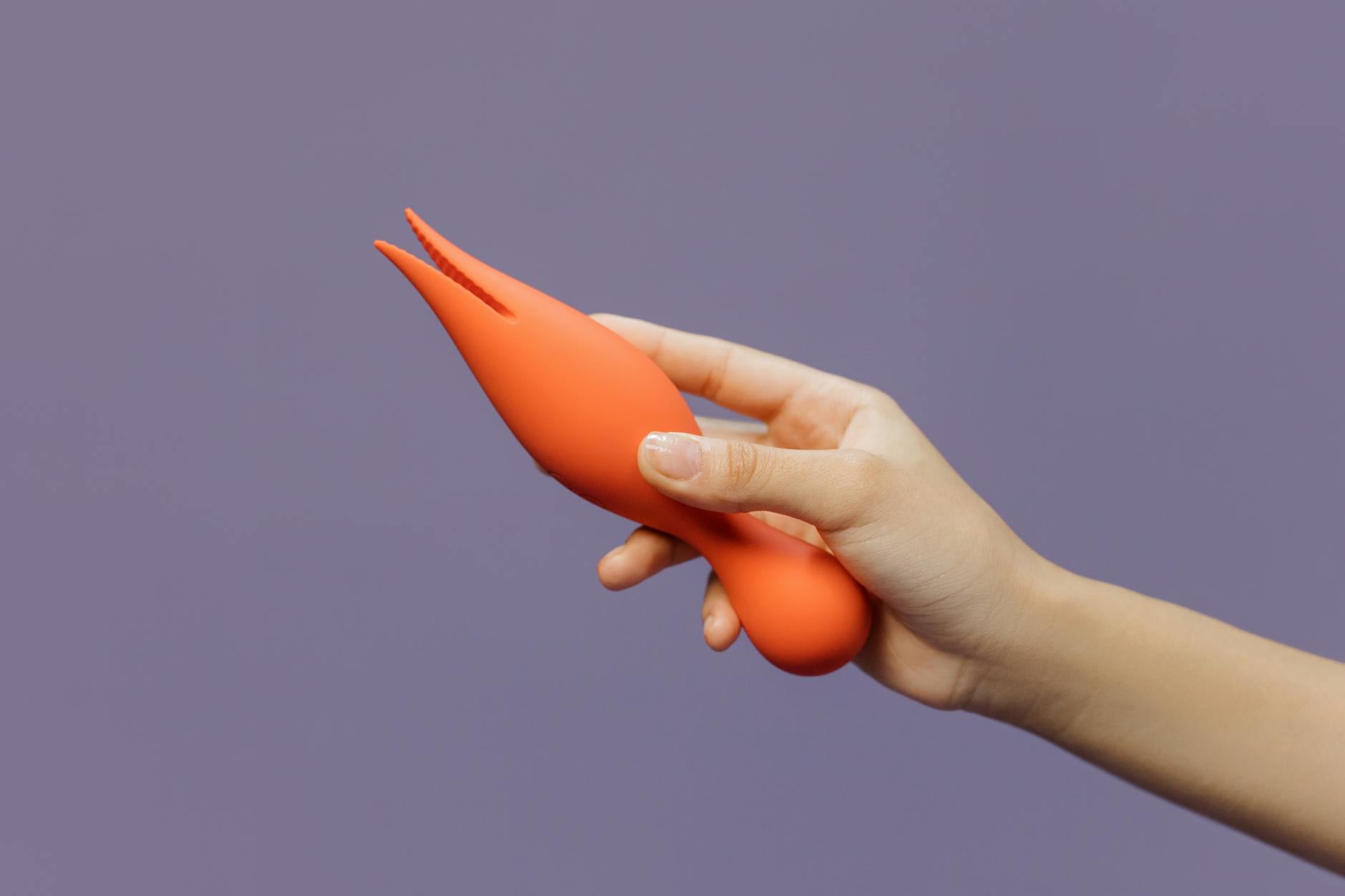
How to Relax Your Pelvic Floor for Better Lemon Vibrator Pleasure
Here's the thing nobody tells you: your pelvic floor can sabotage your pleasure. You can have the best lemon vibrator in your hands, perfect technique, and all the time in the world, and still feel like something's locked down there, keeping the good sensations at arm's length.
That locked-down feeling is usually your pelvic floor. And the paradox is this: the muscles designed to intensify pleasure often get so tense they dampen it instead. For people using clitoral vibrators, this tension can reduce sensation, delay orgasm, or make the experience feel muted. The good news? This is fixable.
I've worked with hundreds of people struggling with pleasure, and pelvic floor tension is one of the most common (and most ignored) culprits. It's not a flaw. It's a habit your body picked up, usually without your knowledge. And habits can change.
What your pelvic floor actually does
Your pelvic floor is a hammock of muscles that stretches from your pubic bone to your tailbone. It supports your bladder, bowel, and uterus. It contracts during orgasm. It helps with sensation and arousal. It's basically the VIP section of your sexual response system.
The problem is that most people only know about one job: kegels. Squeezing. Strengthening. And yes, some tone is good. But what's rarely discussed is the flip side: relaxation.
A chronically tight pelvic floor is like trying to enjoy a massage while your shoulders are hunched up to your ears. The pressure is there, but the nerve endings can't fully register the input. Your body is braced, not receptive. And when you're using a powerful lemon sucker vibrator that relies on sensation and blood flow to do its job, that tension becomes a real problem.
Why tension builds down there
Three big reasons:
Stress and anxiety. Your pelvic floor holds emotional tension the way your jaw holds stress. If you're carrying anxiety about performance, body image, or whether you "should" be enjoying yourself, your pelvic floor clenches. That's not weakness. That's your nervous system doing exactly what it's wired to do: protect you.
Habit and overuse. Some people unconsciously clench their pelvic floor the way others grind their teeth. It becomes background noise. You're not aware you're doing it until someone points out you've been braced for three hours.
Kegel overkill. Here's the awkward truth: doing kegels without learning how to relax is like strength training without stretching. You build tone, but you also build rigidity. And a rigid pelvic floor is a tense pelvic floor. This matters especially when you're using lemon vibrators, which work best when tissue is relaxed and blood flow is optimal.
You can read more about how lemon clitoral vibrators work differently for different bodies in our guide on why Lemon vibrators work better for sensitive clits.
How tension affects pleasure specifically
When your pelvic floor is clenched, three things happen:
1. Sensation dampens. Tight muscles don't transmit sensation as clearly. The vibrations from your lemon vibrator are hitting tense tissue instead of responsive tissue. It's like trying to feel texture through a tightly closed fist versus an open hand.
2. Blood flow suffers. Arousal requires blood flow. Vasoconstriction happens when you're tense. So even if your brain is interested, your body isn't getting the signal to engorge and prepare. This is especially true for people using suction-based vibrators, which depend on tissue responsiveness.
3. Orgasm becomes harder. The pelvic floor contracts during orgasm as a release. If it's already contracted, that release can't happen fully. Some people describe this as feeling like they're "almost there" but can't quite cross the finish line. Others report weaker orgasms or no orgasm at all.
The good news? Relaxation reverses all three of these.
Technique one: Extended exhale breathing
This is the fastest hack for acute tension, and it works because your nervous system has a direct pipeline between your breath and your pelvic floor.
Here's how: your pelvic floor naturally relaxes on the exhale and engages slightly on the inhale. By lengthening your exhale, you literally signal your body to downshift into rest mode.
Practice this for two to three minutes before pleasure:
- Breathe in through your nose for a count of four.
- Exhale through your mouth for a count of six, eight, or even ten.
- Don't force it. Just make the exhale longer than the inhale.
- Notice what happens in your pelvic floor. There's usually a release on that long exhale.
Do this while sitting or lying down. You're not trying to achieve anything. You're just training your nervous system to recognize that it's safe to let go. Most people feel a difference within one minute.
Technique two: Pelvic floor scanning and conscious release
Most people have never actually felt their pelvic floor conscious release. They know how to squeeze. They've never learned how to fully let go.
Here's a simple way to practice:
- Sit or lie down somewhere comfortable.
- Take a few breaths to settle.
- Imagine your pelvic floor as an elevator. Right now, it's probably on floor 3 or 4 (baseline tension). Your job is to send it to the ground floor.
- On each exhale, visualize it dropping: down from floor 3 to floor 2 to floor 1 to ground.
- Don't clench and release. Just relax deeper with each breath.
- Spend three to five minutes doing this. It feels meditative, not active.
The key difference here is that you're not contracting to feel the muscles. You're relaxing to feel the absence of contraction. Most people have never done this. It takes practice, but it's foundational.
Technique three: Partner-assisted or self-massage
If breathing and visualization aren't enough, soft tissue work helps. The tissues around your pelvic floor (your inner thighs, lower abdomen, perineum) often hold tension that radiates inward.
You can do this solo or with a partner:
- Lie on your back with your knees bent and feet flat.
- Using gentle circular pressure with your fingertips, massage the area between your pubic bone and belly button, moving slowly downward.
- Do the same on your inner thighs, slowly, without rushing.
- Focus on breathing and softness, not pressure. You're not trying to break up tension. You're sending signals that it's safe to release.
- Spend five to ten minutes on this.
If a partner is involved, even better. The sensory input of touch from someone else often signals relaxation more effectively than self-touch. But solo massage absolutely works.
After using any of these techniques, you'll likely notice your lemon vibrator feels different. Sensations are sharper. Arousal comes faster. Orgasm feels more accessible. That's your pelvic floor actually working with you instead of against you.
The timing that matters
Do your relaxation work before pleasure. Not during. You want your pelvic floor primed for receptivity, not learning it in real time.
I recommend five to ten minutes of extended exhale breathing or pelvic floor scanning before you touch yourself or your vibrator. Make it part of your setup, like checking your vibrator is charged or making sure you have lube nearby.
Over time, as you practice, your baseline tension drops. Your pelvic floor becomes more responsive by default. And when you do reach for your lemon clitoral vibrator, the experience deepens naturally.
When relaxation isn't enough
If you've been practicing these techniques for two to three weeks and you're still feeling blocked, consider seeing a pelvic floor physical therapist. Sometimes tension is so deep that professional guidance helps. It's not a sign of failure. It's just anatomy that needs skilled hands.
A pelvic floor PT can assess whether you need internal or external work, can teach you what true relaxation feels like, and can identify whether anything else (like scar tissue or nerve sensitivity) is playing a role. This is especially important if you've experienced trauma, surgery, or chronic pain.
For more on how past experiences shape your body's response to pleasure, you might find our article on why Lemon vibrators feel different after surgery or trauma helpful.
The relationship between relaxation and sensation
Here's what I've learned: relaxation is not the opposite of excitement. It's the foundation of it. You can't be truly aroused if you're braced. You can't feel sensation deeply if you're defended. Your body has to believe it's safe before it can open up.
When you use a powerful toy like the Lemon clitoral vibrator, you're asking your nervous system to be sensitive and available. Pelvic floor tension is like wearing armor to a party. You can be there, but you can't really feel anything.
Let your body relax. Let it trust. And then let your vibrator do what it's designed to do.
FAQ: Pelvic Floor Relaxation and Vibrator Pleasure
How long does it take to notice a difference in sensation?
Most people feel a shift within one to three sessions of relaxation work. The first time you fully release your pelvic floor, the difference is often dramatic. But building that as a habit takes two to four weeks of regular practice. Think of it like stretching: one session helps, but consistency is what creates lasting change.
Can kegels actually make pleasure worse?
Yes. If you're doing kegels without also practicing relaxation, you can build a chronically tight pelvic floor. This is especially true if you're doing hundreds of kegels or if you're anxious and clenching them throughout the day. The goal isn't maximum strength. It's balance: tone with flexibility, strength with relaxation. If you've been doing kegels for months or years, add relaxation work to your routine.
Does relaxation work for people with vulva nerve damage?
Often, yes. Relaxation improves blood flow and signals to your nervous system that sensation is safe. People with nerve damage or reduced sensation sometimes find that releasing pelvic floor tension makes their remaining sensation more accessible. That said, nerve damage is complex, and you should work with a healthcare provider if you suspect you have it. Our post on how Lemon vibrators work for people with vulva nerve damage goes deeper into this.
What if I can't feel my pelvic floor at all?
That's more common than you'd think, especially if you've never practiced pelvic floor awareness. Start with exhale breathing. The feeling of release will come with practice. Some people find it helpful to imagine a visualization (like the elevator metaphor) or to notice sensations in surrounding areas first (your lower belly, your inner thighs) and let the pelvic floor awareness develop over time. Patience matters here.
Should I relax my pelvic floor during orgasm?
No. During orgasm, your pelvic floor will contract naturally. That's what an orgasm is: rhythmic pelvic floor contractions. Your job is just to let it happen. All the relaxation work beforehand is so that when orgasm arrives, your pelvic floor can contract fully from a relaxed baseline, which usually means stronger, more satisfying orgasms.
Can my partner help me relax my pelvic floor?
Absolutely. Partner touch, massage, and even just the emotional safety of being held can help your nervous system downshift. Some couples find that partner-assisted breathing (where one person leads the breathing pace while the other follows) creates a deep sense of safety. But make sure the intention is relaxation and presence, not performance or pressure. The moment there's expectation attached, tension often creeps back in.
The bigger picture
Your pelvic floor is not separate from the rest of your nervous system. It's part of your whole-body experience. Stress, anxiety, past experiences, and how safe you feel in your own body all live in that hammock of muscle.
Relaxation isn't selfish. It's foundational. It's the thing that makes everything else work better. So before you adjust your vibrator settings or try a new technique, try this: just breathe. Let your pelvic floor drop. Feel what becomes possible when you're not braced.
That's where the real pleasure lives.