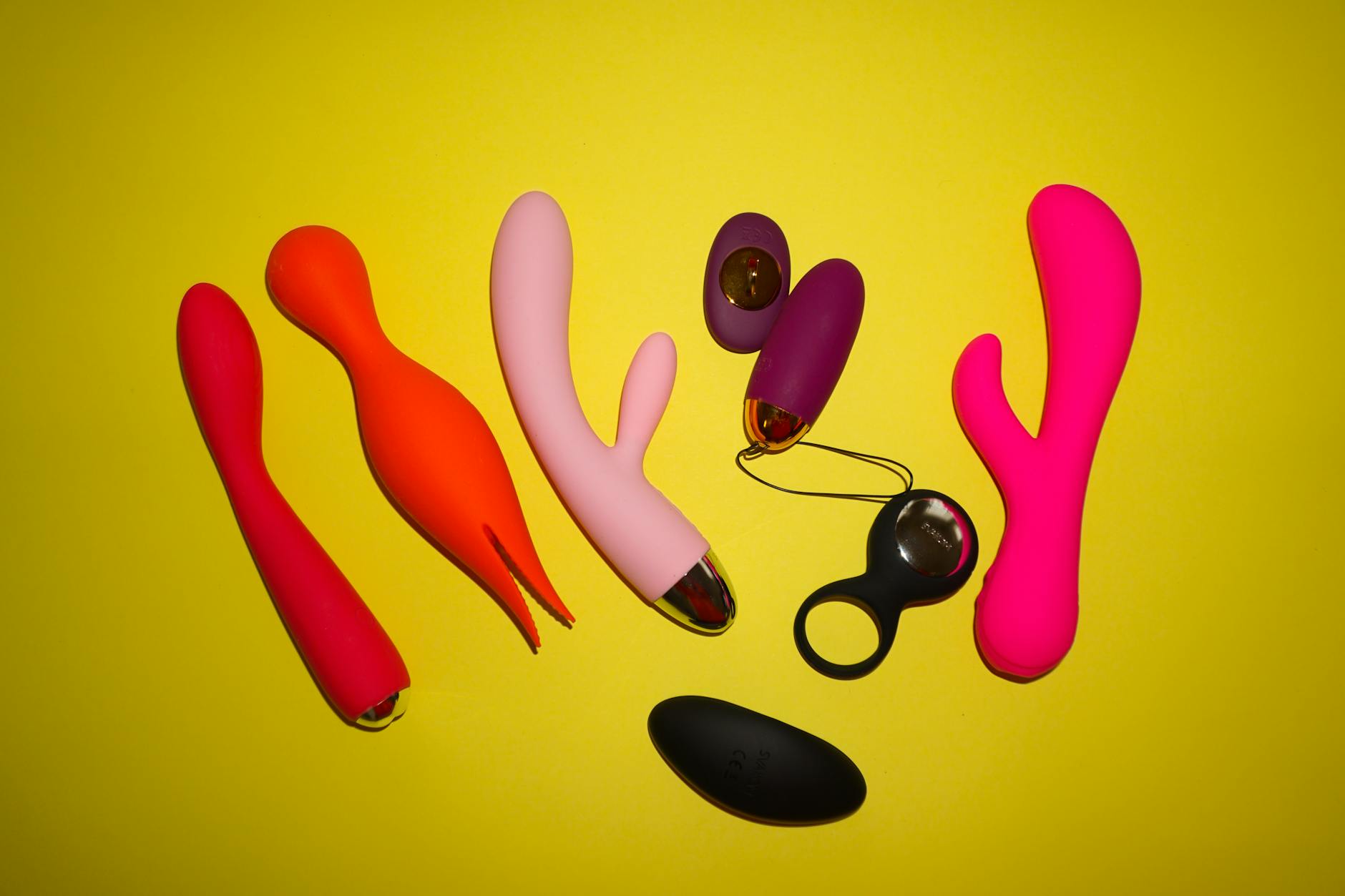
Here's what nobody tells you about low sensitivity
Low sensitivity isn't a personal failure. It's not permanent, and it's absolutely not a reason to give up on pleasure. What it is, though, is a puzzle with real solutions. I've worked with countless people who thought a lemon vibrator wouldn't be for them because their body felt less responsive than their partner's, or less responsive than they remembered. Most of the time, they were wrong.
The trick isn't finding a more powerful vibrator. It's understanding what sensitivity actually depends on and then optimizing those variables.
What low sensitivity actually is
Sensitivity varies wildly based on nerve density, hormonal cycles, stress levels, blood flow, and even how distracted you are. It's not fixed. It changes hour to hour, day to day. Some of that variation you can't control. Most of it, you can.
When people say they have low sensitivity, what they usually mean is one of three things. First, arousal takes longer to build. Second, sensation feels muted even when they're turned on. Third, they need consistent pressure or pattern repetition to reach orgasm. None of these are deal-breakers with a lemon clitoral vibrator. They just require different approach.
The blood flow factor
Here's the thing that changes everything: sensation depends on blood flow. When you're aroused, blood pools in the clitoral tissues, making the entire area more sensitive. When you're not, sensation stays flat. The problem isn't the lemon vibrator. It's not warming up your body first.
This is why a 25-minute buildup before using your lemon vibrator works so much better than a 5-minute one. Spend time touching other parts of your body. Let your breathing deepen. Watch something that interests you, read something that lands, or simply lie there and fantasize without any toy involved. By the time you introduce the lemon vibrator, your tissues are already engorged and ready to respond.
If you're short on time, a hot shower beforehand helps. Warm water increases circulation. Some people find that moving their body a little, even just stretching or a few minutes of dancing, makes a measurable difference in how much sensation they feel.
The positioning strategy
Position matters more than most people realize, especially if you have lower sensitivity. When you're lying on your back, the clitoral area sits in a neutral position. When you're lying on your stomach or in a semi-seated position with your pelvis tilted slightly forward, more blood naturally pools in the clitoris. Sensation feels sharper.
Experiment with your legs. Some people find that keeping their legs together increases sensation. Others find that one leg bent and one leg straight changes what they feel. There's no universal right answer. The point is to try different positions and actually notice which ones create more intense feeling.
Angle also matters with a lemon vibrator specifically. Because suction-based clitoral vibrators work differently than traditional vibrators, the angle at which you hold the lemon vibrator against your body changes which part of the clitoral structure receives stimulation. Small adjustments can make a big difference.
Lubrication and tissue preparation
This isn't complicated, but it matters: adequate lubrication increases sensation. Water-based lube creates a smoother glide and allows the suction mechanism of a lemon vibrator to work more effectively. Without it, there's friction that your nervous system interprets as uncomfortable rather than pleasurable.
But here's the part most guides skip. The type of sensation you want changes what you should use. If you're trying to increase overall sensitivity, a light layer of lube is fine. If you want the most intense sensation possible, a generous amount is better. More lube means the lemon vibrator can move slightly against your skin, creating more complex stimulation.
Some people also find that warming the lube slightly by rubbing it between their fingers first makes sensation feel less clinical and more pleasurable.
The mental state piece
Distraction kills sensation. Full stop. If you're worried about whether you're taking too long, or whether your body is responding "normally," your nervous system is working against you. Your brain is literally downregulating sensation while you're anxious.
This is why the context matters so much. Some people with lower sensitivity report that sensation improves dramatically when they're alone versus when they're with a partner. Others find the opposite true. The variable is always psychological. You need to be genuinely present, not performing or checking yourself for signs of arousal.
One practical strategy: Put your phone in another room. Set aside time specifically for this. Tell yourself that whatever happens in the next 20 or 30 minutes is enough. That permission alone often changes how your body responds.
Medication and sensitivity
Certain medications genuinely reduce sexual sensation as a side effect. Antidepressants, blood pressure medications, and some antihistamines are common culprits. If you're on medication and sensitivity dropped after you started it, that's worth a conversation with your doctor. Sometimes switching to a different medication in the same class resolves it. Sometimes it doesn't.
The same is true for alcohol. A drink can reduce inhibition and increase arousal psychologically. Three drinks reduces physical sensation across the board. If you're using a lemon vibrator while drinking, be aware that sensitivity will likely feel lower than it would sober.
When to use pattern versus intensity
Lemon vibrators offer different patterns and intensity levels. People with lower sensitivity sometimes assume they need maximum intensity. Usually, they don't. Pattern variation often works better.
A pattern is a sequence of stimulation. Instead of steady suction, the lemon vibrator pulses, or builds in waves, or changes rhythm. For people with lower sensitivity, these patterns create more complex sensory information. Your nervous system has more to work with. Orgasm often arrives faster with the right pattern than it does with full-blast intensity.
Start at a lower intensity and try different patterns first. Intensity can always go up. Pattern exploration takes a minute.
The warm-up toy strategy
Here's a technique that works for a surprising number of people with lower sensitivity. Start with a smaller, less intense toy or even just your hand. Build arousal with that first. Once your body is already responding and sensation is heightened, introduce the lemon vibrator. By that point, you're starting from a higher baseline of sensitivity.
This is particularly useful early in a session. Spend five minutes with a smaller toy or manual stimulation. Then switch to the lemon vibrator. Sensation will feel more intense because your tissues are already partially aroused.
Consistency and the adaptation trap
Here's something strange that happens with vibrators, especially suction-based ones like the lemon clitoral vibrator: if you use the exact same pattern and intensity in the exact same position every single time, your nervous system adapts. Sensation gradually becomes duller. It's not the toy failing. It's habituation.
The fix is variation. Use different patterns. Change positions. Vary how much lube you use. Alternate between solo play and partnered play. Take breaks. Use your lemon vibrator three times a week instead of daily for a few weeks. Your sensitivity will reset.
This is actually good news. It means that if sensation ever feels flat, you don't need a different toy. You just need novelty.
Partner communication, if that's relevant
If you're using a lemon vibrator with a partner, the sensitivity question becomes a conversation. People with naturally lower sensitivity sometimes feel pressure to perform arousal they're not actually feeling, which makes everything worse. Your partner needs to know that you feel pleasure and arousal differently, and that's information, not rejection.
Read about how to introduce a lemon vibrator to your relationship without awkwardness for strategies on framing this conversation as expansion, not substitution.
What low sensitivity doesn't mean
Let's be clear. Low sensitivity doesn't mean you can't orgasm with a lemon vibrator. It doesn't mean you enjoy pleasure less. It doesn't mean your body is broken. It means you might need a different strategy than someone with higher natural sensitivity. That's a completely workable situation.
Most people who say "vibrators don't work for me" haven't tried the actual strategies that work for their specific body. Once they do, the lemon vibrator becomes genuinely useful. Sensitivity often increases over time too, as you learn what your body responds to and get better at creating the conditions where arousal can build.
FAQ
Can low sensitivity improve over time with a lemon vibrator?
Yes, often significantly. The more you explore with toys, the better you understand your body's response patterns. You also get better at creating the conditions for arousal. Plus, you're literally building neural pathways for pleasure. Sensitivity often increases as you use a lemon vibrator regularly.
Does sensitivity vary by where in my cycle I am?
Completely. If you menstruate, sensitivity typically peaks around ovulation when estrogen is highest and the clitoral tissues are more engorged. Right before your period, sensitivity often drops. If you're on hormonal birth control, your cycle is suppressed, but sensitivity can still vary based on hormonal patterns in the medication. Tracking when you feel most responsive can help you plan sessions when sensation will be highest.
Will a more expensive lemon vibrator work better for low sensitivity?
Not necessarily. The most expensive lemon clitoral vibrator won't help if the problem is mental distraction or inadequate warm-up. Price correlates with features and materials, not with whether the toy works for your sensitivity level. A standard lemon vibrator with the right approach beats an expensive toy used without strategy.
Can I train my body to feel more sensation?
Yes, in a couple of ways. First, masturbation literally strengthens the neural pathways for arousal and pleasure. The more you practice, the more your nervous system "learns" how to respond. Second, mindfulness and presence directly increase sensation. People who are fully focused during solo play report higher sensitivity than people who are half-watching their phone. Third, variation keeps your nervous system engaged instead of habituated.
What if I have low sensitivity because of trauma or surgery?
That's a bigger conversation and probably worth having with a therapist or a sex-positive healthcare provider. Some trauma-related numbness responds well to graded exposure with toys like a lemon vibrator. Some requires deeper psychological work. Both things can be true. Reach out to us at contact if you want resources.
Is low sensitivity the same as a lack of desire?
Not at all. You can want pleasure, want to explore, want intimacy, and still experience lower physical sensation. Those are separate systems. The fact that you're reading this probably means desire is there. Low sensitivity is solvable. A desire issue requires different approaches. Most people are dealing with one, not both.