
Let's be real about what just happened
You switched partners. Your lemon vibrator still works. But somehow it feels completely different. The sensation isn't sharper or duller so much as...disconnected. Like your body's not quite showing up for the party.
This isn't a toy problem. It's a nervous system problem. And understanding why matters because the fix isn't buying something new—it's rebuilding trust with pleasure in a new context.
The arousal cascade your old relationship created
Here's what most people miss: pleasure is not just genital. When you've been with someone for months or years, your brain builds an entire sensory encyclopedia around them. The way they smell. Their timing. What they say. How predictable or surprising they are. Your nervous system learns to recognize them as safe, and that safety is what allows your body to fully relax into sensation.
That's not romantic fluff. That's neurobiology. When you're aroused by a familiar partner, your parasympathetic nervous system (the "rest and digest" part) is working alongside your sympathetic system (fight or flight). You're safe enough to let your guard down.
With a new partner, even one you're attracted to and excited about, your nervous system doesn't have that map yet. You're literally starting from scratch. Your body is micro-monitoring for threat or comfort or familiarity, and that cognitive load eats up bandwidth that used to go directly to sensation.
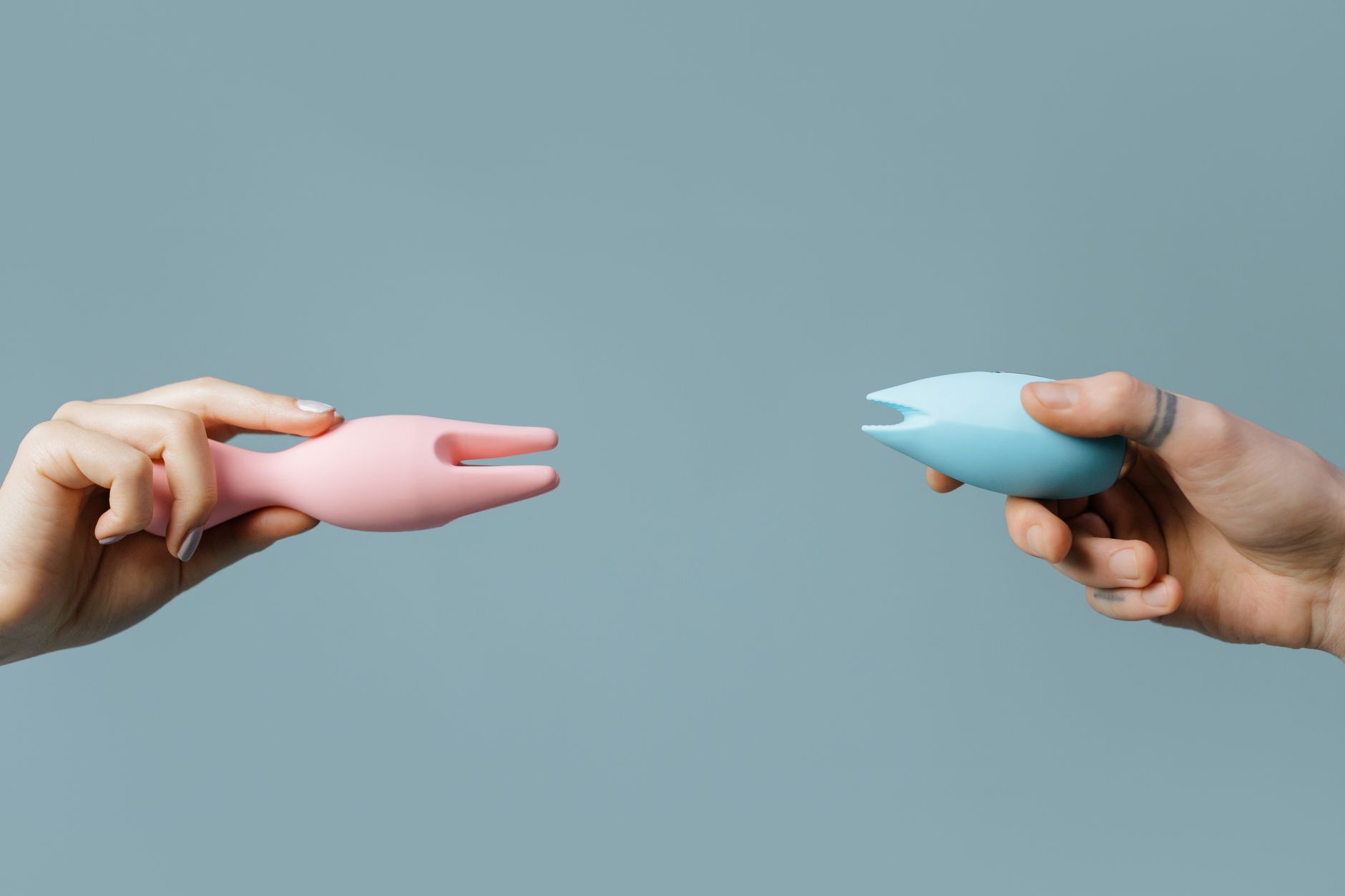
Photo by cottonbro studio on Pexels
Why your lemon vibrator feels muted in a new relationship
Three things happening at once:
Your attention is split. In a new relationship, part of your brain is still gathering information. Are they reliable? Do they care about your pleasure or just theirs? Are you genuinely comfortable, or performing comfort? That vigilance is exhausting and it muffles sensation. A lemon clitoral vibrator that would have felt incredible with someone you've been with for two years can feel distant with someone you've been with for two months.
Arousal timelines don't match. With an ex, you probably knew exactly how long foreplay took before you were ready. With someone new, that rhythm is different. Maybe they jump in faster. Maybe they need more time. When the pacing is off, your body doesn't climb into arousal the way it normally would, and a tool that depends on that arousal (like a lemon vibrator) feels less responsive.
Emotional safety isn't automatic. This is the big one. In long-term relationships, emotional intimacy and sexual intimacy become woven together. You've negotiated preferences, learned what works, had conversations about pleasure without it being weird. New relationships rarely have that foundation. You might be physically safe but emotionally cautious, and that caution dampens the nervous system's ability to relax into sensation.
How the lemon clitoral vibrator responds to nervous system states
Here's something most people don't realize: vibrators are amplifiers. They don't create sensation from nothing. They magnify what's already there. If your nervous system is partly braced, partly vigilant, partly performing, the vibrator is amplifying a signal that's already quiet.
This is why you might have used a lemon vibrator solo and felt incredible, then used it with a new partner and felt like something was wrong with the toy. Nothing was wrong with the toy. Your state changed.
The nervous system shift is real, measurable, and temporary. But it requires patience and intentionality to rebuild.
Building sensation from the ground up
Here's what actually helps:
Start with solo play in a new relationship. This sounds backward, but it's not. Using your lemon vibrator alone gives you a baseline. It reminds your body what fullness feels like, what your preferred intensity is, and that pleasure is still accessible to you. This is grounding. It's also proof that the toy works, which stops you from internalizing a nervous system problem as a toy problem.
Communicate about arousal timelines explicitly. Don't hint. Tell your partner how long you typically need, what helps you warm up, whether you want to start with hands or go straight to a toy. Specificity is sexy because it reduces ambiguity, and reduced ambiguity means your nervous system can relax. When your partner knows exactly what you need, you don't have to monitor whether they're getting it right.
Use the vibrator as a conversation opener, not a solution. If sensation feels muted when you're together, that's information worth naming. "I notice I'm more in my head right now" or "I think I need more time to settle in" is not a failure. It's honesty that actually builds the safety your nervous system is looking for. Some couples find that using a lemon vibrator together early actually accelerates trust because it removes some of the guessing.
Give your nervous system time. Most people need 3-6 months to fully relax into a new sexual dynamic. That's not a timeline for falling in love. That's a timeline for your parasympathetic nervous system to stop running a threat assessment. During that window, sensation might feel different. That's normal. It doesn't mean anything is broken.
The role of emotional intimacy in physical sensation
One thing I tell couples all the time: you cannot separate emotional safety from sexual sensation. The two are neurologically linked. A lemon vibrator in the hands of someone you trust deeply will feel profoundly different from the same vibrator with someone you're still getting to know.
This isn't about being in love. It's about felt safety. Do you trust them to handle your body with care? Do you believe they're genuinely interested in your pleasure, not just performing interest? Do you feel okay being vulnerable? Those questions shape sensation more than most people realize.
If you're in a new relationship and sensation feels muted, it's worth checking in with yourself on these. Sometimes the answer is just "I need more time." Sometimes it's "This person isn't actually trustworthy" and the muted sensation is your nervous system doing its job by holding back.
Managing expectations while you rebuild
Here's the thing: you don't need to chase the sensation you had with an ex. That was one relationship's chemistry. This is a different person, a different nervous system state, different everything. Trying to recreate the old intensity is like expecting a new house to feel like the old one immediately. It takes time.
In the meantime, your lemon vibrator is still a valuable tool. Use it to understand yourself. Use it to communicate what you like. Use it solo when you need to remind your body what pleasure feels like. And give your new relationship the time it needs to build the kind of trust that makes everything, including vibrators, feel alive again.
FAQ: Sensation and new relationships
Why does my lemon vibrator feel less intense with a new partner than it did alone?
Your nervous system is partly in a protective state when you're navigating a new relationship. Mental load around whether the dynamic is safe or trustworthy takes up cognitive bandwidth that would otherwise be available for sensation. Over time, as you build safety and familiarity, that changes. The vibrator hasn't changed—your arousal capacity has.
How long does it typically take for sensation to feel normal again?
Most couples report that sexual sensation and comfort stabilize somewhere between 3 and 6 months. That timeline varies based on how quickly emotional trust develops and how much communication you're doing about pleasure. Some people feel back to baseline in 8 weeks. Some take longer. Both are completely normal.
Should I try a different intensity or pattern on my lemon vibrator to compensate?
Not immediately. If you jump to higher intensities because sensation feels muted, you might desensitize yourself further when you're already running on a lower baseline. Instead, stick with your preferred settings and give your nervous system time to catch up. If sensation still feels off after three months, then it's worth experimenting with different patterns.
Is it normal to feel sensation loss when switching from long-term to a new relationship?
Completely normal. Shifting from years of neural pathways built with one person to starting fresh with someone new is a genuine sensory adjustment. Your body isn't broken. You're just rebuilding the safety structures that allow full arousal.
Can using a lemon clitoral vibrator together early speed up physical comfort?
For some couples, yes. Using toys together removes some of the mystery and can actually accelerate the feeling of vulnerability and safety that nervous systems need. That said, it only works if both partners are genuinely comfortable with it. Forcing toys into a dynamic before you're both ready can have the opposite effect.
What if sensation still feels really different after 6 months?
At that point, it's worth having a conversation about what's underneath. Is there emotional safety missing in the relationship? Are there deeper compatibility questions? Sometimes muted sensation is genuinely just a timeline issue. Sometimes it's your nervous system trying to tell you something about the relationship itself. A couples therapist can help you figure out which one it is.
You're not broken, your nervous system is adjusting
Your lemon vibrator works the same way it always has. What's changed is the context in which you're using it. That context—the relationship, the trust, the safety, the specific person—shapes sensation more profoundly than most people realize. Give yourself the same grace you'd give anyone learning a new skill. Your body will catch up. Your nervous system will learn that this new person is safe. And when it does, everything, including that vibrator, will feel alive again.