
Let's start with the real situation
You started an SSRI. Your doctor said it would help with anxiety or depression. And it probably is. But now when you use your Lemon vibrator, something feels off. The sensation is muted. Orgasms take forever. Or they don't happen at all. You start wondering if the medication is ruining your sex life.
Here's what I tell my clients: SSRIs don't ruin pleasure. They change the pathway to it. And that matters because understanding the difference between "broken" and "different" is what lets you actually fix it.
How SSRIs affect the nervous system
SSRIs (selective serotonin reuptake inhibitors) work by increasing available serotonin in your brain. That's good for mood stability and anxiety. But serotonin also plays a major role in sexual response.
Here's the chain reaction. In your brain, higher serotonin can dampen the activity of dopamine and norepinephrine. Dopamine is your desire neurotransmitter. Norepinephrine is part of your arousal response. When those dip, the whole sexual response system gets quieter. Your clitoris still has full nerve density. Your lemon vibrator still works exactly the same way. But the signal traveling from that touch to your brain feels muffled.
It's like turning down the volume on everything, not just sex. Some people describe it as feeling slightly numb. Others say their brain just feels distant from their body during intimacy.
Which SSRIs are worst for sexual side effects
Not all SSRIs hit your sex drive equally. Sertraline, paroxetine, and fluoxetine tend to have the highest rates of sexual dysfunction as a side effect. Bupropion (sometimes prescribed alongside SSRIs) and vilazodone actually improve sexual function for some people. Escitalopram and citalopram fall somewhere in the middle.
This matters because it's the first conversation to have with your prescriber. If you're six weeks in and noticing major changes to sensation, bring it up directly. A different SSRI or a lower dose might work just as well for your mood without flattening your sexual response.
Why the numbness feels worse with vibrators than other stimulation
Vibrators require a clear sensory feedback loop. Your nervous system has to feel the vibration, process it, and send an arousal signal back. When an SSRI dampens that loop, vibrator users often notice it faster and more sharply than people relying on penetration or manual stimulation alone.
With a clitoral vibrator like Lemon's, the sensation is concentrated and precise. When it feels muted, there's nowhere for your brain to hide from that difference. Penetration is more about pressure and fullness, so changes in sensation might be less obvious. But with lemon vibrators and other clitoral toys, you're acutely aware when the response isn't there.
Practical adjustments that actually work
Four things I recommend to clients managing SSRIs and their sexual response.
1. Timing your dose. If you take your SSRI in the morning, the peak concentration in your bloodstream happens around mid-morning. Peak neurochemical effect is typically 4-6 hours later. Some people find that having sex or using their vibrator in the early morning, before the peak, gives them better sensation. Check with your doctor first, but dosing flexibility sometimes exists.
2. Longer warm-up periods. Your arousal system isn't broken, just slower. Budget 20-30 minutes of foreplay or mental prep time instead of 5-10. Use your Lemon vibrator starting at lower intensities, and give yourself permission to take time. Rushing yourself when your nervous system is already dampened creates frustration on top of numbness.
3. Shifting to sensation-based exploration. Instead of "try to orgasm," reframe as "what touches feel good right now." Some people find that lower vibration frequencies (pattern 1 or 2) feel more satisfying than high speeds when they're on SSRIs. Others need more sustained pressure. Experiment without a goal. Pleasure without orgasm is still pleasure.
4. Combining stimulation types. If clitoral vibration alone feels distant, add manual touch, a partner's hands, or mental fantasy alongside it. Your nervous system might need multiple sensory inputs to cross the threshold. This isn't failure. It's adaptation.
When to involve your prescriber
Sexual side effects from SSRIs are underreported because people feel embarrassed mentioning them. Your doctor has heard this before. They have options.
If numbness or delayed orgasm is significant, mention it at your next appointment. Your prescriber might suggest a "drug holiday" (skipping one dose before sex, though this only works for some SSRIs and isn't safe for all conditions). Or they might add an agent like bupropion or buspirone to counteract the sexual side effects. Or they might switch you to a different SSRI altogether.
Don't just suffer through it. Medication should improve your overall quality of life, and that includes sexual pleasure.
Why this isn't about willpower or attraction
I see a lot of people blame themselves when SSRIs change their sex drive. "I must not love my partner enough." "Maybe I'm broken." "I should be able to push through."
None of that is true. SSRIs are affecting your neurotransmitters, not your feelings or your worth. The numbness is neurochemistry, not a reflection of desire or capacity. You might have the exact same emotional love and attraction while your body's sensory response is quieter. Those are completely separate systems.
The longer-term picture
Many people find that sexual side effects improve after 6-8 weeks as their body adjusts. Some adapt completely. Others have persistent changes but find new ways to access pleasure that work just as well. And some people discover that the mental clarity from being on an SSRI that works for them actually deepens their overall sexual satisfaction, even if individual sensation changes.
It's not guaranteed. But it's common enough that patience sometimes pays off.
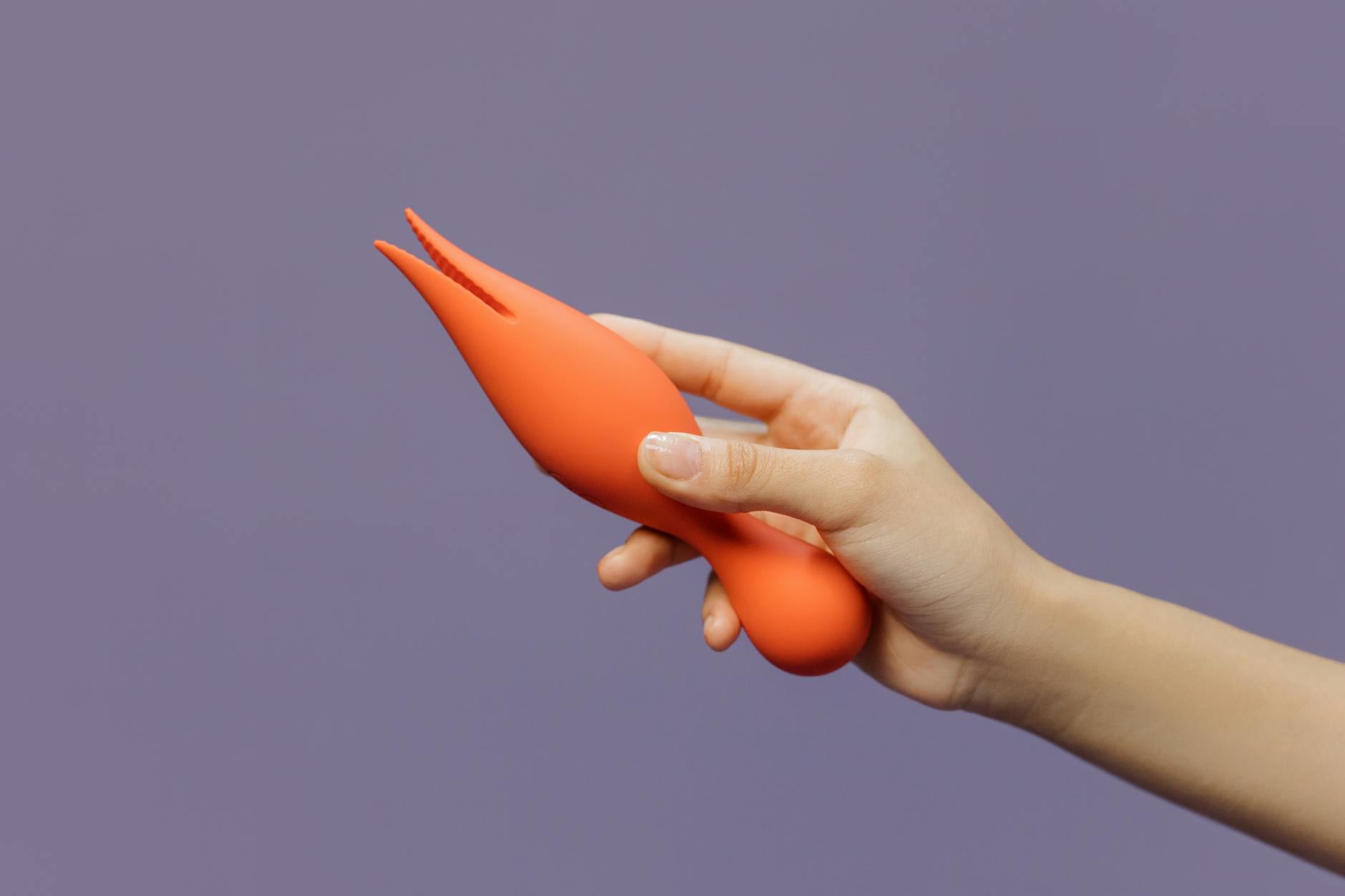
Photo by cottonbro studio on Pexels
What to know about dopamine and desire
Serotonin and dopamine exist in tension. When serotonin is high, dopamine-driven behaviors (desire, motivation, seeking) naturally decrease. This is why some people on SSRIs report that they want sex less, not just that sex feels different. The wanting itself gets quieter.
This is reversible. But it's not something willpower fixes. Your brain chemistry has genuinely shifted. Acknowledging that is the first step to working with it instead of fighting it.
Combining lemon vibrators with patience and communication
If you have a partner, this is a conversation worth having early. "My medication is changing how my body responds to touch. Let's figure this out together instead of assuming something's wrong with us." Many couples find that this actually deepens intimacy because it removes performance pressure and creates space for experimentation.
If you're solo, give yourself grace. Your clitoral vibrator isn't broken. Your nervous system is just processing information differently right now. Keep exploring. Keep adjusting. Your pleasure matters, and it's worth the patient troubleshooting.
Frequently asked questions
Can I stop taking my SSRI to fix sexual side effects?
No, and please don't. Stopping an SSRI without medical guidance can cause withdrawal effects and return of the symptoms it was treating. Talk to your prescriber about alternatives instead. There are real options.
How long does it take for sexual side effects to improve?
It varies. Some people see improvement within 6-8 weeks as their body acclimates. Others have persistent changes. If no improvement happens after 8-12 weeks, that's when talking to your doctor about switching SSRIs or adding another medication makes sense.
Does this happen with all antidepressants?
No. Bupropion, for example, rarely causes sexual side effects and sometimes improves sexual function. Mirtazapine can actually increase libido for some people. If you're having significant sexual side effects on your current SSRI, other options exist.
Will a lemon vibrator work better than a wand vibrator if I'm on an SSRI?
Not necessarily. Some people on SSRIs respond better to broader, deeper stimulation (like a wand). Others need more concentrated, pinpoint sensation. It's individual. The important thing is to experiment with different intensities and patterns rather than assuming you need a "stronger" toy.
Can I use lube or other techniques to compensate for numbness?
Lube doesn't fix sensory numbness because the issue is in your nervous system, not your physical lubrication. But using lube might reduce friction irritation if you're compensating by using your vibrator at higher intensities for longer. Mental techniques like fantasy, mindfulness, or partnered play can sometimes help your brain cross the arousal threshold more easily.
Is this permanent?
Not necessarily. Many people experience improvement over time as their body adjusts. Others make lasting adjustments to how they access pleasure. And some do need to switch medications. The key is not assuming it's permanent right away, but also not waiting indefinitely if something isn't working.
Your nervous system is smarter than the medication
Here's what I know from working with couples managing SSRIs: your body adapts. Your pleasure adapts. You get creative. And often, you find a version of sexual satisfaction that works even better than before because you've had to be intentional about it instead of automatic.
Your Lemon vibrator isn't broken. Your nervous system is just processing the world differently right now. That changes how stimulation feels, but it doesn't change your capacity for pleasure. Patience, communication with your prescriber, and willingness to experiment will get you there.