Here's what nobody tells you about midlife and pleasure
Midlife isn't just about hot flashes or grey hair or renegotiating who pays for dinner. It's also about your body, your desires, and how you experience touch shifting in ways that feel both disorienting and, honestly, kind of liberating if you know what you're looking for.
The conventional story goes like this: desire tanks, sensation dulls, pleasure becomes a fading memory. What actually happens is far more nuanced, and far more workable. I've worked with hundreds of clients navigating midlife relationship transitions, and the ones who thrive aren't the ones pretending nothing changed. They're the ones who lean into it.
The physiology piece (without the doom narrative)
Your body changes during midlife transitions. Estrogen and testosterone shift. Cortisol patterns reshape. Blood flow patterns evolve. Skin texture changes. These are facts, and facts matter.
But here's what gets lost in every listicle and concerned doctor's conversation: your nervous system's capacity for pleasure doesn't diminish. It recalibrates.
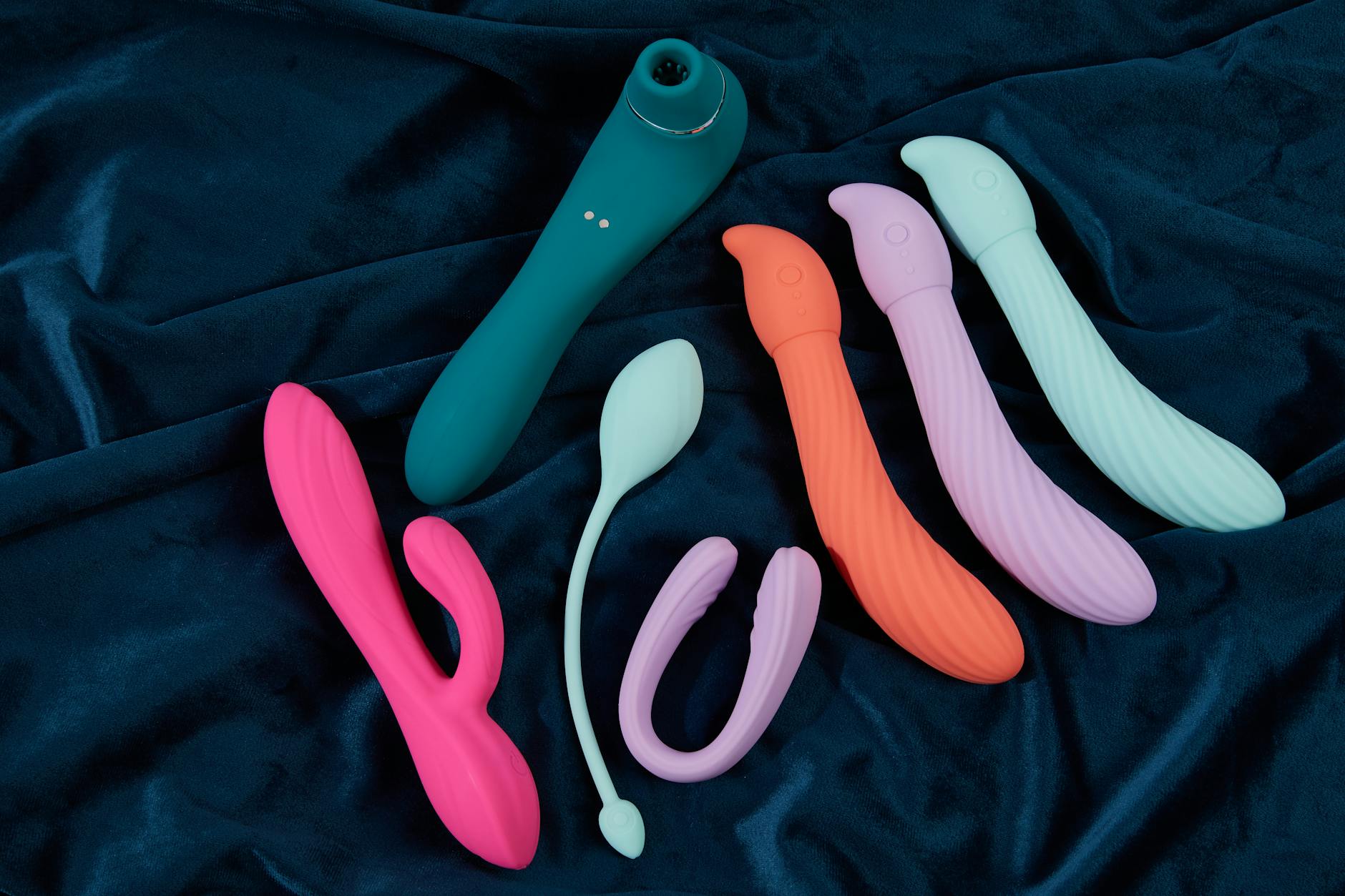
Clitoral tissue doesn't disappear or atrophy. The nerves don't vanish. What changes is blood flow lag time (arousal builds slower), natural lubrication production (which is why lube becomes your friend, not a sign of failure), and how pressure and sensation map onto that tissue. The clitoral suction technology in devices like the Lem responds to this recalibration beautifully because suction stimulates without requiring the kind of sustained friction that can feel overstimulating on more sensitive tissue.
Many of my clients in their 50s and 60s report that their most intense orgasms happened in the decade after major midlife shifts. This isn't poetic nonsense. It's neurology.
Why midlife transitions specifically shift pleasure dynamics
It's not just hormones. Life architecture changes too.
By midlife, you've usually shed some of the cognitive load that consumed your 30s. Career ambition settles into something sustainable. Kids launch or at least stop demanding 24/7 executive function. The mental bandwidth that went to proving yourself, building security, or managing someone else's needs becomes available.
That freed-up bandwidth matters more for pleasure than you'd think. Arousal requires mental space. Orgasm requires presence. If your nervous system is running on fumes managing logistics, neither happens well.
Second, cultural permission shifts. The pressure to perform femininity, to stay young, to be available and enthusiastic on someone else's timeline all soften. Not completely. But enough that many people find themselves, for the first time, exploring their own sensations rather than calibrating everything around a partner's response.
Third, relationship patterns have usually revealed themselves. You've had time to figure out whether you're in a partnership that supports your pleasure or one that doesn't. That clarity is uncomfortable sometimes, but it's actionable.
How lemon clitoral vibrators fit into this rediscovery
I mention lemon vibrators specifically because the suction technology maps onto midlife physiology in practical ways.
Traditional vibrators work through direct oscillation. They're wonderful, but they require that your tissue tolerance for prolonged friction remains high. For some people in midlife, that tolerance shifts. The tissue becomes more sensitive. Direct vibration can feel sharp rather than satisfying.
Lemon suction devices work differently. They create a gentle pressure wave rather than a shake. That stimulates the same nerve clusters but through a different mechanical pathway. The result is that many people who find traditional vibration uncomfortable post-transition find lemon suction accessible and often more satisfying.
It's not a magic fix. But it's a tool that responds to how your body actually is right now, not how it was.
The mental permission piece matters more than the tools
Here's the thing that doesn't get enough airtime: most of the pleasure loss my clients report in midlife isn't physiological. It's psychological.
A woman in her late 40s told me recently that she'd assumed her desire had vanished. Turned out her partner had made several comments about her body over the years, and she'd internalized them as reason to stop trying. Not consciously. She just noticed she was less interested, less present, less willing to ask for what felt good.
A man in his early 50s assumed his slowness to arousal was inevitable aging. In reality, his job had become consuming and stressful. His nervous system was so stuck in sympathetic activation that parasympathetic arousal became difficult. His body hadn't failed. His life structure had.
Both of them needed tool support (lube, devices, time), but they also needed permission. Permission to ask for what they wanted. Permission to say what wasn't working. Permission to explore their own pleasure independent of a partner's response.
That permission is the real shift.
The adjustment toolkit that actually works
Four concrete things I suggest to clients navigating midlife pleasure rediscovery.
First: lubrication becomes non-negotiable. Not because you're broken. Because the tissue producing natural lubrication shifts production, and external lubrication makes everything more comfortable. Water-based is standard. Silicone-based feels richer but damages silicone toys.
Second: slow down the foreplay timeline. Arousal takes longer to build in midlife. Budget 20-30 minutes instead of 10. This isn't a loss. This is an invitation to actually inhabit your sensations rather than rushing through them.
Third: experiment with suction-based stimulation. If you've always used traditional vibrators, lemon clitoral vibrators offer a different sensation map. Start at the lowest setting. Let your body tell you what feels good.
Fourth: separate pleasure from performance. Stop tracking whether you're coming fast enough or intensely enough. Track whether you're present, whether you're enjoying the sensations, whether you're asking for what you want. Those metrics matter infinitely more than the outcome.
The relationship conversation nobody has
If you're navigating midlife transition within a long-term partnership, the most valuable thing you can do is have an explicit conversation about this. Not a therapy-speak conversation. A real one.
"My body is responding differently." That's a statement about physiology.
"I want to explore what feels good right now." That's about rediscovery.
"I need more time to get aroused." That's about realistic timelines.
"I want to try new tools." That's about problem-solving together.
Conflating these conversations leads nowhere. Treating them as separate topics, each with its own solutions, usually opens doors.
When to check in with a professional
If pain shows up during arousal or sex, stop assuming it's normal. Genitourinary syndrome of midlife transition is real and highly treatable, often with topical therapies that have minimal systemic effects.
If desire has completely flatlined and isn't responsive to the environmental and relational shifts you've made, hormone therapy is worth discussing with a practitioner trained in midlife medicine. It's not for everyone, but for some people it's transformative.
If you're navigating this alone after a relationship ended, or with a partner who isn't on board with exploration, a sex-positive therapist or a relationship coach can help you sort through what's about physiology, what's about the relationship, and what's about unprocessed grief or anger from your 30s.
Midlife transitions are not an ending. They're a plot twist. The sensations you're capable of, the kinds of pleasure you can access, the permission you can give yourself to explore are often bigger than they were before. You just need tools that match where you are now and the willingness to find out what that feels like.
FAQ: Your midlife pleasure questions answered
Does lemon vibrator suction really work better than regular vibration in midlife?
It works differently, not necessarily better. Suction stimulates through pressure rather than oscillation, which some people find more comfortable if their tissue sensitivity has shifted. Try it if traditional vibration feels sharp or overstimulating. If vibration still feels great, you don't need to change.
Is it normal for arousal to take longer during midlife?
Completely normal. Blood flow patterns shift. Nervous system activation takes longer to build. This isn't failure. It's just a different timeline. Most people find that extending foreplay makes the experience richer rather than frustrating.
Can I use the same lemon clitoral vibrator if my body changed significantly?
Yes. The device itself doesn't change. What changes is how you use it. Start at lower settings. Use more lubrication. Take longer warm-up time. Your body is the same tool, just responding to a different set of inputs.
What if my partner doesn't want to adjust to these changes?
That's a relationship conversation, not a pleasure problem. You can't negotiate your physiology. You can negotiate whether your partnership has room for that physiology. A relationship coach or sex-positive therapist can help with that conversation.
Is it true that hormonal changes kill desire permanently?
No. Desire shifts, recalibrates, and often becomes more accessible once you stop fighting the changes and start working with them. Some people report stronger desire post-transition because the neurotic thought patterns that blocked it have cleared.
How do I know if what I'm experiencing is normal or something that needs treatment?
Normal: longer arousal time, need for more lubrication, different sensation preferences, changes in orgasm intensity or location. Needs attention: pain, complete loss of sensation, loss of clitoral feeling. Talk to a midlife-trained healthcare provider if you're unsure.