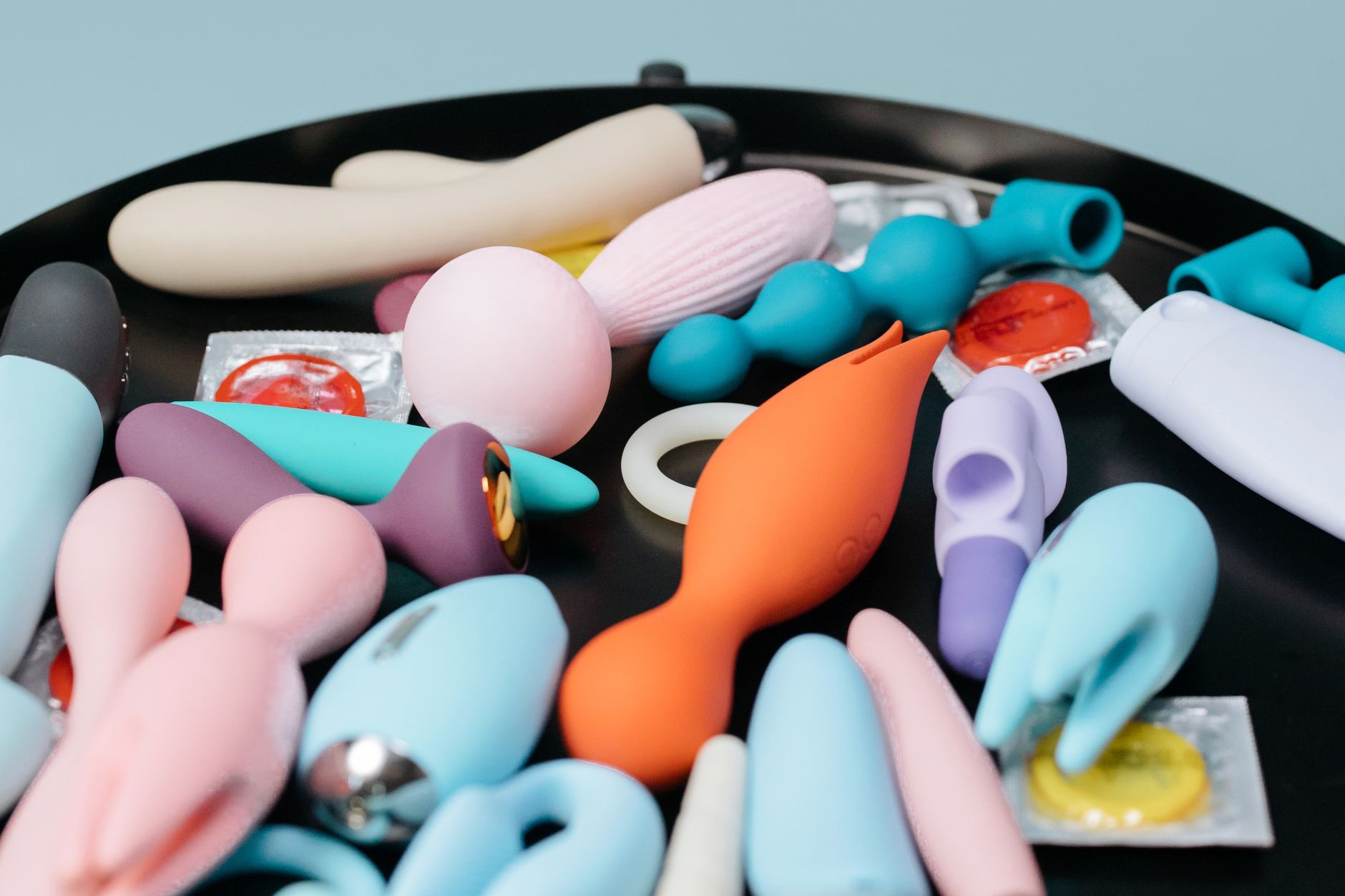
Let's be real about medication and pleasure
You started an antidepressant. Your mood lifted. Then you picked up your lemon clitoral vibrator and thought, "That's not right." The suction feels muted. Orgasms take longer or feel shallower. Maybe you're not even getting the urge to touch yourself at all.
This is not in your head. This is your medication doing exactly what it does.
SSRIs (selective serotonin reuptake inhibitors) like sertraline, paroxetine, and fluoxetine work by keeping serotonin in your brain longer. That's great for mood stability. It's less great for sexual sensation. Between 40 and 60 percent of people on SSRIs report some sexual side effect. Most of us just don't talk about it, so you end up feeling like you're the only one, when really you're in the majority.
Here's what's happening, why it matters, and what actually helps.
How antidepressants change what pleasure feels like
Serotonin doesn't just regulate mood. It also dampens arousal signals in your nervous system. Higher serotonin means calmer, more stable. It also means your body takes longer to register "let's have sex" and slower to build toward orgasm.
Think of it like turning down a volume dial. The music is still playing. You can still hear it. It's just quieter.
SSRIs also reduce genital blood flow slightly, which changes how engorged tissue gets during arousal. Your clitoris might feel less responsive to touch or suction. Some people notice their lemon vibrator's stimulation feels farther away somehow, even though the sensation hasn't moved.
And dopamine, which drives desire and reward, gets affected too. The combination is: less urge, slower arousal, less intense sensation, longer to orgasm, sometimes no orgasm at all. Your body is still capable. Your brain is just less interested in signaling that it's time.
This usually stabilizes after 4 to 8 weeks, but it can linger or become your new baseline. It depends on the medication, the dose, and how your individual neurology responds.
Why your lemon vibrator intensity changed specifically
A lemon clitoral vibrator works by creating suction and rhythm on sensitive tissue. That sensitivity depends on blood flow, nerve responsiveness, and your brain's ability to register and amplify sensation.
When you're on an SSRI, all three of those things change. Your clitoris has less blood flow, so it's less engorged. Your nervous system is calmer and less reactive to stimulation. And your brain isn't broadcasting "this feels good" with as much urgency.
Result: your lemon vibrator still works. It just feels gentler, almost as if someone turned down the intensity setting. You might find yourself reaching for higher settings on your device, which can feel frustrating if you loved the lower settings before.
Some people find that starting lower and going slowly helps. Others find that longer warm-up time makes the difference. And some discover that the dampening effect means they can now enjoy sensations they used to find too intense. There's sometimes a hidden gift in the shift.
The pieces that matter for recovery
First, tell your doctor. Most clinicians know this is a thing and have strategies. You don't need to keep silent about it.
Timing your doses matters. If you take your SSRI at night, you might feel more sensation in the morning or early afternoon, before the medication peaks in your system. Experimenting with this takes patience, but it works for some people.
Lubrication becomes essential. With slightly reduced blood flow and sensitivity, the glide that lube creates becomes noticeable in a good way. Water-based lube is safe with silicone toys like the lemon vibrator. Use generously.
Longer warm-up is not a downgrade. Budget 20 to 30 minutes for arousal instead of your old timeline. This is not "taking longer to finish." This is building arousal with intention. You might find deeper sensation this way.
Lower intensity first, then build. Start your lemon vibrator at setting 2 or 3 instead of your favorite setting. Let sensation accumulate. The urge to climax sometimes arrives slowly on SSRIs, but it does arrive.
Pelvic floor relaxation helps more than you'd expect. When sensation feels muted, tightening your pelvic floor trying to squeeze out more sensation backfires. The opposite works: breathe deeply, relax that area, let sensation move through instead of chasing it.

Photo by Vanessa Loring on Pexels
When to talk to your prescriber about switching
Not every antidepressant has the same sexual side effects. Some are worse than others. Fluoxetine (Prozac) and sertraline (Zoloft) tend to have more sexual effects. Bupropion (Wellbutrin) actually increases dopamine and often has fewer sexual side effects, if your depression responds to it.
If you've been on your current medication for 8 to 12 weeks and pleasure still feels muted, ask your doctor about:
- Switching to a medication with fewer sexual side effects
- Adding a booster medication that counteracts the dampening (like buspirone or bupropion)
- Adjusting your dose slightly to find a sweet spot between mood stability and sensation
- Timing your dose differently if possible
Don't just stop taking your medication. That's how you get relapse and rebound depression. Work with your doctor to find the option that keeps your mental health stable while restoring your pleasure.
The partners conversation
If you're with a partner, this is worth naming directly. "My medication is affecting sensation, so I might need more time or a different approach right now." This is not "I'm less attracted to you." This is neurology. Partners often interpret quieter arousal as lack of interest, which creates a second problem on top of the first one.
Clarity helps. "I'm still interested. My body is just slower to respond. This helps me." And then you both know you're working with medication, not relationship trouble.
Solo play is worth exploring too. With no performance pressure, you can focus on what actually works for you right now. Your lemon vibrator isn't going anywhere. This is just a different chapter of how you use it.
The timeline and what to expect
Most people report that initial sexual side effects improve after the first month. Some resolve completely by month three. Others find that the effects ease but don't fully disappear. A smaller group finds that the effects are permanent with their particular medication.
Your pleasure is not broken. Your arousal is not gone. Your lemon clitoral vibrator still works. Your nervous system has just shifted into a different gear. You're learning how to drive with this new configuration, and that learning curve is temporary.
Meanwhile, your mental health is more stable. That matters. That's worth the adjustment period. And the adjustment period does end, or at least becomes workable.
People also ask
Can I get my sensation back while staying on SSRIs?
Yes, usually. Time helps most (4 to 8 weeks). Adding strategies like longer warm-up, better lube, and pelvic floor relaxation helps faster. Some people find that a dose adjustment or timing shift makes the difference. If nothing works after 12 weeks, talk to your doctor about switching medications. Other options exist.
Does this happen with all antidepressants?
No. Bupropion (Wellbutrin) and mirtazapine (Remeron) tend to have fewer sexual side effects. SNRIs like venlafaxine (Effexor) sometimes have fewer effects than SSRIs. Tricyclic antidepressants also vary. The key is telling your doctor this matters to you so they can pick accordingly if you're starting fresh, or switch if you're struggling now.
Will my lemon vibrator feel normal again when I stop the medication?
Most people report that sensation returns within 1 to 4 weeks after stopping an SSRI. But stopping antidepressants suddenly can trigger relapse and withdrawal symptoms. Never stop on your own. Work with your doctor on a tapering schedule if you decide to discontinue.
Does lubrication actually make a difference if the problem is neurological?
Yes. Even though the dampening is happening in your nervous system, reduced genital blood flow is part of the mechanism. Lube compensates for that and also reduces friction that might otherwise feel uncomfortable. Using a good water-based lube is the easiest first change to make.
Is my libido coming back or is this just the medication wearing off?
Both are possible. SSRIs often suppress libido directly in the first weeks. Some of that suppression is the medication stabilizing your mood (which can feel like flattening if you're used to cycling). Some is the serotonin dampening arousal signals. As your body adjusts and you find strategies that work, libido usually returns. If it doesn't improve after 3 months, that's worth discussing with your doctor.
Should I take a medication break before sex to feel more sensation?
Don't do this without talking to your doctor first. The medication works best when it's consistent. Skipping doses can trigger rebound symptoms. If timing your dose helps, your doctor might be able to adjust when you take it. Work with them, not around them.
The last thing
Your mental health matters. Your pleasure also matters. You don't have to choose. The adjustment you're going through is real and temporary. You have concrete options. Use them. Your lemon vibrator isn't going anywhere.