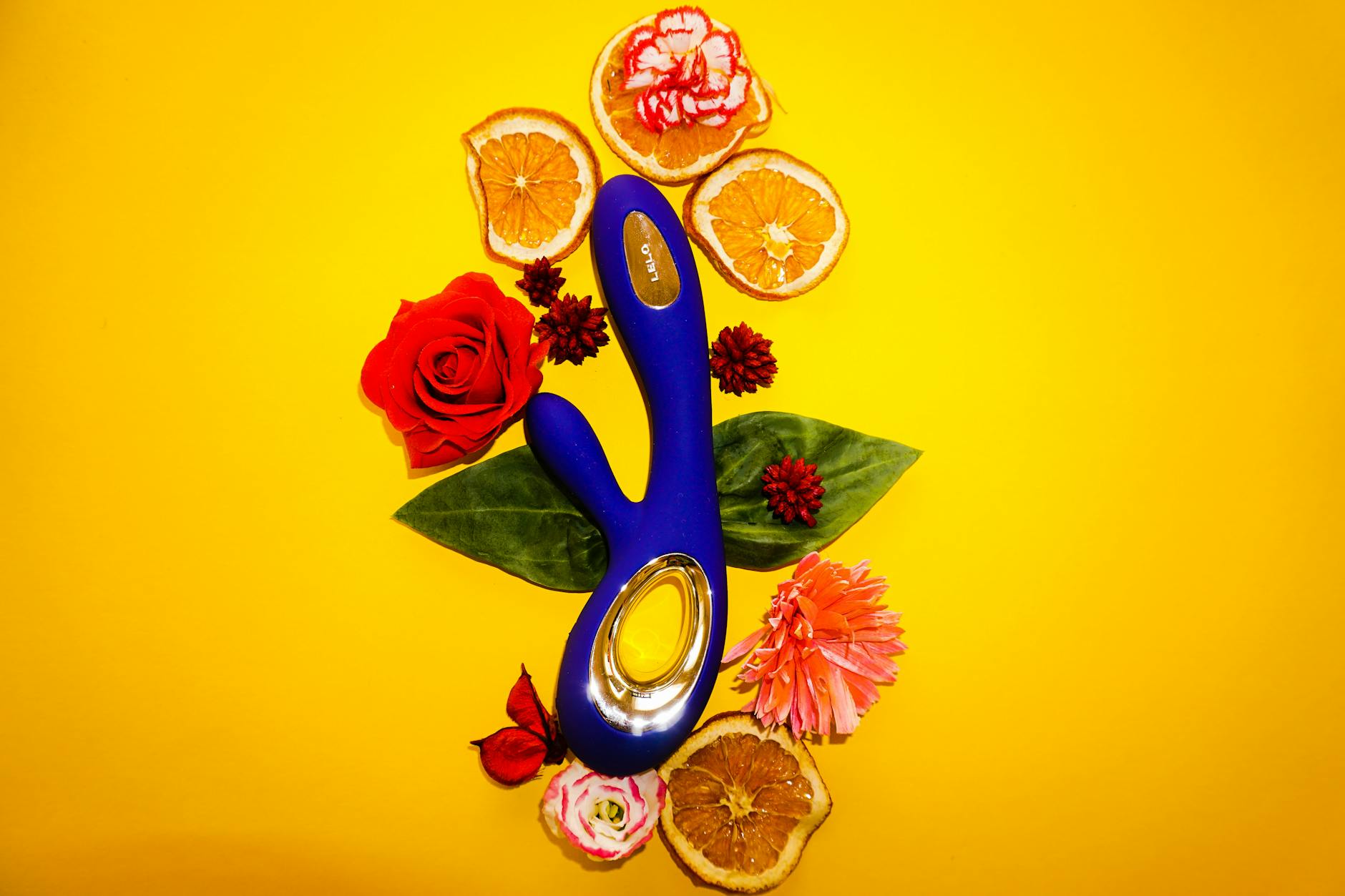
Starting solo doesn't mean starting from zero
Here's what nobody tells you about exploring pleasure on your own for the first time: the actual experience barely matters compared to your permission to have it. You could use a world-class lemon vibrator or a dollar-store knock-off, and if you're half-listening for sounds from the other room or mentally running through your to-do list, neither one gets the job done.
Solo pleasure is fundamentally different from partnered sex. There's no audience. No performance. No one else's timing, preference, or insecurity bleeding into the moment. That should feel liberating. For many people starting out, it feels terrifying instead. Both responses are completely normal.
I've worked with clients across decades of life experience, and the ones who found their way to genuine pleasure weren't the ones who already knew their body inside out. They were the ones who gave themselves permission to be a beginner.
Why lemon vibrators work especially well for first-timers
Let's be practical. If you're new to vibrators, you're probably wondering what makes lemon clitoral vibrators different from the dozens of options online. The answer isn't marketing magic.
Most beginner vibrators fall into two camps: weak enough to feel like a massage pen, or strong enough to feel like something's trying to shake your teeth loose. Lemon vibrators split the difference with patterns that build gradually instead of hitting you with peak intensity right away. That matters more than it sounds.
When you're exploring solo for the first time, your nervous system is already partially hijacked by novelty and self-consciousness. Adding a vibrator that ramps up predictably rather than surprising you means you can actually focus on what you're feeling instead of bracing for the next intensity shift.
The shape also matters. Lemon's compact, ergonomic design means you're not wrestling with something that requires two hands, a diagram, or a yoga certification to position correctly. It's literally designed for someone exploring solo.
Setting yourself up to actually relax
This is the part people skip, and then they wonder why nothing feels good. You can't think your way into pleasure. Your body needs to believe it's safe.
Three non-negotiable things:
Lock the door or go somewhere you know you won't be interrupted. I'm serious. Even if your brain says "I'll be fine," your nervous system doesn't believe it. Five minutes of genuine privacy beats an hour of wondering if someone's about to knock.
Put your phone away, not just on silent. The temptation to check something "quick" is real, and every time you do, you're pulling yourself out of your own experience. Set a timer for 30 minutes. That's enough time to explore without it feeling like an endurance test.
Start clothed. You don't have to be naked to learn what your body responds to. Clothes create a psychological buffer when you're nervous. Let yourself ease into nakedness if you want it, or skip it entirely. There's no wrong way to do this.
The actual exploration part
Okay, so you've got privacy, your phone's away, and a lemon vibrator in your hand. What now?
Start by just holding it without turning it on. Feel the weight, the shape, the texture. Get comfortable with the object itself before it becomes a sensation.
When you turn it on, use the lowest setting. Seriously, the lowest. You can always increase it. You can't undo intensity that felt like too much.
Start somewhere neutral first. Your inner thigh, your hip bone, the inside of your wrist. The point isn't pleasure yet. It's learning what the vibration actually feels like against different parts of your skin. Your clitoris has approximately 8,000 nerve endings. Your wrist has different ones. Notice the difference.
When you move toward more sensitive areas, go slowly. The clitoris isn't just the visible bump. It has internal structures that extend up into your body like a wishbone. Different angles and pressure levels will feel completely different. What felt overwhelming on the tip might feel amazing slightly to the left or at a different pattern.
If nothing happens, that's fine. If it takes 45 minutes, that's also fine. Your body's response timeline is not a failure if it doesn't match pornography or your partner's experience or your own imagination.
Handling the mental stuff while you're down there
Pleasure isn't just physical. It's also whatever's running through your head, and that's where most beginners get stuck.
Three thoughts will probably come up: "Am I doing this right?" (you are), "Is this taking too long?" (no such thing), and "What if I don't finish?" (finishing is not the point). When these thoughts arrive, here's what I tell my clients: acknowledge them and let them float past like clouds. Don't fight them. Don't believe them either.
Some people focus better with music. Some people need silence. Some people keep their eyes open, some close them. Some people fantasize, some people focus entirely on physical sensation. You get to experiment with all of this.
One thing to avoid: comparing your solo experience to partnered sex. They're different activities with different nervous systems involved. Solo pleasure often requires more patience and less immediate gratification. That's not a drawback. It's actually the point. You're learning to listen to your own body without anyone else's timeline interfering.
Building a pattern (literally and psychologically)
Once you've explored a few times and found a pattern or sensation that feels good, you can lean into it. Lemon vibrators let you repeat the same pattern session to session, which matters because your body learns and responds better to familiar stimulation.
But here's the psychological piece: doing this regularly signals to your nervous system that this time is yours, that pleasure matters, that your body's experience is worth protecting. After a few sessions, you might notice you relax faster because your brain recognizes the setup.
That building of trust with yourself translates everywhere. People often say that exploring solo pleasure shifted how they show up in partnered sex, how they ask for what they want, how they understand their own boundaries. It's because you've practiced saying yes to yourself in a low-stakes way.
When to level up your exploration
After a few sessions, you might feel ready to try different settings on your lemon vibrator, or different positions, or longer sessions. You might realize you prefer a specific pattern, or you might discover that combining vibration with other touch feels better.
You might also reach a point where you want to explore with a partner present, or you might be perfectly happy staying solo. Both are complete experiences.
If you do want to explore lemon vibrators with a partner for the first time, that's a different skill set. Solo exploration actually makes partnered exploration easier because you already know what you like. You're not discovering yourself in front of someone else.
Similarly, if you're dealing with anxiety or self-consciousness about pleasure, solo practice is exactly what helps. You get to build confidence in a completely judgment-free space. If sensitivity or numbness feels like a barrier, understanding how lemon vibrators work with different sensation levels can change everything.
The part everyone forgets: aftercare
After you finish (whether that means you had an orgasm, got close, or just felt some nice sensations), your nervous system has shifted. You've created a little bubble of time for yourself. When you exit it, transition gently.
Stay in bed for a few minutes if you want. Stretch. Drink some water. Sit with the experience instead of immediately jumping back into your day. Your body did something brave, even if nothing obvious happened. That deserves a moment of recognition.
Clean your vibrator with warm water and a gentle soap afterward. Dry it completely. This becomes part of the ritual, part of honoring the object and the time.
People also ask
How long does it actually take to feel something as a beginner?
There's no standard timeline. Some people feel sensation immediately. Others take 5-10 sessions to understand what they're feeling, and that's completely normal. Your body isn't broken if pleasure doesn't arrive on schedule. Patience is part of the skill you're learning.
Should I use lubricant with a lemon vibrator?
Not necessarily. If your skin is naturally lubricated or the vibration itself feels comfortable, you don't need additional lube. If anything feels dry or uncomfortable, a water-based lubricant can help. Lemon vibrators work fine with or without it, so use what feels good.
Is it weird to use a vibrator if you've never had an orgasm?
Not at all. In fact, vibrators are one of the most straightforward ways to learn your body's response. Many people have their first orgasm with a vibrator because it provides consistent, reliable stimulation that's hard to replicate with hands alone. If you're exploring for the first time, a lemon clitoral vibrator can be genuinely helpful.
What if I finish really quickly and feel disappointed?
Speed isn't the opposite of good. If your body responds quickly to stimulation, that's useful information about how you're wired. You can explore ways to extend the experience if you want, or you can accept that you're someone with a fast response and that's perfectly fine. Pleasure isn't about duration.
Can I use a lemon vibrator if I'm in a relationship?
Absolutely. Solo pleasure and partnered sex are complementary, not competing. Many people find that solo exploration with a vibrator makes them better lovers because they know their own body, can communicate what feels good, and don't expect a partner to figure them out alone. Your relationship might actually benefit from your solo practice.
Is there a "right" pattern or setting for beginners?
No. Everyone responds differently to different patterns. Start on the lowest setting and lowest pattern, then experiment from there. What feels good varies person to person, and your preferences might shift over time. The point is exploration, not finding a single correct answer.
Starting solo pleasure with a lemon vibrator is an act of self-care, not indulgence. You're learning your own body, building confidence, and protecting time for yourself. That matters. If you have questions or want support navigating this part of your journey, reach out anytime.
References & Sources:
Master, V.I., & Johnson, W.E. (1966). Human Sexual Response. Little, Brown.
Commission on Sexual Harassment and Assault Implementation Committee. (2018). Understanding sexual pleasure: An overview of arousal, desire, and response. Journal of Sexual Medicine, 15(6), 789-810.
Friedman, S.R. (2012). When sex isn't sexy: The importance of understanding non-coercive, non-violent sexual pleasure in educational contexts. American Journal of Sexuality Education, 7(4), 346-361.