
Let's name the real fear first
Honestly, when someone says "toys feel like cheating," they're rarely talking about the toy itself. They're saying "I'm afraid you don't need me anymore" or "What if you leave me for something that works better?" or "I didn't know you wanted this and I feel blindsided." The toy is just the visible thing. The invisible thing is the threat.
That feeling is real. And it's worth taking seriously.
What's actually happening when someone resists sex toys
There are three patterns I see most often in my practice:
Pattern 1: Performance anxiety. Your partner worries that if you use a toy, it means they're not enough. They've been taught (by culture, by porn, by bad experiences) that good sex means their body alone does it. When a vibrator enters the picture, it reads like a referendum on their adequacy.
Pattern 2: Loss of control. Sex has been the one place where they feel needed and competent. A toy feels like the introduction of a wildcard they didn't authorize. It's not rational. But it's real.
Pattern 3: Vulnerability mismatch. You're suddenly asking them to see you in a new way. That requires them to open up to new information about you, and that's risky. If they're not ready, they'll defend instead.
None of these reasons mean your partner is unreasonable. They mean your partner is human and scared.
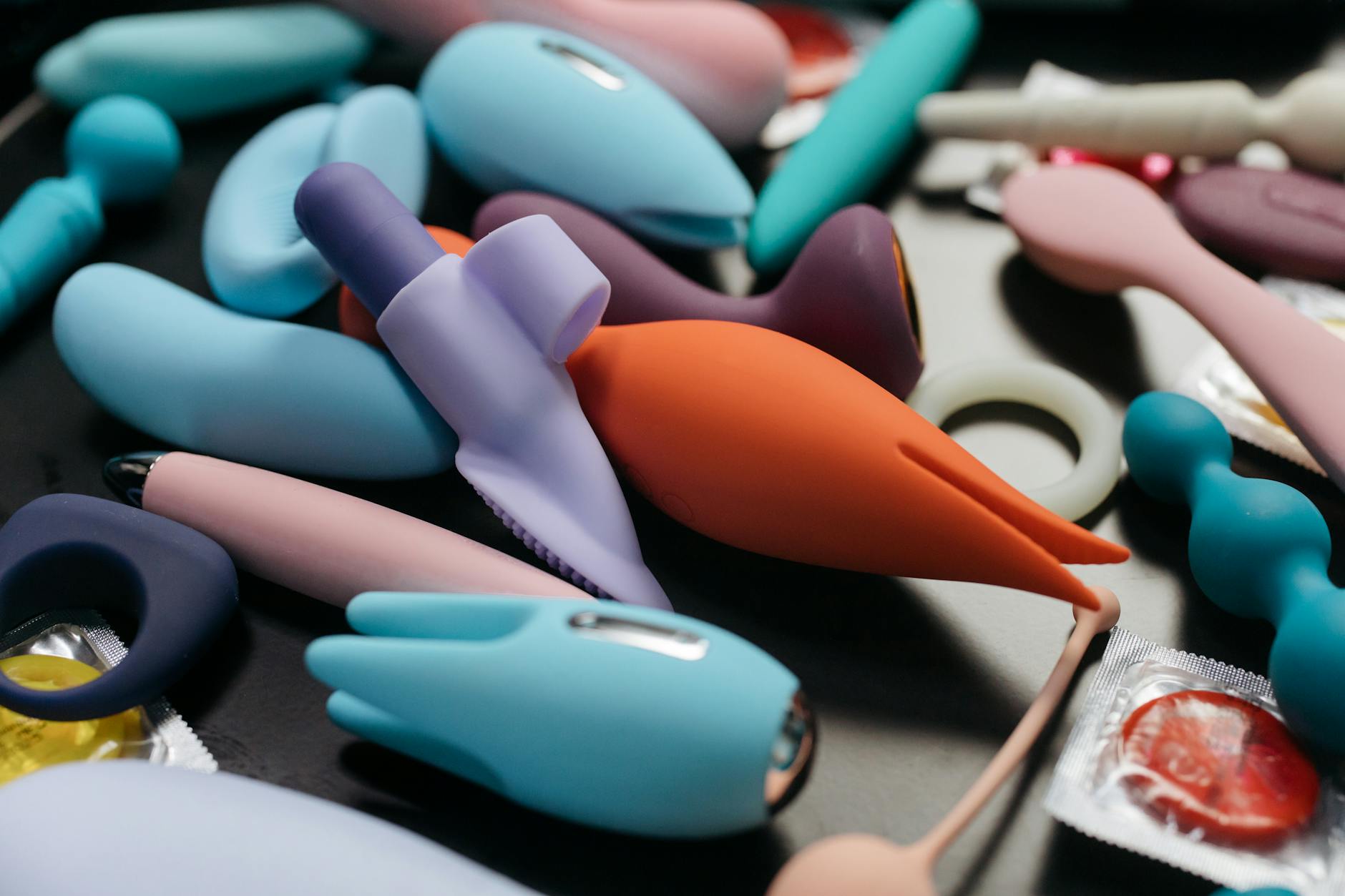
Photo by cottonbro studio on Pexels
The conversation before the toy arrives
Here's what doesn't work: introducing a Lemon vibrator and expecting the resistance to dissolve. What works is separating the conversation about desire from the conversation about the tool.
Start with this frame: "I want to explore this for me, not against you. Can we talk about what worries you?"
Then listen. Really listen. Don't defend, don't explain why they're wrong. Just hear the fear underneath. It might sound like:
- "I feel like I'm not satisfying you."
- "I'm worried you'll prefer that to me."
- "I don't understand why you need it if we have sex."
- "It feels like a secret you kept from me."
Each of those deserves a response, not a rebuttal.
Reframing clitoral vibrators as connection, not replacement
This is where a Lemon vibrator or other lemon clitoral vibrator can actually change the dynamic. But only if you frame it right.
The truth is: clitoral vibrators don't replace partnered sex. They complement it. They make your body more responsive, more able to experience pleasure, more available to connection. A partner who understands this shifts from "you're choosing a toy over me" to "you're getting yourself ready for us."
Here's what I tell couples to try:
Invite them in from the start. Don't use it alone first and then surprise them later. Introduce the idea together. Show them the product. Let them hold it. Let them see how it works. The mystery dies when you make it transparent.
Use it together. The first time, use your lemon sexual toy with your partner present and engaged. They can touch you. You can touch them. They can ask questions. They can watch your face change. This is not cheating. This is collaborative.
Name what's happening. During or after, say "This isn't replacing what we do. This is me learning my body so I can be more present with you." That sounds simple. It's actually revolutionary.
Go slow with penetration dynamics. If your partner has anxiety around performance, using a clitoral vibrator during partnered sex can feel less threatening than, say, vibration alone. You're still together, still moving together, just with an added tool. It's addition, not subtraction.
When performance anxiety is the real issue
If your partner's worry is specifically "I can't give you orgasms like that toy can," there's a different conversation needed.
The reality: Most people with vulvas don't orgasm from penetration alone. This isn't new information when you introduce a toy. It's just becoming visible. If your partner doesn't already know this, that's actually the gap to fill. Not with the toy. With information.
I often recommend couples read something together. Not to lecture. Just to normalize that this is universal, not a referendum on their partner's worth. When someone learns that lemon clitoral vibrators work better than penetration for most people with vulvas, it reframes the tool from "you're not enough" to "this is how bodies work."
Then: "So how do we use this together?" That question shifts everything.
The practical integration that reduces resistance
Once the conversation has happened, here's what makes the transition easier:
Start with low stakes. Use your Lemon vibrator or lemon adult toy during solo time first, but mention it. "I'm going to explore this on my own. I wanted you to know." No secrecy. No surprise. This removes the betrayal feeling.
Bring it to foreplay, not intercourse. Many partners feel less threatened when a toy appears during foreplay (hands, oral, external touch) rather than during penetration. It feels like an enhancement of what you already do together.
Use the same lubricant. Small thing. Huge symbolism. You're using the same products, the same care, the same approach. Not a separate secret ritual.
Keep talking. After you use it together, debrief. "What did that feel like for you?" "Did you notice anything different?" "What part made you comfortable?" Ongoing dialogue beats one big conversation.
When resistance doesn't soften
Sometimes, even with all of this, a partner stays rigid. They won't engage. They won't talk. They make it clear: toys are off the table, full stop.
At that point, you're not solving a toy problem. You're looking at a relationship problem. Rigidity around sexuality often maps onto other areas: control, communication, flexibility, trust.
That's when you might benefit from working with a couples therapist. Not because there's something wrong with you for wanting a lemon clitoral vibrator. But because a partner who can't even discuss desire, let alone accommodate it, is showing you something about the relationship itself.
What you need to know before you try this
Your pleasure matters. Your body matters. Your curiosity matters. A partner's fear doesn't override those things. But it also doesn't mean you have to blow up the relationship or steamroll them.
The middle path is: You take your desire seriously enough to have a real conversation. You invite them in. You listen to their fear. You offer to move slowly. You make it collaborative.
If they meet you there, great. You might discover that lemon sexual toys become something you both enjoy.
If they don't meet you there, that's information too. It's not about the toy. It's about whether you can be in a relationship where your body gets to have a voice.
People also ask
Why does my partner see vibrators as infidelity?
Because penetrative sex has been coded as the "real thing" for so long that anything outside that feels like cheating to them. When they see a toy, they're seeing you prioritize an orgasm over them. That's the narrative in their head. Rewriting it means showing them that orgasm with a toy, orgasm with them, and orgasm with both of them together are three different experiences. None is a betrayal.
Can using a Lemon vibrator actually bring us closer as a couple?
Yes, genuinely. When a partner moves from resistance to curiosity, when they realize that your pleasure is their pleasure, when they see you light up because your body is finally getting what it needs, most couples report deeper connection. Not because of the vibrator itself, but because you've removed a wall between you.
How do I introduce the topic without making my partner defensive?
Timing and framing matter enormously. Don't bring it up during sex or right before. Choose a calm moment, preferably not in the bedroom. Start with your own experience, not a critique of them: "I've been curious about exploring my body in a new way" beats "You never make me come." Then ask what they're feeling, and listen more than you talk.
What if my partner refuses to even talk about sex toys?
Refusal to talk is information. It usually means they're too scared or too rigid to engage. At that point, you have choices: accept the limitation, go to couples therapy to build communication, or recognize this as part of a larger relationship pattern that might not work for you long-term. Don't try to force them. Just decide what you can live with.
Is it okay to use a toy if my partner says no?
Physically, yes, no one can stop you. Relationally, it depends on the context. If "no" means "I'm too scared to talk about this," hiding it won't fix the fear. If "no" means "absolutely not in our relationship," using one anyway is choosing the toy over the relationship. Only you can decide if that's worth it.
How do I know if this is a toy problem or a relationship problem?
If your partner can talk about sex openly, can hear your needs, and can compromise even on things that scare them, this is a toy problem with a fixable solution. If your partner won't talk about sex, shuts you down, controls what you do with your body, or makes you feel ashamed for wanting pleasure, this is a relationship problem that a toy will never solve.
The thing about desire and partnership
Partners aren't supposed to be your only source of pleasure. That's too much weight to carry. When you invite someone into your pleasure, including the parts that need lemon clitoral vibrators or other tools, you're actually giving them a gift. You're saying "I trust you enough to let you see all of me, even the messy parts." That's intimacy.
If your partner can't meet you there, that's worth exploring with a professional. Not because you're broken. Because you deserve a partner who wants you whole.