Let's start with the hard truth
Introducing a toy into a relationship you're trying to reconnect with isn't the same as introducing one when you're already solid. One is a genuine tool for deeper pleasure. The other is a band-aid on a bleeding wound.
I say this as someone who works with couples regularly: the moment you think "maybe a vibrator will fix this," that's actually a sign you need to have a conversation first. Not because toys are bad or shameful. But because they only amplify what's already there. If what's there is distance, a Lemon Massagers clitoral vibrator won't close the gap. It'll just make the distance feel more awkward.
That said, if you're already emotionally connected and want to deepen physical pleasure together, vibrators can be transformative. The difference matters.
The difference between using toys to avoid talking and using them to expand intimacy
Three signs you're using a toy as avoidance:
You haven't actually said what you want. Instead of saying "I miss being touched," you're hoping the toy will do the talking for you. It won't.
You're introducing it to spark something that died. Excitement, novelty, desire. These aren't band-aids. If those things left, they left because of something deeper. A clitoral vibrator won't resurrect them.
You're shopping for it alone, at midnight, without telling your partner. This one's diagnostic. If you're hiding it, some part of you knows it's not a shared decision yet.
Now. Three signs you're ready to use toys together as a real intimacy tool:
You've already had the conversation about what you both want from your sex life. You know what your partner craves. They know what you crave. You've talked about pleasure as something you both deserve, not something you're doing for each other.
You've also touched on the harder stuff. Where you feel disconnected. What you miss about early intimacy. What scared you apart. Not solved it, necessarily. Just named it.
You're introducing the toy together, in daylight, as an experiment you're both curious about. Not as a fix. As an expansion.
The conversation architecture that actually works
Don't ambush your partner with "I bought us a vibrator." Don't frame it as "our pleasure" when you really mean "your orgasm." And don't position it as evidence that something's wrong with the sex you're already having.
Instead, anchor it in curiosity about them.
"I've been thinking about what makes you feel good. And I realized I don't actually know if you like a lot of direct stimulation or prefer something softer. I found this thing, and it got me wondering. Want to figure it out together?"
Or: "I've noticed we've both been stressed. When we do have time together, it's quick. I miss the intimacy. I'm wondering if we could try something new that might help us slow down and focus on each other."
The frame changes everything. You're not saying "fix our sex life." You're saying "I want to know you better. I want to explore what we both enjoy." That's a conversation a partner can actually say yes to.
How to actually introduce it, step by step
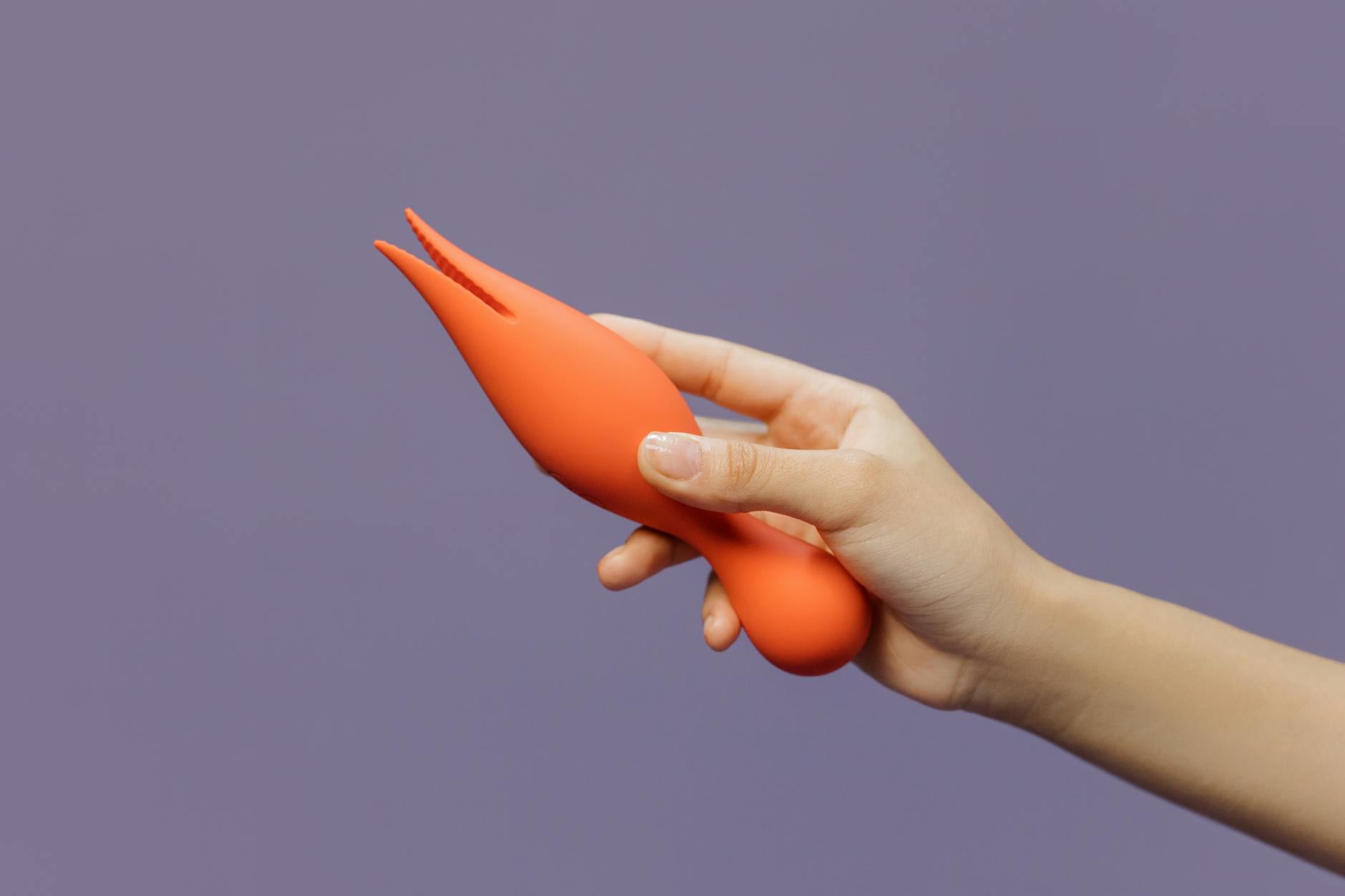
Start by showing them the device. Not in the bedroom at night. On the couch. In normal clothes. Say something like "I read about these. They work really differently from a traditional vibrator. This is what they do."
Let them hold it. Let them turn it on. Let them get bored with it. This removes the performance pressure. You're not asking them to be excited yet. You're just normalizing it as an object that exists.
Then say: "No pressure, but I'd be interested in trying this together sometime. When you're ready. If you want to."
Notice that I said "no pressure." And I meant it. If your partner isn't ready, that's information. Not rejection of you. Information that you might need to have a longer conversation about what's making them hesitant. Fear, past trauma, cultural conditioning, different timelines for vulnerability. All of that is worth addressing before a toy is going to help anything.
The actual mechanics when you do start exploring together
If you're using a lemon clitoral vibrator with a partner for the first time, you're not there to perform or reach some achievement. You're there to slow down and pay attention.
Start with you using it on yourself while they watch. This accomplishes three things. One, it shows them what pleasure actually looks like on your face. Two, it removes the pressure of them doing it "right." Three, it gives you time to get used to the sensation without worrying about their experience.
Then, if you're comfortable, invite them to try it on you. Keep talking. Not dirty talk. Real talking. "That feels good. Try lower. Slower." This creates a feedback loop that's not just physical. It's conversational intimacy.
Finally, if they want, you can explore it on them. But the goal isn't simultaneous pleasure or some performative version of "spicing things up." The goal is to learn how their body responds when they're actually relaxed.
Why clitoral stimulation specifically matters for reconnection
Here's something research keeps showing: clitoral pleasure is rarely about speed or intensity. It's about attention. The brain needs to register that someone is focused on your pleasure, not rushing through it.
When you're using a Lemon Massagers clitoral vibrator together, the slowness required actually creates space for intimacy. You can't multitask through it. You can't check your phone. You have to be present.
Suction-based stimulation, the way lemon vibrators work, is particularly good for this because it doesn't require constant repositioning or guesswork. Once you find the right spot and pattern, you both get to stay with it. That consistency is where real connection happens.
What to do if one of you gets uncomfortable
Discomfort mid-exploration doesn't mean you failed. It means you found an edge worth talking about.
Stop. Put the toy down. Ask what came up. Was it physical? Emotional? Did something hurt? Did it feel vulnerable in a way that wasn't okay? Did you feel watched in a way that triggered something?
The goal isn't to push through discomfort. The goal is to understand what your nervous system is telling you. That information is more valuable than any orgasm.
If your partner needs to stop, that's not a referendum on your desirability or your relationship. It's data. "I'm not ready for this yet" is a complete sentence. Respect it. Ask if they want to try again in a month. Ask what would help them feel safer. Then actually do that work.
The long game
Using lemon vibrators together isn't about having better sex once. It's about building a pattern where you both believe your pleasure matters. Where you know how to ask for what you want. Where you can be vulnerable and curious together without shame.
If you approach it that way, from the beginning, the actual pleasure is almost secondary. Though I'll tell you: couples who build this foundation often report that the intimacy improves dramatically. Not because the toy is magic. Because they finally started talking about what they actually wanted.
People also ask
How do I know if my partner will be receptive to using a vibrator together?
You ask. Not by buying one and surprising them. Not by hinting around it. You sit down and you say "I've been curious about introducing a vibrator into our sex life. How would you feel about exploring that?" Their response, whether it's yes or no or "I need to think about it," tells you what you need to know. If they're defensive or immediately dismissive, that's information that you might need to understand their blocks before introducing a toy. If they're curious or open, you have a partner who's ready to explore.
Can using a vibrator actually help a disconnected relationship, or is it just a temporary fix?
A vibrator is not a substitute for actual connection. It's a tool that can deepen connection if the foundation is already there. If you're using a lemon clitoral vibrator to avoid having hard conversations about distance, it will feel hollow. But if you've done the relational work and you're introducing it as a way to continue that exploration, it can be profound. Think of it like date night. Date night doesn't fix a broken marriage. But a couple already committed to each other who prioritizes date nights builds something stronger. Same logic.
What if I'm nervous about performance or doing it wrong?
There is no wrong way to explore pleasure together. The only mistake is to prioritize the outcome (the orgasm) over the process (the attention and presence). If you're using a lemon vibrator and you're nervous, say that out loud. "I want this to be good for you and I'm feeling a little nervous." That vulnerability often creates more intimacy than perfect technique ever could. Your partner wants to know you. Vulnerability lets them do that.
Should we use a vibrator on a partner or on ourselves while they watch?
Start with yourself. This removes the pressure of performance and lets your partner see what genuine pleasure looks like on your face. Then, if you're both interested, you can invite them to explore using it on you. The progression matters because it builds trust. You're not asking them to know your body perfectly right away. You're showing them what you enjoy, and then they get to practice with feedback. That's how real sexual skill develops.
How often should couples use a vibrator together if they're trying to rebuild connection?
Frequency isn't the point. Presence is. You could use a lemon vibrator together once a month and build profound intimacy if you're actually focused on each other. Or you could use one four times a week and it could feel obligatory and empty. The question isn't "how often" but "are we actually present together when we do this?" Start once and see how it feels. If it feels good and connected, let it happen naturally. Don't turn it into another performance metric.
What if my partner seems interested but then pulls away when we actually start?
That's not rejection. That's nervousness. The first time trying something new is vulnerable. Check in. Ask what would help them feel safe. More time, different setting, different approach, you being more or less involved. Maybe they need to use it solo first to get comfortable with the sensation. Maybe they need more reassurance that you think they're attractive. Different people need different things. Your job is to ask and listen, not to convince them to push through discomfort.