Here's what tension actually does to your body
Let's be real: your brain is the first place pleasure dies. Not because you're broken. Because tension lives in the nervous system, and when you're stuck in your head worrying about your body, your hips, whether this is taking too long, or if you're "doing it right," your nervous system goes into a low-level fight-or-flight state. Relaxation becomes impossible. Orgasm becomes unlikely. Sex becomes a performance instead of a sensation.
This happens to almost everyone at some point. For some people it's chronic. The trap is that the harder you try to relax, the more tense you become. Willpower doesn't work here.
Why performance anxiety blocks pleasure
When you're anxious about sex, your body releases cortisol. Cortisol constricts blood vessels, suppresses the parasympathetic nervous system (the one that handles arousal), and tells your pelvic floor to tighten up defensively. None of that helps orgasm. All of it feels like effort.
The irony: you can be genuinely turned on and still be too tense to feel it. Arousal and anxiety exist in different neural pathways, and they can coexist. You might have a racing heartbeat, shallow breathing, engaged muscles, and a totally numb sensation at the same time. It feels broken. It's not. It's just misfiring.
Tension also changes tactile sensitivity. When muscles are clenched, nerve endings can't fire properly. Light touch becomes imperceptible. You end up needing heavier and heavier stimulation to feel anything, which creates more pressure, more anxiety, and the cycle deepens.
What clitoral vibrators do differently
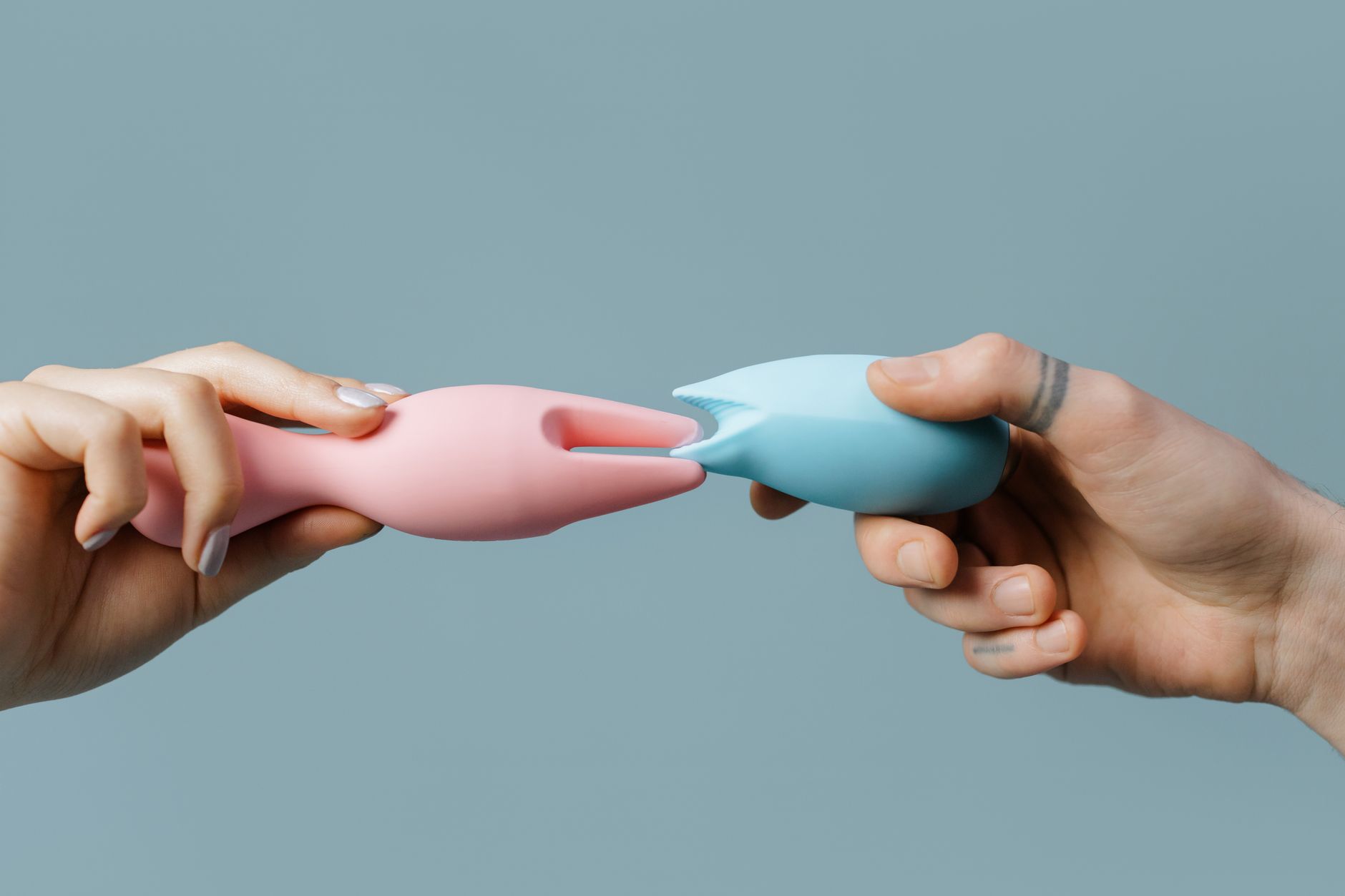
Here's where lemon vibrators shift the dynamic. Unlike partnered touch, which carries emotional and performance pressure, a lemon clitoral vibrator creates a consistent, pressure-free sensation that your nervous system can actually relax into.
The suction action of lemon vibrators (the air-pulse technology they use) doesn't require you to do anything. There's no rhythm to follow, no partner timing to sync with, no wondering if you're taking too long. The vibrator just creates sensation. Your job is to notice it.
That simplicity matters neurologically. When external stimulation is predictable and consistent, your nervous system de-escalates faster. Predictability signals safety. Safety allows the parasympathetic nervous system to activate. Activation allows blood flow to redirect toward your genitals instead of fueling the tension response.
Second, the gentle, broad stimulation of a clitoral vibrator naturally discourages the holding patterns that tension creates. Traditional vibrators often trigger a squeeze-and-grip response because the sensation feels like it requires muscular engagement. Lemon vibrators do the opposite. They invite softness.
The actual mechanism of relaxation
Think of your pelvic floor like a fist. When you're anxious, that fist is clenched. Most sex advice says "relax your pelvic floor," which is like telling someone with a clenched fist to "just unclench it." Doesn't work.
What works: shifting attention away from the effort and toward the sensation. When you focus on something a vibrator is actively creating, your brain literally cannot simultaneously monitor tension and anxiety. Attention and activation are bounded resources. Use them on pleasure, and the threat-detection system quiets down.
Start with the lowest intensity on your lemon vibrator. Place it gently against your clitoris or the surrounding tissue. Don't try to "relax." Just notice: the warmth, the vibration, the exact edges of the sensation. That's it. Your nervous system will relax on its own.
Breathing matters here. Anxiety makes breathing shallow. Shallow breathing keeps cortisol elevated. If you notice yourself holding your breath, exhale longer than you inhale (4 count inhale, 6 count exhale). That's a direct signal to your vagus nerve that you're safe.
How to set up an environment for actual relaxation
Tension doesn't live in isolation. It's usually surrounded by pressure: time pressure (someone's waiting), self-consciousness (what if someone hears), performance pressure (I need to come tonight), or just mental noise (did I pay that bill).
Starting with your lemon clitoral vibrator requires removing at least two of those. You need time (no rushing), privacy (actual privacy, not just a closed door), and permission (mentally giving yourself the right to prioritize sensation over outcome). Without those, you're fighting the environment.
Turn off your phone. Close the door fully. Set a time limit that feels luxurious, not tight (30 minutes is better than 15 for tension patterns). Lower the lights or use soft lighting. Temperature matters: being too cold creates tension, so make sure you're warm.
The goal isn't to "achieve" anything. It's to let your nervous system downshift. That shift takes time.
When tension is paired with a partner
If you're in a relationship and tension shows up during partnered sex, here's the truth: the vibrator is not a replacement for your partner. It's a relief valve. It's something you can do that doesn't require your partner to change anything about what they're doing or how fast they're doing it. It removes the synchronization problem.
Some partners feel rejected when a vibrator enters the picture. That's a separate conversation from the tension itself. But once that's been addressed, bringing a lemon vibrator into partnered sex often makes both people more relaxed because the pressure to "make it work" decreases.
Your partner can hold you while you use it. They can kiss your neck. They can slow down their own breathing to sync with yours. The vibrator handles the genital stimulation piece, and your partner handles the connection piece. Neither of you is trying to do both at once, which means neither of you is failing at either.
FAQ
Can using a clitoral vibrator make me permanently numb to partnered touch?
No. This is one of the biggest myths about vibrators, and it's not supported by research. Sensation changes temporarily when you're relaxed versus tense, but the nerve endings themselves don't desensitize from regular vibrator use. What often happens: people discover they feel more during partnered sex once they've learned to relax. Relaxation plus vibrator equals heightened sensitivity, not diminished.
What intensity should I start with on a lemon vibrator?
Start at level 1 or 2, even if it feels too gentle. Tension patterns respond better to consistency than intensity. You can always increase, but going too hard initially can trigger the same squeeze-and-grip response that caused the tension in the first place. Low and slow retrains your nervous system to recognize pleasure without effort.
How long does it take to relax enough to experience real pleasure?
That varies. Some people feel a shift in the first session. For others, especially if tension patterns have been in place for years, it might take 3-5 sessions before the parasympathetic nervous system truly downregulates. Think of it like muscle memory, except it's nervous system memory. Your body has learned to be tense during sex. It needs repeated experiences of safety and sensation to unlearn that pattern.
Is it normal if a vibrator makes me feel more anxious at first?
Yes, actually. If you have significant anxiety around sex or your body, introducing a vibrator can initially amplify that anxiety because you're now focused on sensation in a new way. That's not a reason to stop. That's a signal to go slower, lower intensity, and maybe add grounding techniques like the breathing we discussed. The anxiety usually decreases within 2-3 sessions once your nervous system recognizes the pattern is safe.
Can I use a lemon vibrator if my partner has ED or we have mismatched desire?
Absolutely. In fact, lemon clitoral vibrators are particularly useful in these scenarios because they remove the pressure from partnered performance. If your partner has ED, a vibrator means you can still experience clitoral pleasure without requiring their arousal or function. It's not a workaround. It's a different kind of intimacy. Many couples find that reducing pressure on the penis actually helps ED naturally. The same logic applies to desire mismatches: if one partner has lower desire, the other can experience pleasure without the frustrated waiting or performance pressure that often comes with those dynamics.
What if I have trauma or past sexual pain?
If you have a history of sexual trauma or pain, start with your therapist or a trauma-informed sex therapist before introducing any new stimulation. Tension in these cases often has a protective function. Vibrators can help, but they work best with professional support alongside them. Look for practitioners who specialize in trauma and can guide you through desensitization safely.
What actually changes when you stop trying so hard
The paradox of relaxation is this: the moment you stop focusing on achieving it, it usually arrives. Lemon vibrators work because they give your brain something to pay attention to other than the performance narrative. They create sensation that's interesting enough to interrupt the anxiety loop.
After a few sessions, something shifts. Your nervous system stops bracing for threat. Your breathing deepens. The tension doesn't vanish permanently (stress still exists), but your baseline during sex becomes calmer. From there, pleasure becomes possible. Orgasm becomes likely. And sex starts to feel like something you're experiencing rather than something you're trying to pass a test in.
If you're stuck in tension during sex, the tool isn't the real solution. The solution is permission: permission to slow down, permission to feel, permission to prioritize sensation over performance. A lemon clitoral vibrator is just the container that makes that permission practical.