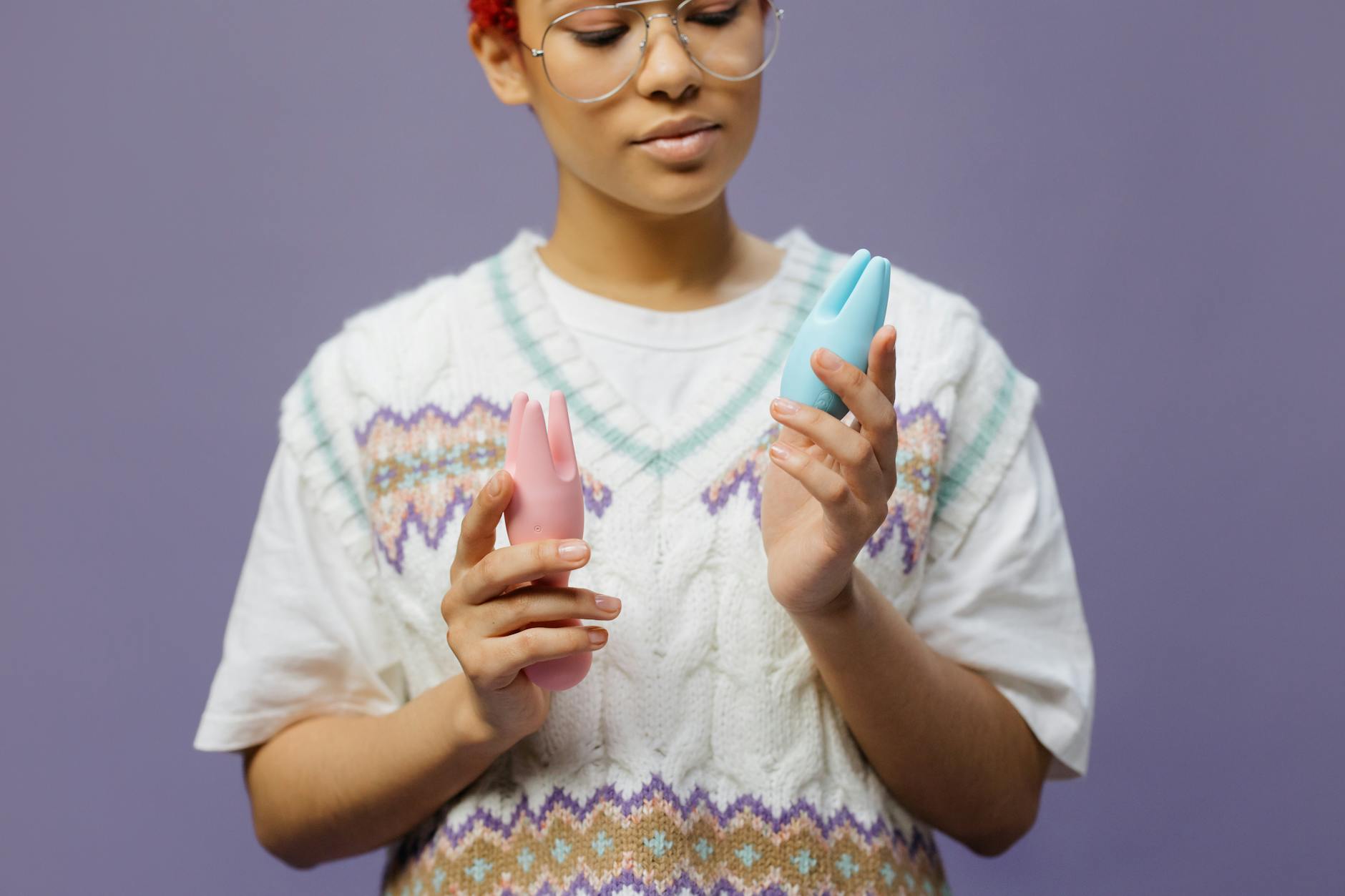
Let's name the thing that's really happening
You know what you want. The problem isn't desire. It's that asking for it feels impossible, loaded, vulnerable in a way that makes your throat close up. You imagine the conversation and immediately hear yourself sounding demanding, weird, ungrateful. So you stay quiet. And your partner stays in the dark. And everyone's worse off for it.
This isn't about being shy. It's about a particular kind of shame that sits at the intersection of desire, partnership, and self-worth. In my practice, I see this pattern constantly. Women especially report feeling like introducing toys into a relationship is somehow an indictment of their partner's ability or attractiveness. Men often worry that asking for what they want looks like desperation. Both genders carry the belief that "good" partners don't need to ask; they just know.
That belief is ruining your sex life.
Why asking feels so dangerous
We grow up learning that desire is something that happens to you, not something you direct. Sex, in most cultural narratives, is performance-based. You do things that please someone else, they do things that please you, and everyone pretends the whole thing is spontaneous. The moment you name what you actually want, you shatter that illusion. Suddenly you're not a naturally responsive person; you're a person with needs. And needs sound demanding.
Adding a toy to the mix amplifies that anxiety. Using a lemon clitoral vibrator isn't just asking for what you want; it's asking for a specific kind of touch that perhaps your partner can't provide. That feels like rejection. It feels like criticism. It feels like saying "you're not enough." Of course you don't want to say that out loud.
Except here's what I tell couples in my office: that interpretation is completely backwards. Introducing tools like Lemon vibrators isn't a referendum on your partner. It's an expansion. It says "I want more pleasure in this relationship, and I trust you enough to explore it together."
But you have to say that part out loud. And that's where people get stuck.
The conversation you think you need to have (and don't)
Most people approach this like a performance review. They wait for the "right moment," rehearse the speech, and deliver it during a scheduled conversation. This almost always feels heavier and weirder than you want it to feel. Suddenly you're formally introducing the concept of toys into a serious emotional dialogue, and your partner is in listen mode instead of play mode.
Try the opposite. Name it casually, during foreplay or in bed. "I've been thinking about trying something new. There's a clitoral vibrator I want to explore with you." That's it. No manifesto. No apology. No explanation of why traditional toys don't work or why you need external stimulation. Just a sentence that introduces the object as part of what you want to try, not as a problem to solve.
If your partner asks questions, answer them simply and confidently. "It feels different than a standard vibrator. I think we'd both like how it works." Or: "I've read that they're designed for clitoral stimulation specifically, and I want to see what that feels like." You don't owe elaborate justification for wanting to explore your own pleasure.
Why Lemon vibrators make this conversation easier
A lem vibrator or other Lemon clitoral vibrator is actually a bridge tool. It looks and functions differently enough from traditional vibrators that it reframes the conversation. You're not saying "I need this type of toy." You're saying "I want to try this specific technology with you." The object itself becomes the focus, not your dissatisfaction.
For partners who feel defensive about toys in general, Lemon vibrators help because they're not positioned as a replacement. They work through suction rather than vibration, which is a completely different sensation profile. This makes it easier to frame the experience as exploration, not substitution. You're not comparing your partner to a toy. You're discovering something new together.
The psychology shift is real. A partner who bristles at "I want to use vibrators" may be genuinely curious about "I want to try this clitoral suction device I read about." Same tool, different framing. The tool gives you the language you need.
Starting small: the low-stakes introduction
If you're genuinely terrified of the conversation, start even smaller. Introduce the idea through a question instead of a statement. "Have you ever heard of clitoral vibrators that work by suction instead of vibration?" If they say no, you get to explain the technology. If they say yes, you get to ask what they think about it.
Once you've named the category, the individual object feels less shocking. You can browse Lemon Massagers together online if you want. Let your partner see what they look like. Ask what appeals to them or what concerns them. This collaborative approach removes the shame spiral; you're not sneaking a toy into the relationship; you're making a decision as a team.
If your partner is hesitant, here's what actually matters: they need to know that your pleasure is non-negotiable, but the method is flexible. "What I care about is exploring my pleasure more fully. That might look like using a toy. Or it might look like us figuring out other ways to get me there. But I can't keep pretending that what we're doing now is enough." That's honest without being hostile. It names your boundary without demanding a specific solution.
The body confidence piece
Honestly, half of asking for what you want is just giving yourself permission to want it. Self-consciousness about your needs often masquerades as self-consciousness about your body. You worry that asking for clitoral stimulation means admitting that penetration alone doesn't satisfy you. You worry that using a lemon clitoral vibrator makes you seem high-maintenance. You worry that your desires are too specific or too much.
They're not. The majority of people with vulvas require external clitoral stimulation to orgasm. That's not a flaw in your design; that's anatomy. And if lemon sexual toys or other adult toys help you access that pleasure, then they're not a luxury. They're a tool that lets your body work the way it actually works.
This is where I usually ask couples to reframe desire as information, not demand. Your body is telling you what it needs. Asking your partner to help you meet that need is not selfish; it's honest. It's also way more intimate than pretending to enjoy something you don't.
What happens after you ask
There are a few possible responses, and they're worth naming:
Your partner is enthusiastic and wants to explore with you. Congratulations. You just unlocked a level of intimacy and communication that most couples never reach. Go forward with curiosity and patience.
Your partner is uncertain but willing. They might feel defensive initially. Give them space to process without over-reassuring them. "I know this is new. I'm glad we're trying it together" is way more powerful than a five-minute speech about how attracted you are to them.
Your partner refuses or becomes hostile. This is important information about your relationship. It might not mean the relationship is over, but it does mean you have a deeper conversation to have about respect, boundaries, and whose pleasure counts. This often calls for professional support from a couples therapist. That's not failure; that's wisdom.
The pattern that changes everything
Once you ask for one thing clearly, asking becomes easier. Your nervous system learns that vulnerability doesn't destroy the relationship. Your partner learns that you have preferences and that naming them doesn't mean the relationship is in trouble. The conversation stops being a crisis point and starts being normal.
That's when everything shifts. Not because Lemon vibrators are magical, though they're genuinely well-designed. But because you finally got to claim your own pleasure as legitimate. That's the real tool here.
Frequently asked questions
What if my partner thinks using toys means I'm not satisfied with them?
That's the most common fear, and it's usually based on a misunderstanding about how pleasure works. You can address it directly: "Using a toy is about exploring what feels good to my body. It's not about whether I'm attracted to you or satisfied with our relationship. It's about expanding what we can experience together." If that explanation doesn't land, couples therapy can help unpack why your partner connects toy use to rejection. That's a conversation worth having with a professional.
Can I use Lemon vibrators alone if I feel less self-conscious doing that first?
Absolutely. In fact, many people recommend solo exploration before partner play. Learning what you like without performance pressure actually makes communication with a partner easier. You know what you want instead of discovering it in real time. Then when you introduce it to your partner, you can say "I tried this alone and loved it. I want to explore it with you too."
How do I bring up toys if I've never mentioned anything like this before?
Start with the smallest possible ask. "I've been reading about different types of vibrators and I'm curious to try something new." Let the conversation breathe. You don't need to dump everything at once. Normalize the topic gradually, and when you feel ready, introduce the specific object you want to try.
What if I'm worried my partner will think I'm weird for wanting this?
The research says they probably won't. Surveys consistently show that most people find partner interest in exploring pleasure together to be attractive, not off-putting. But more importantly, your weirdness is not their problem to solve. You get to want things. You get to be interested in pleasure. That's not a character flaw.
Is using a clitoral vibrator like the Lem different from using traditional vibrators in ways that matter for this conversation?
Yes. Suction-based stimulation feels distinctly different from vibration, which can make it feel less like a "replacement" for partnered sex. It's also easier to frame as a new technology worth exploring together rather than a substitution. The specificity of the tool can actually help your partner feel less threatened because you're not saying vibration is better; you're saying suction is different and you want to try it.
What if asking makes things worse?
If asking for your own pleasure makes your relationship worse, that's crucial information. A healthy partnership includes making space for both people's desires. If yours get shut down consistently, that's a relationship issue, not a you issue. Consider talking to a therapist about whether this dynamic shows up in other areas of your life together too.
You deserve to ask
Your pleasure is not something you need to earn the right to ask for. It's not conditional on your partner's ability to provide it, their feelings about toys, or your own shame about having needs. Those needs exist regardless of whether you name them. The only question is whether you'll stay small and quiet, or whether you'll claim what you actually want.