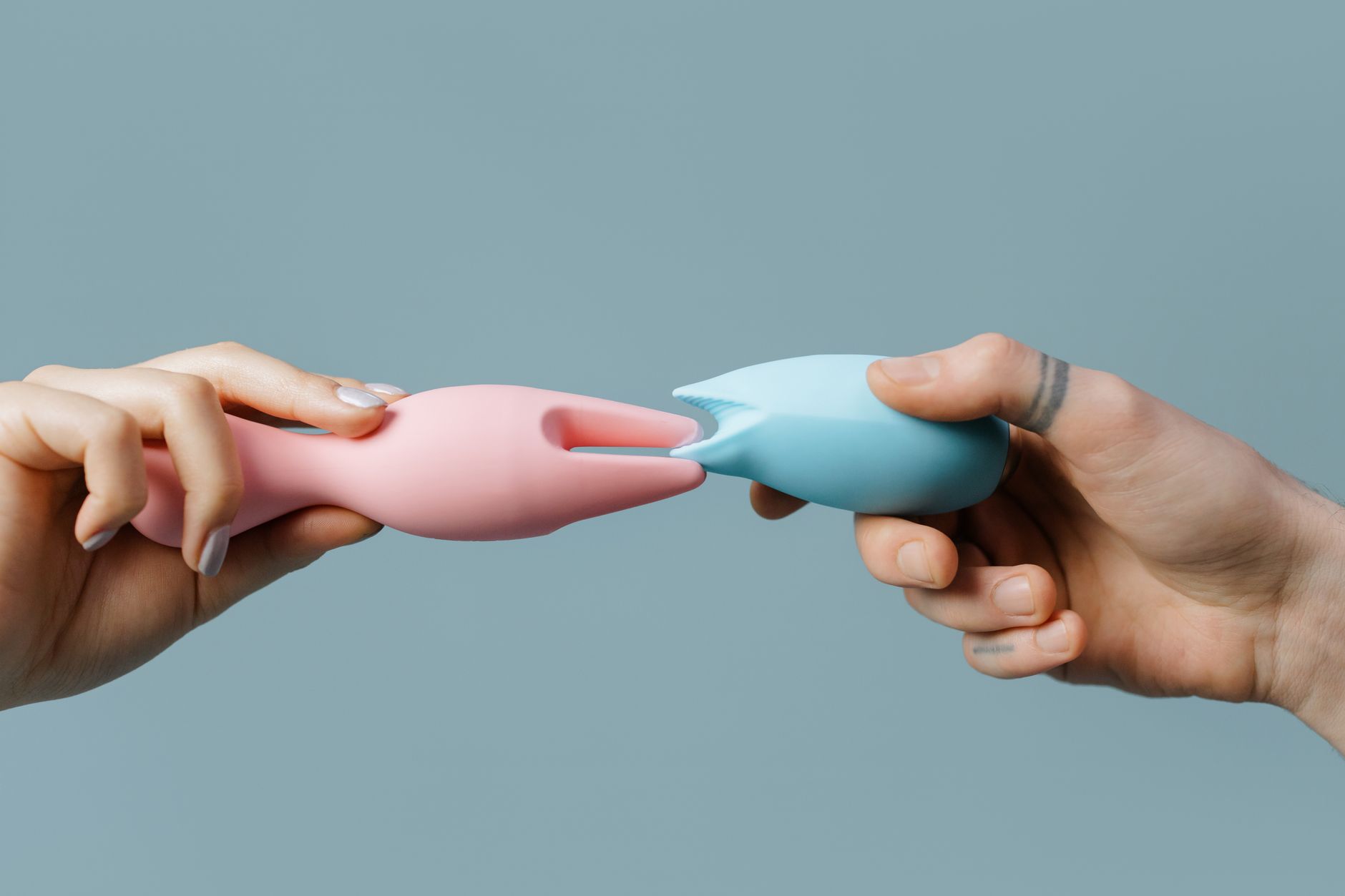
Here's what nobody tells you about not knowing what feels good
If you've never had an orgasm, or you've had them but can't reliably repeat the experience, or you simply draw a blank when someone asks what you like—you're not broken. You're not even unusual. You're in the middle of a very common experience that our culture refuses to normalize: not knowing your own pleasure architecture yet.
Most people aren't born with a manual. Pleasure is learned, and learning requires exploration. Vibrators aren't shortcuts to knowing yourself. They're tools that help you ask clearer questions of your body, and lemon vibrators specifically—with their gentle suction pattern—are surprisingly good at answering back.
Why exploring alone matters more than you think
There's a specific kind of pressure that comes with partnered sex: the feeling that you should already know what you like, or that figuring it out in real time is somehow an inconvenience to the other person. That pressure is exactly what keeps people from learning anything at all.
Solo exploration removes the audience. There's no one to perform for, no one's timeline but yours, no one waiting for you to "get there." That mental quiet is where discovery actually happens. It's not selfish. It's actually the most efficient path to better partnered sex later, because you'll know what you're asking for.
Using a lemon clitoral vibrator alone isn't about replacing partnership. It's about building literacy in your own body so partnership becomes richer, not easier.
What a lemon vibrator actually does differently
Traditional vibrators buzz. A lot of them. That constant vibration can feel overwhelming if you're new to vibrators, or if you're still mapping what sensitivity even means on your body.
Lemon vibrators work through gentle suction and pulsing patterns—think more like a pattern language than a monotone hum. That difference matters hugely when you're exploring. You can feel the pattern. You can notice which rhythm your body leans into. You get feedback.
That feedback is what turns a tool into a teacher. Instead of your body feeling like a mystery, it starts feeling like something you can read.
Starting the conversation with your body
Set aside 20-30 minutes with zero expectations. Not "I'm going to have an orgasm." Not "I'm going to feel something." Just: "I'm going to notice what my body does when I play." Lower the bar radically.
Start with touch alone. Hand, fingers, whatever. Get familiar with the baseline. Where is sensation concentrated? Where is it dull? Does pressure feel better than light touch, or the opposite? There's no right answer. You're just taking notes.
When you introduce the lemon vibrator, start at the lowest setting—pattern 1 on the Lem gives you gentle pulsing that won't overwhelm. Hold it against your outer labia first. Not penetrative, not even directly on the clitoris. Let your body get used to the vibration as a concept before you dial up the intensity or placement.
Move it slowly. Linger where something happens—a slight shift in sensation, a tiny contraction, anything your nervous system notices. These micro-moments are data. They tell you what your body wants to explore more.
The rhythm-finding phase
You might notice that some patterns feel closer to "yes" than others. Maybe pattern 3 feels engaging while pattern 1 felt barely there. Maybe one rhythm makes your leg twitch slightly while another feels distant. That's not failure. That's you learning your own wiring.
Spend a few sessions just cycling through patterns without any goal except "what does my nervous system prefer?" You're not chasing orgasm. You're building pleasure vocabulary.
Many people discover that the pattern that feels best changes depending on arousal level. Early on, a gentler pattern might feel right. As sensation builds, you might want something more intense. That evolution is normal. Your nervous system is learning to communicate with you.
Lubrication is not optional
Water-based lubricant isn't a sign that something's wrong. It's a sensory upgrade. Lube changes how vibration travels across tissue. It reduces friction (which can feel sharp instead of pleasant when you're new to this). It also just feels better—smoother, less jarring.
If you've only ever used your hand, you might not realize how much difference a simple water-based lube makes with vibrators. Try it both ways in different sessions. Notice the difference. This is part of learning what your body responds to.
The patience piece that actually matters
Orgasms aren't the endgame of exploration. I know that sounds like a cop-out, but here's what I mean: if you show up to solo exploration expecting an orgasm, you'll often not get one, and then you'll feel like something's wrong. If you show up curious about sensation, you might have an orgasm. Or you might just discover that pattern 4 on the vibrator makes your breath catch, or that you like slow circles better than direct pressure, or that you need mental quiet before physical sensation registers.
All of that is useful. None of it requires an orgasm to be valuable information.
That said: most people do eventually have them once they stop white-knuckling toward the finish line. Pleasure and relaxation are linked. The more you practice noticing sensation without judgment, the more your nervous system relaxes into the experience. Orgasms follow relaxation, not pressure.
What to do when you're still not feeling much
If after a few sessions of exploration you're still drawing a blank, a few things to check:
Stress and mental load. If your brain is churning with work, family stuff, or life chaos, your nervous system won't drop into pleasure mode. This isn't a reflection on the vibrator or your body. It's just physiology. Some people need 15 minutes of intentional mental wind-down before exploration lands. Some people need to schedule it during the one part of the week when their brain is actually quiet.
Medication side effects. Some antidepressants, birth control, and other medications can flatten sensation. That doesn't mean sensation is gone forever—it might just mean this isn't the right time to explore, or that you need a different approach. This is worth a conversation with your doctor.
Pelvic floor tension. When you're learning pleasure, your pelvic floor is often clenched tight from habit or anxiety. That tension literally blocks sensation. Learning to consciously relax those muscles (opposite of Kegels) can open doors. Some people find it helps to do this work with a pelvic floor therapist.
The partner conversation, if there is one
If you have a partner and you're using a lemon vibrator solo for self-discovery, that's a conversation you get to have on your own timeline. You don't owe anyone live updates. But when you're ready to talk about it, you have actual information instead of vague feelings. "I discovered that I like rhythmic patterns more than constant vibration" is useful feedback. It's also way less vulnerable than "I don't know what I like and I'm embarrassed."
Solo exploration with a vibrator isn't a statement about your relationship. It's you getting fluent in your own language so you can speak it together later.
A note on the shame piece
If you're feeling weird about exploring alone with a toy, that's understandable. We grow up with a lot of messages that solo pleasure is shameful, that good girls don't know what they like, that asking for what you want is demanding. Those messages live in your nervous system.
But here's the thing: your pleasure matters. Learning your own body is an act of self-respect, not selfishness. Using tools—like lemon clitoral vibrators—to understand sensation is smart, not desperate. And the person who benefits most from you knowing yourself is your future self, and any partner lucky enough to share that knowledge with you.
Start small. Be patient. Notice everything. You're building a map.
People also ask
How long does it take to figure out what feels good with a vibrator?
It's different for everyone. Some people notice patterns in 2-3 sessions. Others need weeks of regular exploration before anything clicks. The timeline depends on stress level, medication, how often you explore, and just the baseline wiring of your nervous system. There's no "should" here. Consistency matters more than speed.
Is it normal to not feel anything the first time you use a lemon vibrator?
Completely normal. New sensation often registers as "numb" until your nervous system figures out what to do with it. Try it a few times before you decide it's not working. Also try different placements—outer labia, one side of the clitoris, the perineum. The right spot makes all the difference.
Can you use a lemon vibrator if you've never had an orgasm before?
Yes, and it might actually help you find one. But that shouldn't be the goal of exploration. The goal is sensation, curiosity, and learning. Orgasms often follow once the pressure to have one lifts. Use the vibrator to explore what feels good, not to chase a specific outcome.
What if my partner gets jealous about me exploring alone?
That's a real concern worth talking about directly. Solo exploration isn't a referendum on your relationship. It's you learning yourself so you can show up more fully in partnership. Some partners feel threatened; talking openly about what you're doing and why often helps. If your partner is consistently resistant to you knowing your own body, that's a larger relationship pattern worth examining—maybe with a couples therapist.
Should I use lube with a lemon vibrator?
Water-based lube absolutely improves the experience, especially if you're new to vibrators. It changes how sensation travels and just feels better. It's not required—some people prefer direct contact—but I'd recommend trying a session with and without to notice the difference yourself.
What if I feel guilty about solo pleasure?
That guilt often comes from old messages about your body not being yours to enjoy. But it is. Solo exploration is an act of self-knowledge and self-respect. It's not cheating. It's not selfish. It's you taking care of you. If the guilt persists, talking to a therapist who specializes in sexuality can help you untangle those beliefs.
The bigger picture
Not knowing what feels good isn't a problem to solve quickly. It's an invitation to get curious about your own body over time. Using tools like lemon vibrators makes that exploration richer, safer, and often more successful than flying blind.
Start where you are. Explore without pressure. Notice everything. Your body has been waiting for you to pay attention. It's a good conversation to begin.
Have questions about your exploration journey or how to start? Reach out. We're here to help.