Here's the thing about anxiety and pleasure
Anxiety doesn't just make you feel worried. It literally rewires how your body experiences sensation. Your nervous system goes into high alert, blood flow redirects to your extremities, your pelvic floor tenses, and the signals that would normally trigger arousal get lost in the noise. You touch yourself and feel almost nothing. Or worse, you feel everything as pressure instead of pleasure.
This is wildly common, and it's not a sign that something's broken. It's your nervous system doing its job, just in the wrong context.
Why anxiety numbs sensation in the first place
When your body perceives threat (even low-grade, constant threat like work stress or financial worry), it activates your sympathetic nervous system. That's your fight-or-flight response. During this state, your body deprioritizes pleasure pathways in favor of survival systems. Blood redirects away from your genitals. Lubrication decreases. Your pelvic floor contracts.
Pleasure, neurologically speaking, requires the parasympathetic nervous system to be in charge. That's your rest-and-digest mode. Anxiety keeps you locked in sympathetic overdrive, which means sensation feels distant, muted, or completely absent.
The real problem isn't your desire or your capacity for pleasure. It's that your nervous system can't access it while it's braced for danger.
How lemon vibrators help when anxiety is in the way
The strength of a lemon clitoral vibrator lies in its intensity and specificity. When your nervous system is in overdrive, subtle sensation doesn't register. You need stimulation that's direct, consistent, and powerful enough to break through the noise.
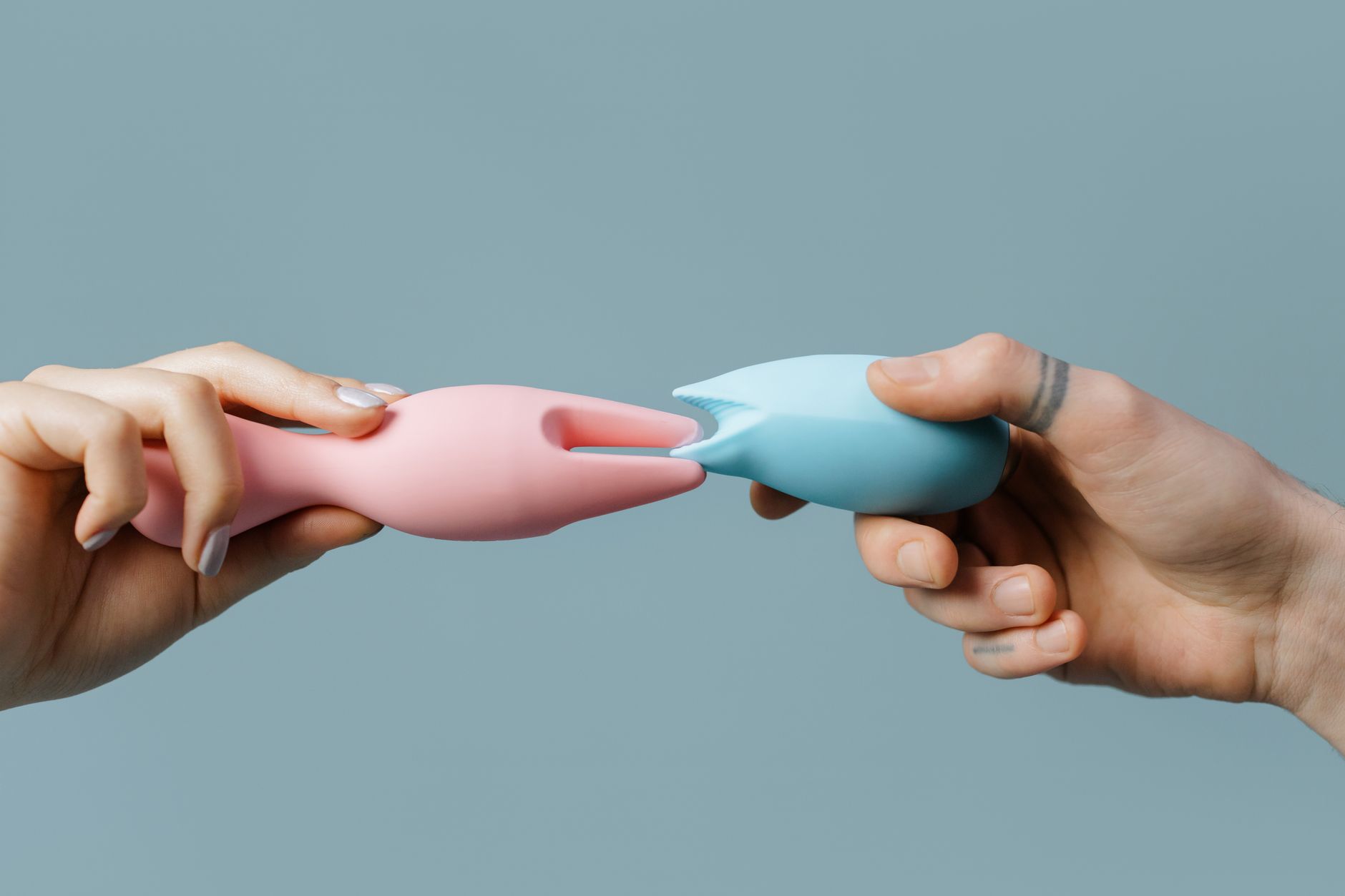
Lemon vibrators use suction and air-pulse technology instead of traditional vibration. This creates a different kind of stimulation that many people find more intense and more pleasurable than standard vibrators. For anxious bodies, that intensity is actually the advantage. It gives your nervous system something so compelling that it forces attention away from the anxiety loop and into the present moment.
The repetitive, pulsing rhythm also helps regulate your nervous system. Rhythm has a calming effect on the brain. When you're using a lemon sucker, you're not just chasing an orgasm. You're also using rhythm and sensation to gently downshift your nervous system from high alert back into a state where pleasure is actually possible.
Build the right conditions first
Before you reach for any toy, your environment and mindset matter more than the tool itself. Anxiety flourishes in chaos and rushing.
Start with time. Don't give yourself 5 minutes. Give yourself 30 minutes with zero deadline. Set a timer on your phone if you need to, but promise yourself that this is protected time where nothing else exists. Close the door. Turn off notifications. Anxiety thrives on the feeling that something could interrupt you.
Next, manage your space. Make it feel intentional. Light a candle. Put on a playlist that doesn't have lyrics (instrumental, ambient, lo-fi beats all work well). The goal is to create a cocoon of safety. Your nervous system needs to know it's okay to drop its guard.
If you live with others and privacy feels impossible, a shower is your friend. Lock the door, warm water relaxes your pelvic floor, and the sound of water provides acoustic cover. Anxiety often thrives in silence because silence amplifies your own thoughts. White noise helps.
The pre-pleasure work
Before you touch yourself with a lemon vibrator, spend time on nervous system downregulation.
Try box breathing. Inhale for four counts, hold for four, exhale for four, hold for four. Do this for two minutes. You can do it clothed before you even get to the bedroom. This signals safety to your parasympathetic system.
Then move into your body slowly. Take a warm shower or bath. Notice the water on your skin without trying to feel turned on. Just notice. Touch your arms, your neck, your thighs with intention. You're literally relearning what touch feels like when anxiety isn't in the driver's seat.
When you finally reach for your lemon sexual toy, you're not starting from zero arousal. You've already begun the shift.
How to use a lemon vibrator when sensation feels numb
Start at a lower intensity setting. This feels counterintuitive when sensation is muted, but jumping to high intensity can feel jarring instead of pleasurable when your nervous system is already activated.
Begin with external stimulation. You're not trying to reach an orgasm. You're trying to feel something. Apply the lemon vibrator to your outer labia, your clitoral area, your inner thighs. Move it slowly. Notice where sensation registers more clearly. Anxious bodies often have dead zones, areas where sensation doesn't penetrate as easily.
Spend 10 to 15 minutes here. Your nervous system is learning that this sensation is safe. Rushing to intensity or penetration sends a subtle message that you're still chasing, still performing, still anxious.
Once you feel a shift in your pelvic floor (it relaxes instead of tensing), you can increase intensity or move toward what typically feels good. But don't rush this. The magic happens in the landing, not in the speed.
Managing intrusive thoughts during pleasure
One of the worst parts of anxiety during sex is the chorus of thoughts that won't stop. You're touching yourself and simultaneously thinking about your work email, what you look like, whether you're doing it right.
Here's what I tell clients. You don't need to stop the thoughts. You need to make the sensation louder than the thoughts.
This is where a lemon vibrator's intensity becomes your advantage. The pulsing sensation becomes the thing you're paying attention to instead. When your brain drifts to anxiety, you anchor back to the feeling. It's like a weighted blanket for your attention.
If thoughts keep dragging you back, try this. Name them without judgment. "There's the work worry." "There's the body image thought." Then return to the sensation. You're not fighting the anxiety. You're just refusing to let it be the loudest thing in the room.
The patience piece
Pleasure when you're anxious takes longer. Your body needs more time to downshift. This is not weakness. This is not a sign that something's wrong with you.
Some sessions will feel like nothing happens. You'll feel the sensation, but it won't build into arousal. That's fine. You're still teaching your nervous system that pleasure is safe. You're still building capacity.
The orgasm is not the goal. The goal is to prove to your body that it's possible to experience pleasure without threat. Some days that looks like a full release. Some days it looks like 20 minutes of sensation and a quiet feeling of calm. Both count.
When to bring a partner in (or not)
If you're partnered and anxiety is affecting your shared sexual life, the temptation is to solve it together. Sometimes that helps. Often it makes it worse because now you're managing both your anxiety and their feelings about your anxiety.
I recommend learning your lemon vibrator solo first. Build a relationship with your own sensation. Then, when you're ready, you can show your partner what you've discovered. You're not asking them to fix anything. You're inviting them into what's working.
If you're not ready to involve a partner yet, that's also completely fine. Solo pleasure is not a stepping stone to partnered sex. It's its own valid form of self-care and nervous system regulation.
People also ask
Can anxiety medication interfere with how a lemon vibrator feels?
Some medications (SSRIs in particular) can reduce sensation or delay orgasm. If you notice a shift after starting a new medication, talk to your prescriber. Don't stop the medication on your own. But do mention it because there are often dosage or timing adjustments that help. In the meantime, a lemon clitoral vibrator's intensity can sometimes help compensate for reduced sensation by providing more stimulation than other tools.
How long does it usually take to feel a difference when using lemon vibrators for anxiety?
Most people notice something shift within a few sessions, usually two to three weeks of consistent use. But "shift" doesn't mean instant pleasure. It often means sensation becomes slightly less muted, or the time it takes to feel something shortens a bit. Progress with anxiety-related numbness is incremental. Patience is part of the practice.
Is it normal to feel pressure or discomfort instead of pleasure at first?
Completely normal. When your nervous system is in high alert, even gentle touch can feel like pressure. Your pelvic floor is tense, protecting you. This usually softens with repeated safe exposure. If discomfort persists or worsens, that's worth talking to a therapist or pelvic health specialist about, because sometimes anxiety-related pelvic tension needs additional support.
Can I use a lemon sucker if I also have low libido from anxiety?
Yes. Low libido and sensation numbness often go together with anxiety. The vibrator isn't designed to create desire that isn't there. But it does help your body remember what pleasure feels like, which sometimes rekindles desire. Think of it as a nervous system reset rather than a desire booster.
Should I use lemon vibrators every day when anxiety is high?
Daily use is fine if it feels good, but consistency matters more than frequency. Three to four times weekly with intention beats daily use that feels like another obligation. If pleasure starts feeling like a chore, you've switched into performance mode again. That's when you scale back and focus on the nervous system work instead.
What if nothing works and sensation stays completely muted?
That's a sign to bring in additional support. A therapist trained in somatic therapy or nervous system work can help you understand what's underneath the numbness. Sometimes it's not just anxiety. Sometimes it's past trauma, or medication effects, or something else entirely. A lemon vibrator is a helpful tool, but it's not a substitute for professional support if the numbness doesn't shift.
The real work
Using a lemon vibrator when anxiety has numbed your sensation is part of the solution. The bigger part is learning to recognize when your nervous system is activated and gently bringing it back offline. That might look like therapy. It might look like exercise or meditation or setting better boundaries at work.
Pleasure is a nervous system state. When anxiety controls that state, no tool can force the issue. But the right tool, in the right conditions, with patience and intention, can help you prove to your body that safety and pleasure are possible at the same time.
Start small. Build from there. Your sensation will come back. It just needs permission and time.
Want to talk through what might work for your specific situation? Reach out to discuss how to move forward.