Let's start with what nobody says out loud
Emotional distance doesn't usually announce itself with fanfare. It creeps in quietly. One partner stops asking about the other's day. Conversations become logistics instead of connection. You sleep in the same bed but exist in separate worlds. Then sex stops, or it feels mechanical when it happens, and suddenly you're both wondering if the spark ever existed at all.
Here's what I see constantly in my practice: couples blame the lack of sex on the lack of desire. But desire doesn't die first. Emotional safety dies first. The body simply follows what the nervous system already knows. Touch stops because talking stopped. Intimacy froze because honesty did.
The good news is that lemon vibrators, used deliberately, can become a tool for rewiring both sensation and connection. Not as a bandage over the real work (which is conversation), but as a way to remind your body what pleasure feels like while you rebuild the emotional foundation underneath.
Why emotional distance specifically kills physical sensation
When you're emotionally disconnected from your partner, your nervous system isn't safe. Safety is the precondition for arousal. Your brain can't redirect blood flow to your genitals when it's scanning for threats or managing resentment. It's not a choice. It's neurobiology.
Long-term couples often experience what's called "responsive desire" rather than "spontaneous desire". Spontaneous desire is that spark that hits without provocation. Responsive desire is what builds during connection, touch, and emotional presence. When emotional distance grows, responsive desire atrophies because there's nothing to respond to.
The pattern usually looks like this: less emotional connection leads to less initiation, which leads to less touch, which leads to less oxytocin, which leads to less desire. The cycle becomes self-reinforcing. After six months or a year of this, your body literally forgets what pleasure feels like. It's not broken. It's protecting you.
The specific role lemon vibrators play in reconnection
A lemon vibrator (or any quality clitoral vibrator from Lemon Massagers) can interrupt that protective cycle by offering pleasure without the complexity of partner negotiation. You're not trying to perform. You're not waiting for your partner to initiate "correctly". You're not managing resentment in real time.
What lemon clitoral vibrators do is reintroduce your nervous system to the sensation of arousal in a low-stakes way. Solo use first. This matters. When you use a lemon vibrator alone, you're reminding your body that pleasure is possible, that your responsiveness wasn't damaged, just dormant.
Then, and only then, can you bring that reconnection back into the partnership. But we'll get there.
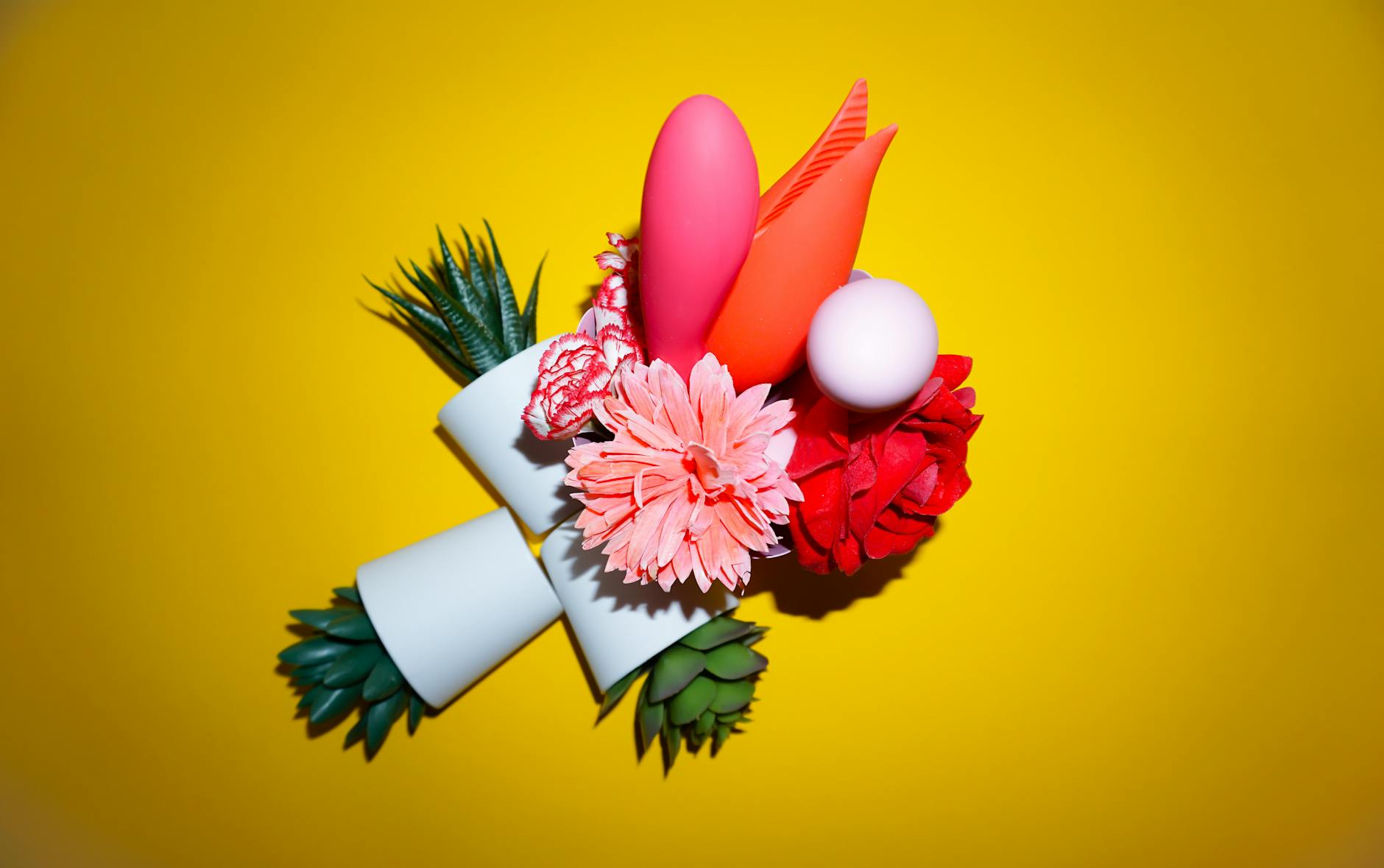
Photo by DRT.fm on Pexels
Solo practice first: rebuilding your own pleasure
Start here, not with your partner. Give yourself 3-4 weeks of solo exploration with a lemon vibrator before any couple conversation happens.
This is deliberate. When you rebuild solo first, you're gathering data. What patterns of touch still work? How long does arousal take now? What intensity feels right? Does your mind wander? Where does it go? These details matter because they tell you what your nervous system needs.
Use the lemon vibrator in a space where you feel physically and mentally safe. Not rushed. Not trying to orgasm within a specific timeframe. Just noticing. Start with low patterns and build gradually. Many people find that after emotional distance, the body needs longer warm-up time and gentler initial touch. This is normal.
What you're doing is bottom-up nervous system regulation. You're sending your body signals that pleasure is safe again, that you can invest in sensation without immediate threat. This takes time.
Conversation has to come before partner use
This is non-negotiable. You cannot use a lemon vibrator with your partner to "fix" emotional distance if the emotional distance itself hasn't been named and addressed.
The conversation doesn't need to be elaborate. It needs to be honest. Something like: "I've noticed we've grown apart. I miss you. Sex stopped feeling good because I stopped feeling safe. I want to change that, but I need to know you do too."
Then listen. Your partner might say something you don't expect. They might name patterns you didn't see. They might be scared. Let them. This is the actual work. Lemon vibrators are what comes after this conversation, not instead of it.
If your partner isn't willing to have this conversation, a vibrator isn't going to fix the relationship. But it can help you figure out if the relationship is what you want to fix.
How to introduce a lemon vibrator as a shared experience
Assuming you've had the conversation and both people are interested in reconnection, here's the practical piece.
Start with mutual exploration, not performance. You're not trying to orgasm. You're trying to be curious together. One partner (let's say you) uses the lemon vibrator solo while your partner is present, watching, touching your non-genital body, talking to you.
This sounds simple. It's actually vulnerable and requires trust to rebuild. You're saying "here's what my body needs" without shame. They're saying "I want to understand you" through their presence.
Then swap. Your partner uses a vibrator while you're present. The specific vibrator matters less than the willingness to be seen.
Only after a few sessions of this should you move toward simultaneous use or partnered use. And even then, the vibrator is not the centerpiece. Connection is. The lemon vibrator is just the permission structure that says "this is about both of us exploring pleasure together, not about me proving something to you."
Timing, rhythm, and realistic expectations
Emotional reconnection is slower than physical arousal. You'll probably find that your body responds before your heart fully trusts again. This is fine. In fact, it's useful data.
If pleasure returns quickly but resentment lingers, you'll know the issue isn't physical. You'll know you need to keep talking. The vibrator becomes a barometer for how the rest of the relationship is healing, not a substitute for that healing.
Realistically, rebuilding takes weeks to months depending on how long the distance was. Start with solo use for 3-4 weeks. Introduce conversation. Then introduce shared experience gradually. Expect that some sessions will feel good and others will feel disconnected again. This isn't failure. This is the nervous system slowly recalibrating.
The specific patterns and intensities that help with reconnection
After emotional distance, many people find that lower, sustained patterns feel better than high-intensity pulses. The reason is that your nervous system is still in a slightly defensive state. Gentle, consistent sensation helps it downregulate. Intense sensation can feel jarring or overwhelming.
Start with pattern 1 or 2 on your lemon clitoral vibrator. Stay there for several minutes. Let your body adjust. Gradually increase if it feels good, but there's no obligation. Some people find their sweet spot is lower intensity than it was pre-distance. This is normal and doesn't mean something's wrong.
If you're using a lemon vibrator with your partner present, they can also learn your body's current rhythm. This data becomes part of the intimacy. "I notice you respond more when I slow it down here." That's connection being rebuilt in real time.
When to bring in a professional
If after 8-12 weeks of solo and partnered exploration, pleasure still feels absent or forced, or if the emotional distance persists despite good-faith effort, bring in a therapist. Specifically, a couples therapist or sex therapist who works with long-term relationships.
Sometimes emotional distance is a symptom of something deeper: unresolved conflict, mismatched values, infidelity, burnout, or changed life direction. A lemon vibrator isn't equipped to address those. A professional is.
But if the distance is situational (a rough year, bad communication patterns, life stress), the combination of honest conversation, solo exploration, and gradual partnered reconnection often rewires things remarkably fast.
The larger shift: from performance back to presence
What rebuilding pleasure after emotional distance teaches you is that sex was never actually about the mechanics. It was always about feeling seen and safe.
When you use a lemon vibrator as part of reconnection rather than as a quick fix, you're learning that intimacy is something you build together. The vibrator is just a tool. The real tool is willingness. Both partners showing up, curious and honest, willing to be awkward and vulnerable.
After emotional distance, that might feel riskier than it did before. But it's also truer. And that's when pleasure becomes less about sensation and more about the person you're experiencing it with.
FAQ: Using Lemon Vibrators When Emotional Distance Needs Repair
Is it normal for pleasure to feel numb after emotional distance in a relationship?
Completely normal. Emotional safety is a prerequisite for arousal. When that's missing, your nervous system downregulates sensation as a protective response. It's not damage. It's your body communicating that something in the relationship needs attention. Once emotional safety returns, physical sensation typically follows.
Can using a lemon vibrator alone actually improve desire in a partnership?
Yes, but with a caveat. Solo exploration reminds your body what arousal feels like and builds evidence that pleasure is possible. This can help shift the nervous system out of protective mode. But it doesn't fix the underlying emotional distance. Solo use is a complement to honest conversation, not a substitute for it.
How long should we wait before using a lemon clitoral vibrator with a partner after having the emotional reconnection conversation?
Give yourself at least 2-3 weeks of solo practice first. This lets you rebuild your own sense of pleasure before bringing another person into the experience. Then spend another 2-3 weeks on non-sexual touch and conversation. Introducing a vibrator as a shared experience should happen gradually, starting with one partner using it while the other is present but not touching.
What if my partner is uncomfortable with introducing vibrators into our sex life?
That's worth exploring. Sometimes the discomfort is about feeling "replaced" or inadequate. Other times it's about shame or unfamiliarity. Have an honest conversation about where the discomfort comes from. You might discover the resistance is about something else entirely. If your partner remains uncomfortable, forcing it won't rebuild connection. The real work is understanding why they're hesitant.
Can a lemon vibrator fix a relationship that's emotionally broken?
No. A vibrator can't fix emotional distance by itself. What it can do is help you rebuild individual pleasure and create a shared experience that reminds both partners what connection feels like. But if the distance comes from infidelity, incompatibility, abuse, or fundamental value misalignment, a vibrator is a tool for pleasure, not for repair. That repair requires couples therapy or honest acknowledgment that the relationship may have run its course.
Should we use the same vibrator or different ones?
Different ones are usually better for reconnection work. When you both have your own lemon clitoral vibrator or lemon sexual toy, you're each claiming your own pleasure. This creates autonomy and removes any sense of "sharing" in a way that might feel uncomfortable. Plus, you learn each other's preferences without pressure.
Rebuilding intimacy after emotional distance is slow, unglamorous work. There's no shortcut. But the couples I've worked with who do this work often report that the intimacy on the other side is deeper than what came before. You've had to be honest. You've had to be vulnerable. You've had to choose each other repeatedly.
A lemon vibrator can be part of that journey. But it's just a tool. The real work is the conversation that comes before it and the presence that comes after.
If you're ready to start that conversation, or if you want to explore this further, reach out here. I'm here to help.