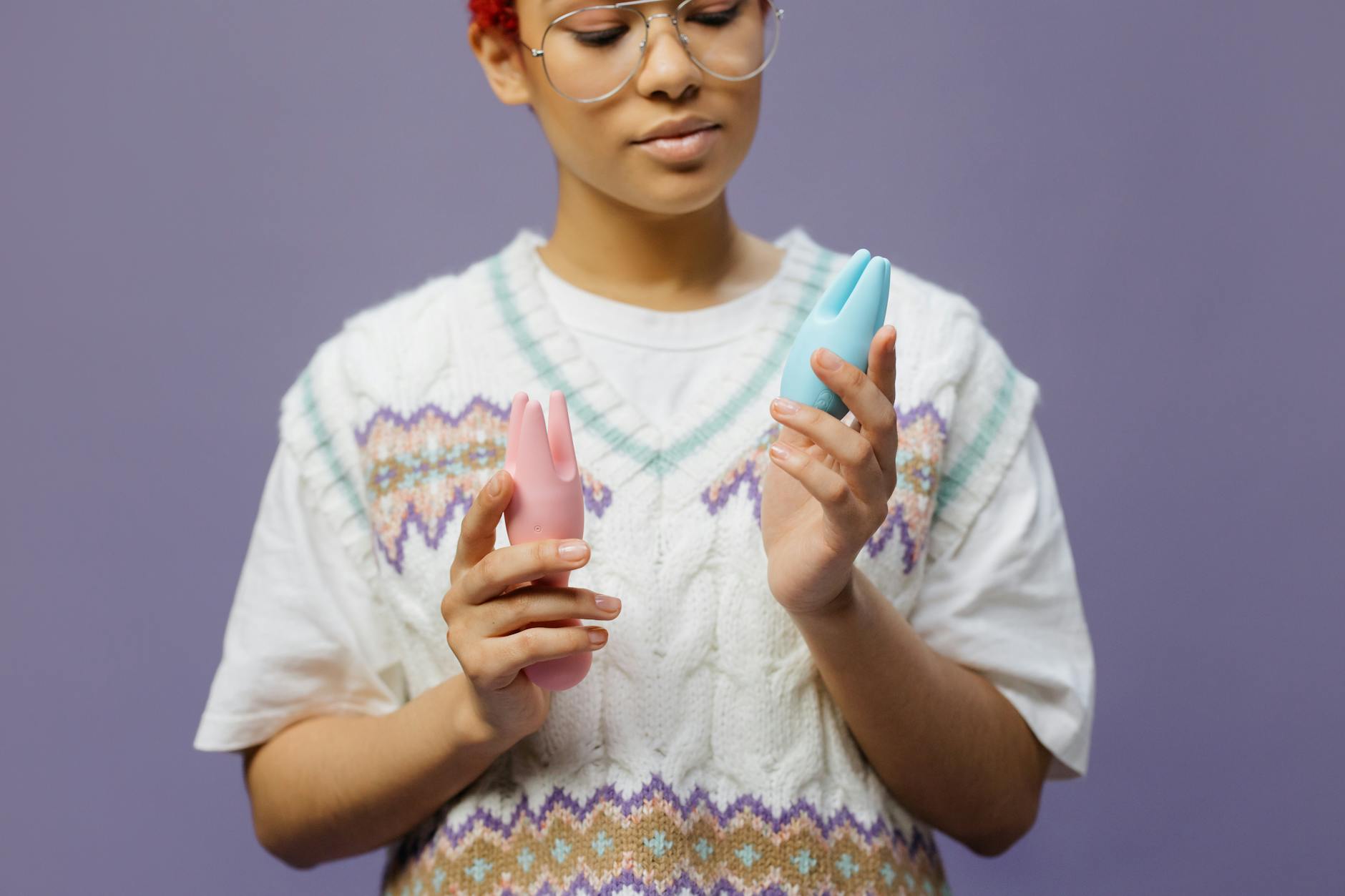
Let's talk about hurried intimacy
Rushed sex is the relationship equivalent of eating standing up at the kitchen counter. Technically you're fed, but you missed the whole point. Between work schedules, childcare logistics, and the general chaos of modern life, intimacy often gets squeezed into the gaps instead of carved out intentionally.
Here's what happens when sex feels hurried: your nervous system stays partially in fight-or-flight mode. Arousal doesn't build fully. Orgasms, if they happen at all, feel thin and unsatisfying. And over time, both partners start avoiding sex because it's become another thing that has to be done, not something that actually feels good.
The good news is that lemon vibrators and clitoral vibrators in general are specifically useful for reclaiming pleasure when time is precious. They're efficient without being mechanical. They build sensation quickly without sacrificing depth. And they give you and your partner a structured way to slow down together.
Why rushed sex is a nervous system problem, not a willpower problem
When you're rushing, your body doesn't have time to shift gears. Your parasympathetic nervous system (the rest-and-digest mode where actual pleasure happens) needs 15-25 minutes of consistent safety signals to really engage. Hurrying says the opposite: "We have to be fast. Get to the finish line."
This is especially true if you're someone with vulva anatomy. Clitoral arousal is cumulative. It builds. You can't fast-track it without losing the quality of sensation. A lemon vibrator doesn't speed up arousal so much as it makes whatever time you do have more efficient and more satisfying.
The pattern also affects desire. If sex has become rushed and unsatisfying, you start avoiding it. Avoidance leads to longer gaps. Longer gaps make reconnection harder. Within a few months, you're back to scheduling sex three weeks out because initiating feels vulnerable after the pattern has been so negative.
Creating a real time container
Here's what actually works: decide on a realistic window and protect it. Not "sometime this week." Pick Tuesday at 8:30 p.m., or Sunday morning, or whenever you realistically have 30-45 minutes where you won't be interrupted.
This sounds unromantic. It's the opposite. It's the most generous thing you can do for your own pleasure and your partner's. Knowing exactly when sex is happening lets your brain start anticipating it. Your nervous system gets time to prepare. And you remove the constant low-level negotiation about whether now is a good time.
For the 30-45 minutes you've blocked, phones go into another room. No checking work email or the baby monitor on a split screen. Full presence doesn't have to mean an entire evening. It means actual attention during the time you've carved out.
Why lemon vibrators are built for this dynamic
A lemon clitoral vibrator works differently than traditional vibrators. Instead of straight vibration, it uses suction and pulsing patterns. This matters when you're rebuilding arousal after a period of rushed, unsatisfying sex.
Suction stimulates a wider nerve network than direct vibration does. It builds sensation more gradually but more completely. You can start at a lower intensity (patterns 1-3 on most lemon models) and still feel something meaningful. There's no pressure to immediately reach pattern 7 just to feel anything.
This gives both of you a way to slow down without it feeling like you're failing at sex. You have an external tool that's literally guiding you toward a slower pace. It removes the awkwardness of "I need this to go slower" because the toy is already built for progressive, cumulative pleasure.
The pre-game protocol that actually changes things
Start your 30-45 minute window without jumping straight to genital touch. Spend the first 10-15 minutes on non-sexual intimacy. This sounds like wasted time when you're already squeezed for moments together. It's actually the opposite.
Non-sexual touch signals safety to your nervous system. A 10-minute shoulder massage, kissing fully clothed, skin-to-skin contact on the couch. Your parasympathetic nervous system doesn't know the difference between "we have time for this" and "we're rushing through foreplay." It responds to the pace and the attention.
After this warm-up, introduce the lemon vibrator or clitoral vibrator slowly. Don't go from clothed to the toy in 30 seconds. Take another 5-10 minutes with manual touch first. Let arousal actually build before adding the vibrator.
If you're partnered, this is also where explicit communication helps. "I want to go slow tonight" isn't asking permission. It's setting expectations. Your partner can match that energy instead of wondering whether to push for faster or hold back.
Using patterns and pacing as your slowdown tool
Most lemon vibrators have 3-5 intensity settings and 2-3 pattern variations. Instead of jumping to the pattern that feels best immediately, use this intentionally.
Start at pattern 1, intensity 1. Spend 3-5 minutes here. Your brain will be impatient. This is normal and exactly the point. Stay here anyway. Let sensation build without scrambling for more stimulation. Most people find that after 5 minutes at low intensity, arousal catches up and what felt underwhelming suddenly feels substantial.
Then move to pattern 2 or intensity 2. Spend another 3-5 minutes. The cumulative effect is what matters. You're not chasing the next level of sensation. You're letting each level fully register before moving deeper.
This rhythm removes the pressure to "perform" faster arousal. It also usually results in stronger, more complex orgasms because arousal has time to build in layers instead of in a spike.
The partner conversation that makes this work
If you're with someone, the conversation before you start matters more than the conversation during.
Instead of "I want to use the lemon vibrator tonight" (which can feel like criticism of your partner), try "I've noticed sex feels rushed lately and I miss really enjoying it together. I want to try slowing down, and I think using the vibrator might help us both stay present. I'd love that." Different message entirely.
Then talk about what you each need to feel less rushed. For some people it's knowing the end time. For others it's removing the pressure to orgasm. For some it's having the toy be his or her responsibility so there's no spectating feeling.
If you're a partner watching, the hardest thing is not trying to speed up the process. When arousal is building slowly, the urge to escalate is real. The gift you can offer instead is staying with the pace. Matching her breathing. Maintaining eye contact. Keeping your own nervous system calm so she can feel that steadiness.
When rushing happens anyway
Life will interrupt. A kid will knock on the door. Someone will remember something urgent. Real life is not a spa weekend.
When this happens, don't abandon the lemon vibrator approach. Use it to salvage what you can of the experience instead of switching to hurried mode. Ten minutes of slow, intentional pleasure with the vibrator is better than 20 minutes of stressed, mechanical sex.
You can also restart. "We got interrupted. Let's do this again tomorrow night." This is not failure. This is actually reclaiming the boundary that intimacy deserves protected time.
FAQ: Slow intimacy and lemon vibrators
Why does rushing make arousal harder instead of easier?
Arousal is a nervous system response, not a choice. When your body senses urgency or time pressure, the sympathetic nervous system (fight-or-flight) stays activated. Pleasure requires the parasympathetic nervous system (rest-and-digest) to be dominant. These can't happen simultaneously. Your body interprets rushing as threat, which suppresses the exact neurochemistry you need for good sex.
Can lemon vibrators help if my partner is the one rushing?
Partially. The vibrator can help you build arousal more quickly so the experience feels less pressured for you. But the real fix is the conversation about why rushing is happening. Is it anxiety? Schedule pressure? Mismatched desire? The tool helps, but it doesn't solve the underlying dynamic. If rushing is a consistent pattern, that's worth addressing with a couples therapist.
How long should I spend at each intensity level?
At least 3-5 minutes, ideally 5-10. The temptation is to escalate quickly because you're watching the clock. Resist that. If you only have 20 minutes total, spend 5-8 on low intensity, 5-8 on medium, 4-6 at higher. Quality of sensation matters more than quantity of settings.
Is scheduling sex really romantic?
It's more romantic than the alternative, which is resentful, hurried sex that neither person actually wants. Couples who schedule sex report higher satisfaction, more consistent desire, and better orgasms. Spontaneity is great when your life actually allows for it. Intention is what actually sustains pleasure long-term.
What if I feel self-conscious slowing down in front of my partner?
This is real and common. You might feel like you're being demanding or difficult. In reality, you're modeling what your own pleasure requires. That's not selfish. It's actually teaching your partner what turns you on, which is information they need. If your partner responds with frustration to your boundaries, that's a separate issue worth addressing outside the bedroom.
Can I use a lemon vibrator solo if intimacy with my partner feels rushed?
Absolutely. Solo pleasure with a clitoral vibrator using the slow-build approach can actually reset your nervous system and remind you what good arousal feels like. This can then inform how you want partnered sex to feel. You're not avoiding your partner. You're reclaiming your own pleasure literacy.
The truth about slow intimacy
Rushed sex isn't really about time. It's about attention. When you decide that your pleasure (and your partner's) deserves protected time and a deliberate pace, everything shifts. The lemon vibrator becomes the tool that enforces that slowness, that prevents you from slipping back into the pattern of getting through it instead of actually feeling it.
Start with one protected 30-45 minute window this week. Bring the slow-build approach. Feel the difference. Then decide if this is something you want to repeat. Most couples do.