Let's talk about what nobody mentions in the prescribing office
You start birth control for one reason. A few weeks in, you notice something unexpected: arousal doesn't feel the same. Maybe it takes longer to build. Maybe lubrication feels different. Maybe desire itself is quieter. And then you wonder if you're broken, or if the pill is supposed to do this.
It is. And you're not.
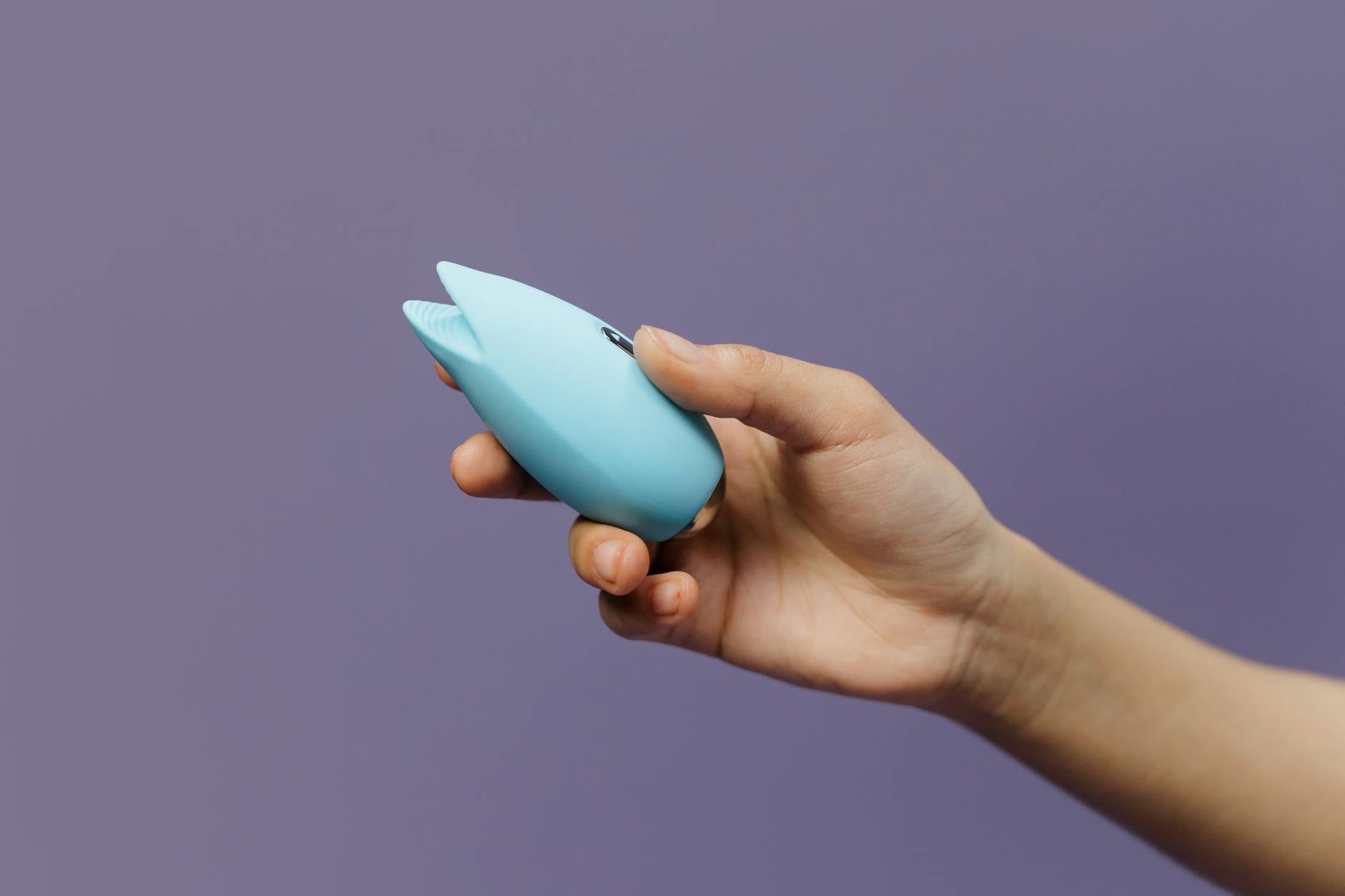
Hormonal birth control is a wildly effective tool, but it rewires desire in measurable ways. The good news: this is temporary, treatable, and absolutely manageable. The better news: tools like lemon clitoral vibrators can help you stay connected to pleasure while your body adjusts.
What birth control actually does to arousal
Most hormonal birth control suppresses ovulation by keeping estrogen and progesterone steady (no surge, no egg). That stability is the whole point. But here's the friction: those hormonal fluctuations also triggered your body's arousal cascade. Less fluctuation means less natural spark.
Birth control also typically lowers free testosterone, the hormone that drives desire in all bodies. The research is clear: about 15-20% of people on hormonal contraception report noticeably lower libido. Another chunk notices slower arousal, or needing more stimulation to reach the same response.
Third, some formulations thicken cervical mucus and thin the uterine lining, which means less natural lubrication. You might notice dryness where there wasn't any before. This has nothing to do with arousal level. It's a mechanical change.
The timeline matters: most people adjust within 3 months. Some adjust within weeks. A few experience persistent changes. All of this is normal.
Why lemon clitoral vibrators help specifically
Traditional vibrators rely on your body's natural response speed. If arousal is building slowly, or if sensation feels muted, a regular toy can feel like you're chasing your own pleasure.
Lemon vibrators work differently. The suction mechanism doesn't wait for you to build arousal. It triggers the clitoris directly, rapidly, reliably. For people whose bodies are responding more slowly to birth control, this matters. You're not forcing pleasure. You're giving your nervous system a pattern it recognizes immediately.
Second, lemon vibrators don't require the sustained pressure that can feel uncomfortable on thinner or less lubricated tissue. The suction is gentler than friction. Many people find they're more accessible when lubrication feels inconsistent.
The practical adjustments
Start with lower intensities. If you were using traditional vibrators at levels 4-5 before birth control, spend time at levels 1-3 now. Your sensitivity might be different. Give yourself permission to explore what feels good in this new body state.
Lubricant becomes essential, not optional. Water-based lube is your friend. Use it even if you feel naturally lubricated. It changes the sensation profile and removes any friction worry. You deserve smooth, easy pleasure.
Longer warm-up time is not a step backward. It's just different. Spend 10-15 minutes on non-genital touch, kissing, whatever gets your brain in the game. Arousal is not just physical. If you're stressed about the change, your nervous system knows it.
Consider timing. Some people find that using a lemon vibrator in the morning, when cortisol is naturally higher and energy is fresher, works better than late night when fatigue compounds the arousal slow-down.
What to discuss with your doctor (and why it matters)
If arousal doesn't improve after 3 months, bring it up. It's not complaining. It's information your prescriber needs. Sometimes switching formulations helps. A different progestin-to-estrogen ratio, or a different delivery method altogether (patch, ring, IUD), can make a difference.
If lubrication is the main issue, topical estrogen vaginal creams can help without affecting your contraceptive efficacy. Ask specifically.
If you've lost desire and it's not coming back, testosterone therapy is worth discussing with a knowledgeable provider, though it's less commonly prescribed than it is in some other countries.
Don't assume you'll be told the contraception is the cause. Many doctors skip this conversation entirely. You have to name it.
The emotional piece (because it's half the picture)
Starting birth control is often connected to relationship changes: new partner, more frequent sex, or the relief of not worrying about pregnancy. Your arousal response might feel flat, but your actual desire might be higher than ever. These aren't contradictions.
That said, sometimes arousal changes are tied to stress, anxiety, or ambivalence about the relationship itself. Birth control doesn't cause those, but it can unmask them. If you notice arousal slowdown and also notice you're less excited about sex generally, that's worth examining separately.
Talk to your partner if you have one. "My body is adjusting to this medication and I'm exploring what feels good now" is a mature, clear conversation. It frames the change as temporary and normal, not as a rejection or a problem.
When to try a different approach
If you've been on birth control for 4-5 months and arousal still feels flat, or if it's affecting your relationship or your sense of self, exploring alternatives is reasonable. Some people switch to non-hormonal methods: copper IUD, condoms, or barrier methods that don't touch your endocrine system.
Others find that a different formulation of hormonal birth control suits them better. There are dozens of options. The one you're on now isn't the only answer.
If you stay on your current method, patience with your body and tools like lemon clitoral vibrators can bridge the gap while your system adjusts.
The honest closing
Birth control changing arousal is not a flaw in the medication or in you. It's a side effect that's widely known among clinicians and almost never explained to patients. Once you name it, once you understand what's happening, you can actually do something about it.
Your pleasure matters. Your body deserves care, curiosity, and tools that work with its current state, not against it. Whether that's communication with your partner, time with a clitoral vibrator, or a conversation with your prescriber, you have options.
People also ask
How long does it take for arousal to return after starting birth control?
Most people see noticeable improvement within 3 months as their body adjusts to stable hormones. Some adjust faster, within 2-3 weeks. Others take 4-6 months. If it hasn't shifted by month 4, talk to your doctor about switching formulations. Individual responses vary wildly, so timeline comparisons aren't helpful.
Can I use lemon vibrators safely if I'm on birth control?
Completely yes. There's no interaction between hormonal birth control and any external toy. Clean your vibrator before and after use, use water-based lubricant, and go at whatever pace feels good. Your birth control doesn't make vibrators unsafe or less effective.
Does birth control permanently change arousal, or is it temporary?
For most people, it's temporary. When you stop birth control or switch formulations, arousal typically returns to baseline within 1-3 months. A small percentage of people notice persistent changes, but that's genuinely rare. The majority report a full return of their previous arousal pattern once hormones stabilize again.
Should I tell my partner that birth control is affecting my arousal?
If you're in a relationship and having regular sex, yes. But frame it clearly: "My body is adjusting to this medication, and I'm working with it. I'm still attracted to you, and I'm exploring what feels good right now." This prevents your partner from internalizing the arousal slowdown as their fault or as a sign of waning attraction.
Is it normal for lubrication to feel different on birth control?
Absolutely. Many hormonal birth control methods thin the vaginal mucosa or change cervical fluid consistency. This is a documented side effect, not a sign of low arousal or dysfunction. Adding lubrication fixes it immediately. Water-based lube is your best option.
Why do lemon clitoral vibrators work better than traditional vibrators when arousal is slow?
Lemon vibrators use suction to stimulate the clitoris directly, triggering nerve response without waiting for your body to build arousal naturally. For people whose arousal is slower due to birth control, this creates a faster pathway to sensation. They're also gentler on tissue when lubrication is variable, making them more comfortable during the adjustment period.