How to Use a Lemon Vibrator With Reduced Sensation From Hormonal Changes
Let's be real: hormones control a lot more than your mood. They control how your nerve endings respond to touch, how blood flows to your genitals, and ultimately, how intensely you feel pleasure. When those hormones shift, your lemon vibrator might feel less responsive than it used to. That doesn't mean your sensitivity is broken. It means your technique needs recalibrating.
What hormonal changes actually do to sensation
When estrogen drops, your tissue becomes thinner and less engorged with blood. This isn't failure. It's a physiological fact. Lower estrogen also means less baseline lubrication and slower vasocongestion, the process where your genitals fill with blood during arousal. Combine that with potentially lower testosterone, which affects desire and nerve sensitivity, and you get a body that responds more slowly and sometimes less intensely to the same stimulation you've always used.
Here's the part nobody tells you: this is temporary and adjustable. The lemon vibrator's suction-based design actually works in your favor here because it doesn't rely on friction or direct pressure alone. It creates a gentle vacuum that draws tissue into the cup, stimulating nerve clusters without requiring the intense friction that thinner tissue might find uncomfortable.
Why your current settings might not work anymore
Most people don't change their routine when their body changes. You use the same pattern, the same intensity, the same duration you've always used. But your nervous system is sending different signals now. The pattern that used to feel perfect might feel muted or even irritating if the intensity is too high for your current tissue sensitivity.
This is especially true if you've been using the same lemon clitoral vibrator on higher settings for years. Your body adapts. Add hormonal fluctuations and you hit a wall where pleasure feels dampened or inconsistent.
Starting from zero: the recalibration approach
Reset your assumptions about what your lemon vibrator can do and what it needs to do.
Start with pattern 1 or 2. Not because you're broken, but because your tissue is now more delicate and responsive to subtle stimulation. Suction toys like the Lem work brilliantly at lower intensities because the technology itself is subtle. Many people skip the low settings thinking they won't feel anything. They're wrong. Try pattern 1 for a full session before moving up.
Extend your warm-up time to 20-30 minutes. Arousal takes longer when hormones are shifting. This isn't about your desire. It's about physiology. Blood needs time to engorge tissue. Lubrication needs time to build. Mental focus needs time to deepen. Rush this and you'll use the lemon vibrator on higher settings trying to chase a feeling that's still building.
Use water-based lubricant, always. Not optional. Not "if you feel you need it." Always. Thinner tissue benefits from the glide. The lemon vibrator's suction seal works better with lubrication, and your overall comfort improves dramatically. Silicone lubes feel richer but can damage silicone toys, so stick to water-based.
Focus on the external clitoris, not internal stimulation. Hormonal changes affect your clitoris most directly. When you're recalibrating sensation, keep the lemon vibrator focused on external stimulation. Save internal play for when you've reestablished baseline sensitivity.
Technique adjustments that actually work
Three specific shifts I recommend for bodies experiencing hormonal sensation changes:
Micro-movements over broad strokes. Instead of moving the Lem around, keep it positioned and let the suction do the work. The toy is designed to stay in place. Let it. Small adjustments of angle are fine, but constant repositioning breaks the seal and disrupts the sensation build.
Patience with plateau. You might feel sensation building, then plateau for several minutes. Don't assume it's not working. This is normal when tissues are responding more slowly. Stay with it. The orgasm often comes after the plateau, not during the climb.
Breathing and pelvic floor awareness. Hormonal shifts often tighten the pelvic floor out of habit. Deep breathing during lemon vibrator use helps relax those muscles, which increases sensation. Try inhaling for four counts, holding for four, exhaling for six. This activates your parasympathetic nervous system and opens up sensation pathways.
When to explore different settings
Give yourself at least two weeks at lower settings before incrementally moving up. This isn't about punishment. It's about recalibrating your nervous system to recognize subtle sensation before adding intensity. Many people find that once they've relearned the lower patterns, they actually prefer them. They feel more sustainable and often produce more powerful orgasms than the high-intensity approach.
If you've been using the Lem on pattern 4 or 5 for months, your nerve endings might have adapted to that level. Stepping back to pattern 2 might feel like nothing at first. Stick with it for five or six sessions. You'll often find that your sensitivity redistributes itself and lower patterns become intensely pleasurable again.

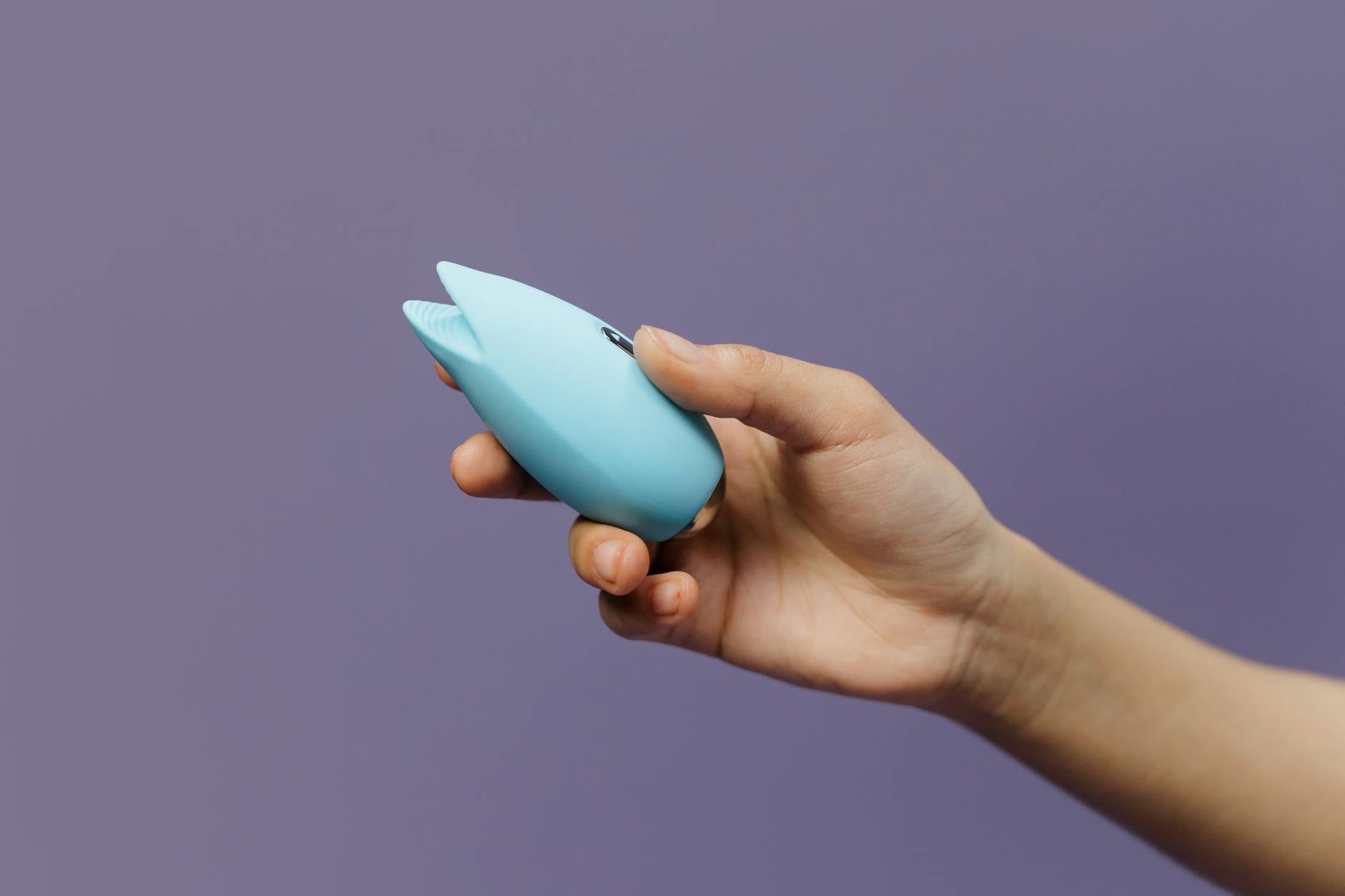
Photo by cottonbro studio on Pexels
Lubrication is non-negotiable
Water-based lubricant becomes more important during hormonal transitions, not less. Your natural lubrication might be reduced. The lemon vibrator's seal depends partly on moisture. The combination of external lubrication plus the toy's gentle suction often creates more sensation than friction alone would.
Reapply lubricant every 5-10 minutes during a session. It dries. That's not a sign to stop. It's a sign to refresh and keep going. Many people experience breakthroughs in sensation once they've committed to this rhythm.
The mental piece is just as real
When sensation feels different, anxiety often follows. "Is this permanent?" "Will I ever feel the same?" "Am I broken?" These thoughts actually dampen sensation further by activating your sympathetic nervous system, which is the opposite of what you need for pleasure.
Separate the physical from the psychological. Yes, your body is responding differently. No, this doesn't mean your capacity for pleasure is gone. Many people report that after working through hormonal transitions, they develop more nuanced, longer-lasting orgasms than they had before. The sensitivity isn't gone. It's redistributed.
When to check in with a professional
If reduced sensation is accompanied by pain, burning, or significant discomfort, see a gynecologist who specializes in hormonal health. Genitourinary syndrome of menopause is real and treatable. Topical estrogen or vaginal moisturizers often help within weeks.
If sensation loss is sudden and wasn't preceded by any hormonal event (like starting a new medication or hormonal birth control), that's worth discussing with your doctor too. Sometimes sensation changes signal thyroid issues or other systemic changes that deserve attention.
The recalibration timeline
Expect about four to eight weeks to establish a new baseline with your lemon clitoral vibrator. This isn't forever. Your body will likely stabilize at some point, and you might find yourself returning to higher settings. Or you might discover that you prefer the lower-intensity approach and never go back. Both are fine.
The goal isn't to recreate the past. It's to meet your body where it is now and rebuild pleasure from there.
FAQ: Lemon Vibrators and Hormonal Sensation Changes
Why does my lemon vibrator feel less intense when I start hormonal birth control?
Hormonal birth control suppresses the hormone fluctuations that normally happen across your cycle. This can reduce baseline genital blood flow and slow arousal. Your lemon clitoral vibrator isn't the issue. Your baseline physiology is different. Lower patterns, longer warm-up, and increased patience usually restore sensation. Some people find that their sensation stabilizes after three to four months on a new birth control. Give your body time.
Can I use higher patterns on my Lem vibrator if my sensation is reduced?
You can, but it's usually counterproductive. Higher intensity on tissue that's already less responsive often feels numbing or uncomfortable rather than pleasurable. It's like turning up volume on a song you're already struggling to hear. Reset to lower patterns first, rebuild sensitivity, then incrementally explore higher settings if you want them. This approach usually restores more pleasure than jumping straight to maximum intensity.
Does hormonal sensation loss mean I should try a different toy than a lemon vibrator?
Not necessarily. The lemon vibrator's suction mechanism actually works better for bodies experiencing reduced sensation than traditional vibrators do because it doesn't rely on friction alone. That said, if you've been using the same toy for years and sensation has genuinely plateaued despite technique changes, exploring a different toy might help. But try the recalibration approach first. Many people assume they need a new toy when they really just need different settings and more patience.
How long does it take to restore sensation after hormonal changes?
This varies wildly based on what hormonal change happened. If you just started a new medication, you might see sensation shifts within two weeks. If you're in early perimenopause, the timeline is less predictable because your hormones are fluctuating. Generally, allow four to eight weeks of consistent lemon vibrator use with adjusted settings before assuming permanent change. Your nervous system adapts slowly. Give it time.
Should I use the lemon vibrator more or less frequently if my sensation is reduced?
Use it the same frequency but with lower intensity. Using the toy more often in hopes of "waking up" your sensitivity usually backfires and can actually dull sensation further. Using it less often might make you anxious about whether you've lost capacity permanently. Stick with your normal frequency, adjust your settings down, and let your nervous system recalibrate at its own pace. Consistency matters more than intensity here.
Is there a supplement or food that helps restore sensation during hormonal changes?
No single supplement will magically restore sensation, despite what you'll read online. That said, general circulatory health supports genital sensation. Staying hydrated, maintaining blood pressure health, and managing stress all help. Some research suggests that ginseng and arginine support blood flow, but the evidence is modest. Lubrication, patience with your lemon vibrator, and recalibrating your settings will do far more for you than any supplement.
The real takeaway
Your lemon vibrator isn't broken. Your body isn't broken. You're simply experiencing a normal physiological shift that requires a different approach. Reset to lower settings, commit to longer warm-ups, use plenty of lubrication, and give yourself permission to move more slowly. Many people find that this recalibration leads to more sustainable, more interesting pleasure than their pre-hormonal-change routine. Your body is trying to tell you something. Listen to it.
Ready to explore what works for your body right now? Get in touch with Hello Nancy if you have questions about your lemon clitoral vibrator or want to discuss your pleasure journey.
References and sources
- Kingsberg, S. A., Rezapour, M., & Faraday, S. (2020). Vulvovaginal atrophy. Menopause. 27(4):p 451-456.
- Brotto, L. A., Atallah, S., Johnson-Agbakwu, C., et al. (2016). Cognitive and physiological correlates of sexual function in women with provoked vestibulodynia. The Journal of Sexual Medicine. 13(11):p 1665-1675.
- Davie, S. L., & Teahan, S. (2018). Emerging evidence for the use of vaginal estrogen therapy in treating estrogen-deficiency-induced sexual dysfunction. Sexual Medicine Reviews. 6(3):p 454-461.