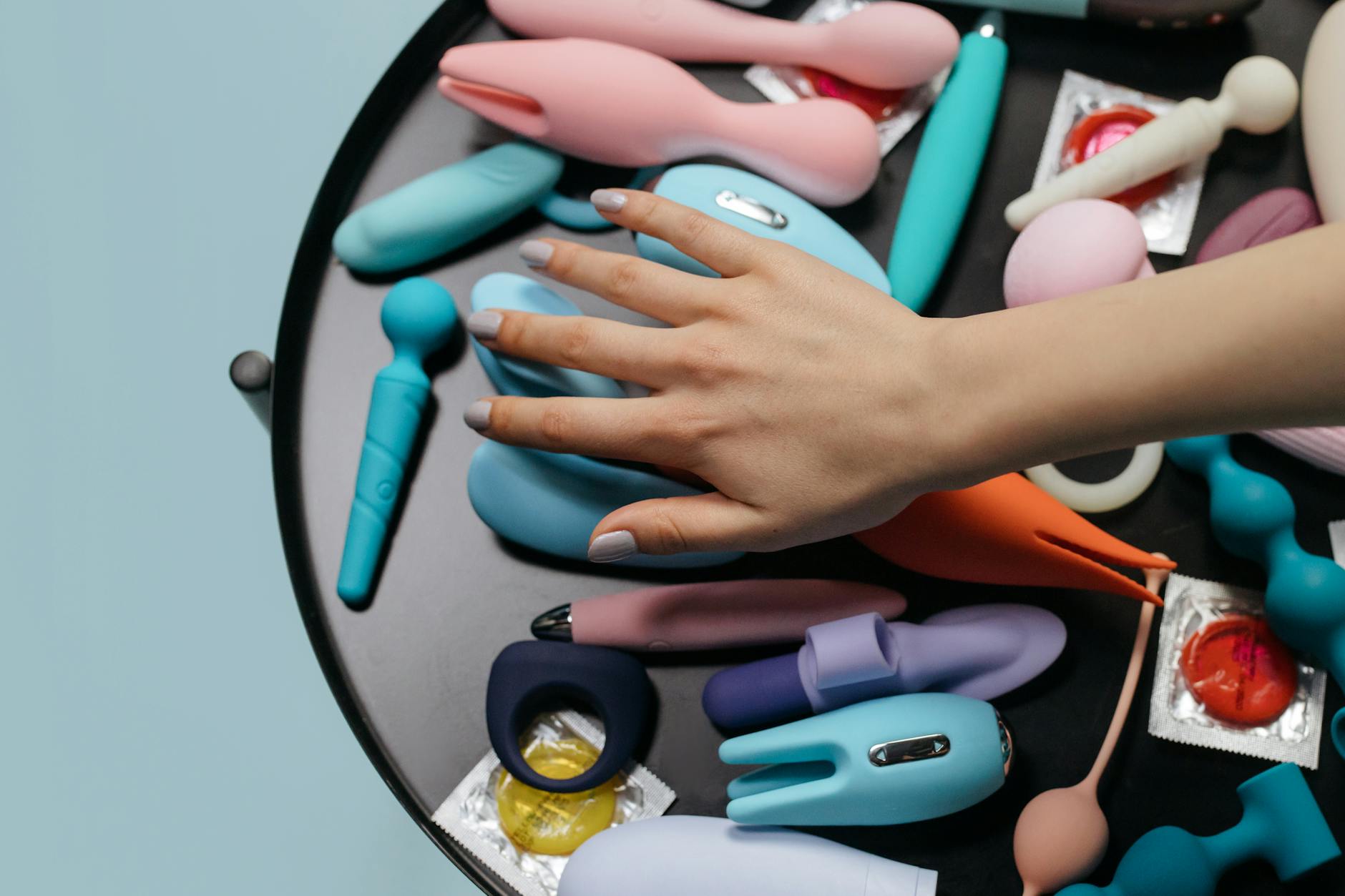
Here's the myth your partner probably believes
Toys mean you don't need them. Introducing a lemon clitoral vibrator signals that something's missing, and that something is them. So they resist. And you end up hiding it, or resenting their resistance, and suddenly the toy becomes a problem when the toy was never the problem.
I work with couples on this almost weekly. And every single time, the resistance comes from the same place: fear. Not of the toy. Of being replaced.
What the research actually shows
A 2020 study published in Sexual and Relationship Therapy found that couples who integrated toys together reported higher sexual satisfaction and better emotional intimacy than couples who didn't. Not lower. Better.
Here's the counterintuitive part: the toy isn't a substitute for your partner. It's a tool that makes it easier for you to experience pleasure with them present. That's the opposite of replacement. That's collaboration.
When you use a lemon vibrator during partnered sex, your nervous system settles faster. Your arousal builds more reliably. You orgasm more easily. From your partner's perspective, they get to watch and participate in something that makes you visibly happier. That's not a threat. That's a win.
But your partner doesn't know this yet. So here's how to have the conversation.
The setup conversation (before you even mention the toy)
Pick a time that is absolutely not sexual. Seriously. Not in bed, not after foreplay, not when either of you is aroused or tired. Sit down over coffee or tea with a clear head.
Start with the truth about you, not the toy. "I've been thinking about our sex life, and I want it to feel better for both of us. Not because anything's wrong. Because I want more for us." That framing matters. You're not complaining. You're advocating for more pleasure.
Then name the specific thing. "I've noticed it takes me a while to finish, and sometimes I don't finish at all. And I think that might actually be frustrating for you too, because you're putting in effort and I'm not getting there." This reframes the toy as a problem solver, not a criticism.
Listen. Your partner might say, "So you're saying I'm not enough." That's the fear talking. Your job is to gently separate two things: "You are enough for me. And my body works a certain way, and it could work better with a little help. Like how we use lube." That's accurate, and it's non-threatening.
Why the lemon vibrator specifically helps with skeptical partners
If your partner thinks toys are for solo use or fantasy, the lemon's suction design actually challenges that assumption. A lemon clitoral vibrator is designed to work during partnered sex. Your partner can watch. They can feel your response. They're not sidelined.
Unlike a traditional vibrator that can sometimes feel mechanical or dominant, a lemon's suction mimics oral stimulation. Your partner understands oral sex. They know how that works. It's not alien. It's an extension of what they already do.
The invitation (not the ambush)
Don't surprise your partner with a toy mid-intimacy. That's betrayal, no matter how good your intentions are. Instead, after you've had the conversation, pick a moment when you're both relaxed and say something like: "I got something I'd like to try with you. Would you be open to that this weekend?"
That gives them time to adjust mentally. It's not a shock. It's a plan.
When you're actually together, start without the toy. Have sex like you normally would. When you're both aroused, casually introduce it. "I want to try this now," not "I need this to finish." The framing shifts it from necessity to novelty.
What to actually do when you use it together
First time? Use the lowest intensity setting. You want the experience to be comfortable, not overwhelming. Your partner is already anxious. If you're gasping or tensing up, they'll interpret that as pain or displeasure, which confirms their fear.
Invite participation. "Do you want to hold it?" or "I like it when you touch me while I use this." That keeps them engaged. They're not watching passively. They're part of it.
Talk. Not dirty talk necessarily, just real feedback. "This feels amazing," or "I like it more when you're touching my shoulder at the same time." That communication does two things: it makes your partner feel included, and it gives them data that this is working.
Research shows that couples who communicate during sex report higher satisfaction. Full stop. So turn the nervousness into connection.
The conversation after
Don't leave it ambiguous. "That was hot," or "I felt so connected to you," or even just "I really liked that." Your partner needs to know this was good for you and good for the relationship.
If something felt off to your partner, listen. Maybe the position wasn't comfortable for them. Maybe seeing you with the toy triggered some feelings they didn't expect. That's fixable. It doesn't mean the experiment failed. It means you have information.
Over time, as your partner sees that the lemon vibrator doesn't replace them but amplifies the sex you have together, the skepticism dissolves. They stop seeing it as competition and start seeing it as foreplay equipment. Just like a vibration bed or a blindfold.
When skepticism is actually something deeper
Sometimes the resistance isn't about the toy. It's about control, or shame around pleasure, or a deeper disconnection. If your partner refuses to even discuss it, or becomes angry or withdrawn, that's a sign you might need to talk to a couples therapist.
A lemon vibrator can strengthen intimacy. It can't fix a broken foundation. If there are trust issues or communication problems, tackle those first. The toy will still be there.
The long view
Introducing a lemon clitoral vibrator to a skeptical partner isn't about proving anything. It's about building a shared experience of your pleasure mattering. About showing your partner that asking for what you want, and using tools to get there, makes you more present and more satisfied with them.
The couples I work with who get here report that their sex actually deepens. Not because of the toy. Because they had to talk honestly about pleasure, listen to each other, and try something new together. That's intimacy.
People also ask
Does using a toy with a partner mean I'm not satisfied with them?
No. In fact, couples who integrate toys report higher satisfaction with their partners overall. The toy isn't a referendum on your partner. It's a tool that helps your body respond more reliably, which usually means better sex for both of you.
What if my partner refuses to use the toy with me?
That's different from refusing to discuss it. If they won't discuss it at all, that's often a sign of shame or control issues that therapy can help with. If they're open to discussing it but not using it together, you can use it solo. Your pleasure still matters.
Will a lemon vibrator make my partner feel inadequate?
Not if you frame it correctly. The conversation isn't "you're not enough." It's "my body responds well to this kind of stimulation, and I want us to figure out how we can both enjoy that together." That's collaborative, not critical.
How do I introduce the topic if we've never used toys before?
Start with the conversation about pleasure and satisfaction, not the tool. Once your partner understands you're trying to improve things for both of you, introducing a specific tool is much easier. Use the word "together," not "for me."
What if we try it once and he still doesn't like it?
That's okay. You have data. Maybe it's not the toy, it's the position or the timing. Maybe your partner needs more time to adjust to the idea. Or maybe it's genuinely not for them. The goal isn't to force anyone into something they hate. The goal is to create enough trust and openness that you can try new things without shame.
Can I use a lemon vibrator if my partner is completely against toys?
Yes, you can use it solo. But if the resistance comes from a place of fear or insecurity, solo use won't fix the underlying issue. A conversation with a therapist might help your partner work through what's driving the resistance.
The real outcome
The couples I work with who move past toy skepticism don't do so because the toy is magic. They do it because they had to communicate, listen, and be vulnerable together. The tool changed their sex. The conversation changed their relationship.
A lemon clitoral vibrator can be part of that. But the real work is the willingness to talk about pleasure, to hear your partner's fears without defensiveness, and to keep trying even when it feels awkward at first.
That's intimacy. The toy is just the vehicle.